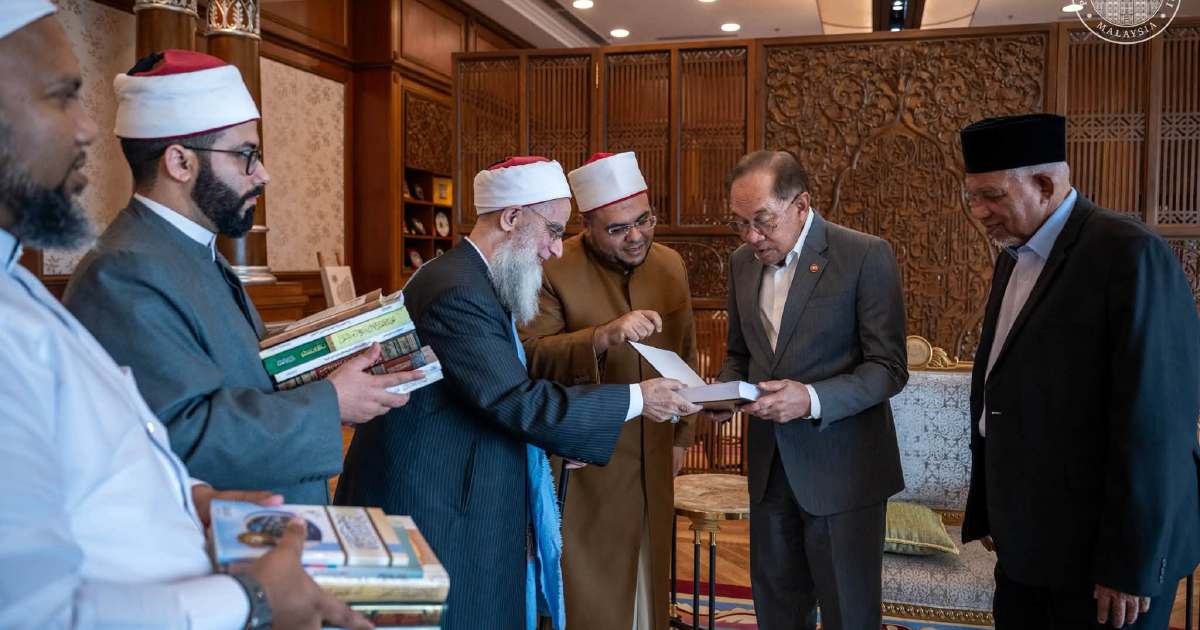
Prime Minister Datuk Seri Anwar Ibrahim extended an official welcome to Sheikh Dr Mustafa An-Nadwi Al-Hasani Mansurah, a prominent Egyptian scholar, at his Putrajaya office today, underscoring Malaysia's ongoing engagement with influential figures in the Islamic scholarly world.
The meeting represents part of Malaysia's broader strategy to deepen diplomatic relations with key Middle Eastern intellectuals and religious leaders. Such high-level visits to the Prime Minister's office typically signal the importance both governments place on strengthening bilateral ties and fostering greater understanding across Islamic academic circles.
Sheikh Dr Mustafa An-Nadwi brings significant credentials to the discussion table. His scholarly work has earned him recognition across the Arab world and beyond, positioning him as an influential voice in contemporary Islamic thought and interpretation. The Egyptian scholar's expertise spans multiple dimensions of Islamic jurisprudence, theology, and contemporary Islamic concerns, making his insights particularly valuable for policymakers navigating complex religious and social issues.
Malaysia's engagement with prominent Middle Eastern scholars reflects the country's self-positioning as a bridge between the Islamic world and global affairs. By hosting and meeting with influential religious and academic figures from Egypt and other countries, Malaysia reinforces its credentials as a centre for interfaith dialogue and Islamic intellectual discourse in Southeast Asia. This diplomatic approach aligns with Anwar's stated commitment to promoting moderate Islamic values and international cooperation.
The timing of such visits often carries diplomatic weight beyond the immediate conversation. Egypt remains a central player in Middle Eastern politics and a crucial voice within the Organisation of Islamic Cooperation, making Egyptian scholars and intellectuals important channels for fostering regional dialogue. For Malaysia, maintaining strong relationships with such figures enhances the country's standing within Islamic scholarly networks and opens avenues for collaborative initiatives.
Scholar-to-statesman exchanges like this also provide opportunities to discuss shared concerns within the Islamic world, including matters of religious education, interfaith understanding, and the counternarrative to extremism. Egypt's Al-Azhar University, long regarded as one of Islam's most prestigious institutions, has trained scholars across the globe, and many of its alumni hold influential positions in various countries.
From a Malaysian perspective, such meetings contribute to the government's efforts to position itself as a custodian of moderate Islamic principles in a region sometimes buffeted by religious tensions. The Prime Minister's office regularly hosts visits by international religious scholars and leaders, reflecting the government's view that such engagements strengthen Malaysia's soft power and cultural diplomacy.
The visit also occurs within the broader context of Malaysia's role in the Islamic world. As a Muslim-majority nation with significant economic and political influence in Southeast Asia, Malaysia has invested considerable effort in becoming a platform for Islamic intellectual exchange. Universities and religious institutions across Malaysia regularly host international scholars, and the government actively supports such academic partnerships.
Sheikh Dr Mustafa An-Nadwi's presence in Putrajaya suggests potential discussions on a range of topics of mutual interest to Egypt and Malaysia. These could include approaches to Islamic education, strategies for promoting religious tolerance, and contemporary challenges facing Muslim-majority societies. Such dialogues often result in deeper institutional partnerships, whether through university collaborations, student exchange programmes, or joint research initiatives.
The reception extended to the Egyptian scholar also underscores Malaysia's commitment to engaging with intellectual voices from across the Islamic world. Rather than limiting diplomatic attention to political leaders, the government recognises the influence that prominent scholars and religious figures wield in shaping public opinion and contributing to policy discussions within their respective countries.
For Malaysia's broader foreign policy objectives, such meetings reinforce the narrative of a nation deeply invested in promoting inter-Islamic dialogue and cooperation. In a geopolitical landscape where religious identity increasingly intersects with political and economic interests, Malaysia's ability to host and engage meaningfully with prominent Islamic scholars from other nations enhances its credibility and influence within Islamic circles.
The government's continued hospitality towards visiting scholars also sends a signal to Malaysia's own religious and intellectual community about the importance of scholarly engagement and cross-border collaboration. By demonstrating that such exchanges merit Prime Ministerial attention, the government elevates the status of Islamic intellectual discourse within the national conversation.
As Malaysia continues to navigate its role in regional and global affairs, maintaining strong connections with influential figures in the Islamic world remains strategically important. The visit by Sheikh Dr Mustafa An-Nadwi exemplifies this approach, reflecting both the government's diplomatic priorities and its commitment to fostering deeper relationships with key thinkers and leaders across the Muslim-majority world.

