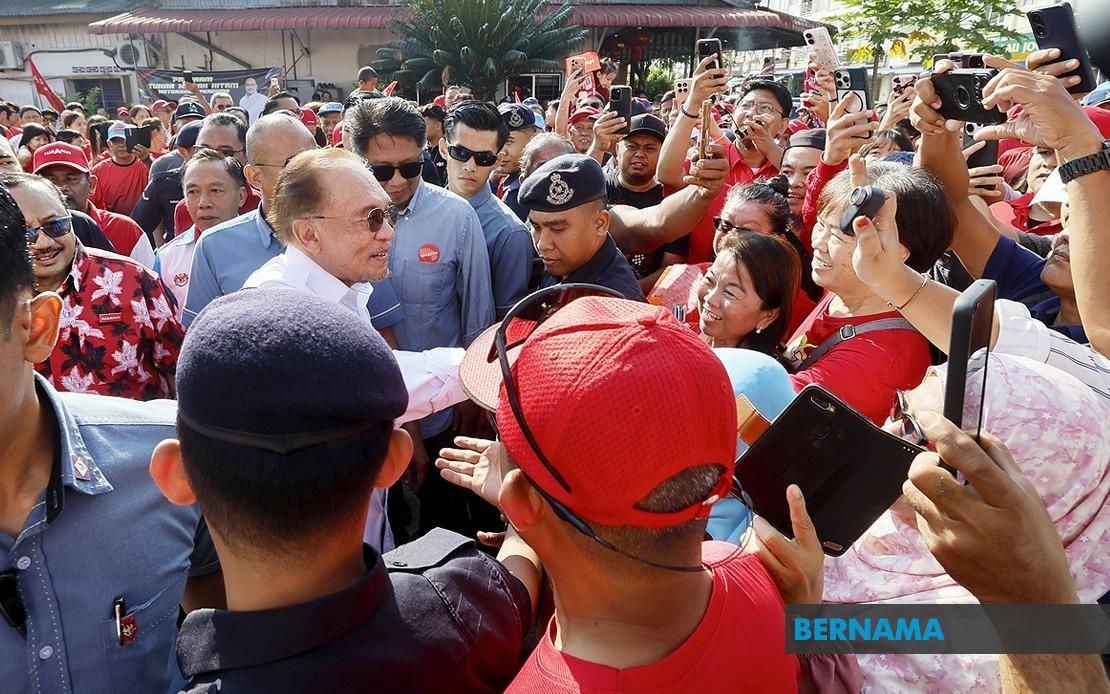
Prime Minister Datuk Seri Anwar Ibrahim took the opportunity to reconnect with an elderly couple from Johor whose determined effort to meet him captured public attention last week. Abdul Razak Pelangga, 86, and his wife Jamilah Samsudin, 64, met the Prime Minister on Wednesday during the "Yok! Meriahkan Johor! Undi Harapan" campaign gathering in Senggarang. The reunion came just days after their trishaw ride became a talking point across the state, highlighting the emotional connection between ordinary Malaysians and their political leaders during the election season.
The original encounter occurred when Abdul Razak decided to pedal his trishaw nearly a kilometre through Senggarang to fulfil his wife's wish of greeting the Prime Minister during a scheduled breakfast stop. The octogenarian's determination and the couple's genuine enthusiasm resonated with many Malaysians who shared their story on social media. The incident underscored how accessible politics has become in the digital age, with spontaneous moments of public interaction often gaining traction online before traditional news outlets report them.
During Wednesday's formal meeting, Anwar displayed characteristic informality by engaging Abdul Razak in light-hearted banter about the elderly man's remarkable physical capability to pedal the trishaw. Rather than treating the encounter as a mere photo opportunity, the Prime Minister expressed genuine gratitude for the couple's support and their willingness to brave the journey. Such personal interactions form an important part of electoral engagement in Malaysia, where grassroots connection often carries more weight than media-managed appearances.
The event in Senggarang brought together several key political figures, including Pakatan Harapan Communications director Datuk Fahmi Fadzil, who also serves as Minister of Communications. The presence of ministerial-level representation demonstrated that Pakatan Harapan regarded this campaign stop as significant enough to warrant high-level attendance. Additionally, three PH candidates contesting in the state election—Onn Abu Bakar in Senggarang, Mohd Khuzzan Abu Bakar in Semerah, and Felicia Poh Rui Ling in Penggaram—participated in the programme.
The timing of this reunion held particular significance given that Johor voters were preparing to cast their ballots on Saturday in the 16th state election. Early voting had already taken place the previous Tuesday, meaning the campaign was entering its final stretch. Such well-orchestrated but seemingly spontaneous moments can influence voter sentiment during the crucial final days before polling. For political analysts, the incident exemplifies how genuine human interest stories can become powerful campaign narratives without explicit orchestration.
Abdul Razak's trishaw journey raises broader questions about voter engagement and accessibility in Malaysian politics. The fact that an 86-year-old felt compelled to make a kilometre-long journey by trishaw to meet the Prime Minister suggests deep-rooted respect for the office and considerable emotional investment in the political process. It also reflects the enduring importance of personal political engagement among older demographics who may prefer direct interaction over digital alternatives. For younger voters and urban populations, such stories often go viral precisely because they highlight values like dedication and sincerity that resonate across generational lines.
The Johor state election represented a significant political moment for both Pakatan Harapan and competing coalitions. The state had undergone considerable political upheaval in recent years, with various combinations of parties forming governments. A strong showing in Johor would provide momentum for whichever coalition emerged victorious, particularly given the state's economic importance and relatively large population. Campaign events like the one in Senggarang formed part of a broader strategy to consolidate support among undecided voters and energise the party's base.
From a Malaysian political culture perspective, such encounters between senior leaders and ordinary citizens demonstrate the importance of maintaining personal connection in democratic processes. Unlike societies where politicians operate from behind security barriers and managed environments, Malaysia's political tradition permits relatively direct access to leaders during public events. This accessibility has both advantages and risks, but it clearly matters to voters who value the opportunity to voice support or grievances directly. Abdul Razak and Jamilah's trishaw journey symbolised this democratic ideal in action.
The incident also highlighted how social media has transformed political communication in Malaysia. The couple's story likely reached thousands of people through digital platforms long before formal news coverage appeared. This organic amplification of grassroots political engagement can benefit parties by creating positive narratives that spread without substantial media spending. For Pakatan Harapan in particular, such feel-good stories provided valuable messaging during a competitive election campaign where messaging discipline and narrative control significantly influence outcomes.
As Malaysian politics continues to evolve, incidents like the Senggarang trishaw journey serve as reminders of the human dimensions underlying electoral politics. Behind polling statistics, campaign budgets, and strategic calculations are individual voters whose decisions rest partly on perceived sincerity and personal connection with leaders. Abdul Razak's willingness to pedal a trishaw to meet the Prime Minister, and Anwar's genuine reciprocation of that respect, encapsulated values that many Malaysians associate with authentic political engagement. The reunion on Wednesday underscored that such moments, far from being forgotten after initial news cycles, remained meaningful enough for senior political figures to prioritise meeting again during busy campaign schedules.

