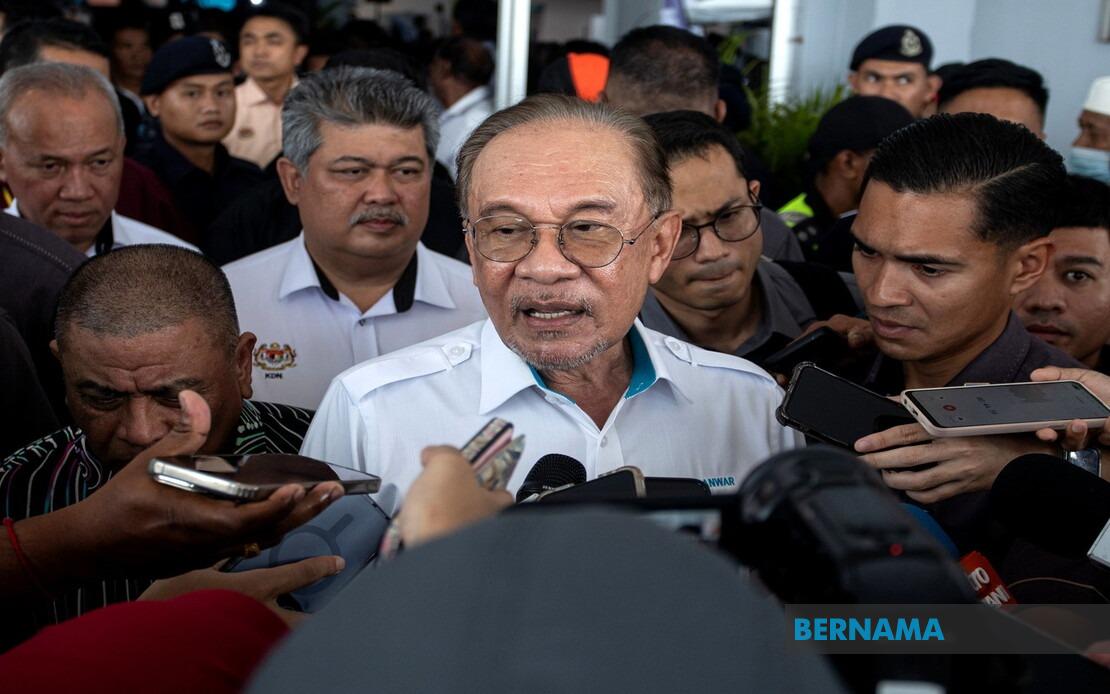
Prime Minister Datuk Seri Anwar Ibrahim has issued a firm directive to members of the ruling coalition, instructing them to maintain professional standards and avoid launching public attacks on the Federal Government while campaigning for state-level elections. Speaking at an event in Ipoh, Anwar conveyed the message that internal coalition discipline remains essential even as political parties compete against each other at the state level, and he warned that breaches of this understanding could damage Malaysia's broader political environment.
The timing of Anwar's statement underscores growing tensions within the Unity Government as state polls approach. While coalition partners operate under a shared federal arrangement, they often field competing candidates in state contests. This dual reality—cooperation at the centre paired with electoral competition in the states—requires careful management to prevent the coalition from fracturing. Anwar's intervention signals that party leaders have already raised concerns about campaign rhetoric crossing into territory that undermines federal stability.
Government officials holding ministerial and senior administrative positions face the strictest expectations under Anwar's directive. Ministers, deputy ministers, and agency heads are permitted to campaign on state-specific issues and promote their respective parties, a democratic norm. However, Anwar made explicit that any government official choosing to publicly criticise the federal administration must resign from their post beforehand. This condition effectively forces a choice: retain governmental authority or escalate internal attacks, but not both simultaneously.
Anwar's approach reflects a pragmatic understanding of how coalition governments operate in Malaysia's complex political environment. The Unity Government comprises parties that frequently disagree on policy and electoral strategy, yet they maintain a common federal platform to provide stable governance. When state elections occur, these inherent tensions surface as parties seek to maximise their standing. Without clear rules of engagement, campaign season can quickly devolve into mutual recriminations that weaken public confidence in the entire administration.
The Prime Minister has already consulted with his two deputies, Datuk Seri Dr Ahmad Zahid Hamidi and Datuk Seri Fadillah Yusof, signalling that this guidance represents a coordinated leadership position rather than an ad-hoc statement. This consultation suggests that concerns about discipline may have emerged from specific instances or warnings from within coalition parties. By framing the discussion at the highest levels, Anwar sought to elevate the message beyond mere campaign guidance to a matter of governmental principle.
Beyond individual discipline, Anwar stressed that the Unity Government coalition partners must work to strengthen relationships across both federal and state levels. This emphasis on maintaining cordial relations reflects recognition that Malaysia's federal structure requires ongoing cooperation between centre and state administrations, regardless of which parties control which jurisdictions. When federal and state officials from the same coalition openly quarrel, service delivery suffers and citizen satisfaction declines—a particular concern for a government already navigating complex governance challenges.
The broader political context makes Anwar's directive especially significant. Malaysia's democracy depends on coalitions that can contain internal disagreements without allowing them to paralyse government function. The current Unity Government represents a deliberate choice to include diverse parties as a stabilising force after years of political volatility. However, this arrangement remains fragile, and state elections inject unpredictability into the arrangement. Officials who use state campaigns to undermine federal colleagues risk unravelling the very coalition structure that keeps them in power.
For opposition parties observing these dynamics, the Prime Minister's warning also communicates a subtle message: the Unity Government recognises its internal tensions and is actively managing them. This transparency may actually strengthen public perception of governmental stability by demonstrating that leadership understands coalition challenges and possesses mechanisms to address them. Conversely, failure to enforce such discipline could invite opposition criticism that the government lacks cohesion.
Malaysian political observers note that state elections have historically served as testing grounds for federal coalitions. When smaller parties or individual politicians gain disproportionate leverage during state contests, they sometimes attempt to extract concessions or increase their profile through aggressive posturing. Anwar's statement effectively raises the cost of such behaviour by linking it directly to ministerial tenure. A deputy minister who prioritises state campaign aggression over federal loyalty now faces clear consequences.
The enforcement mechanism Anwar outlined—requiring resignation for those who breach discipline—carries real weight because ministerial positions represent significant power and privilege in Malaysia's system. This creates genuine incentive for officials to comply without explicit monitoring. However, the statement also requires party leaders to police their own members, placing responsibility on coalition partners to ensure candidates and members respect the boundaries.
State-level electoral competition will inevitably generate campaign rhetoric that pushes boundaries. Anwar's directive attempts to establish where those boundaries lie without eliminating legitimate political competition. The distinction between criticising a rival state government and attacking the federal administration provides the key demarcation line. Officials can argue their party's superior state governance vision without assailing colleagues at the federal level.
Moving forward, the Unity Government's resilience may depend partly on how effectively this guidance is implemented. Early enforcement of the disciplinary standard would signal that the rules carry genuine force. Conversely, selective enforcement or overlooked violations could invite opportunism. The coming state election campaigns will test whether coalition members understand that federal stability ultimately serves their own political interests better than short-term state-level gains achieved through internal sabotage.
For Malaysia's broader political system, Anwar's approach demonstrates that democratic governance and coalition management need not be contradictory. Parties retain genuine electoral competition while accepting constraints designed to protect institutional stability. Whether this balancing act proves sustainable will substantially influence Malaysian politics in the years ahead.

