%22%2F%3E%3C%2Fpattern%3E%3C%2Fdefs%3E%3Crect%20width%3D%22100%25%22%20height%3D%22100%25%22%20fill%3D%22url(%23ph3k3z2g)%22%2F%3E%3Crect%20width%3D%22100%25%22%20height%3D%22100%25%22%20fill%3D%22url(%23ph3k3z2p)%22%2F%3E%3Ctext%20x%3D%2250%25%22%20y%3D%2250%25%22%20text-anchor%3D%22middle%22%20dominant-baseline%3D%22central%22%20fill%3D%22rgba(255%2C255%2C255%2C0.95)%22%20font-family%3D%22Georgia%2C%20'Times%20New%20Roman'%2C%20serif%22%20font-weight%3D%22700%22%20font-size%3D%22320%22%20letter-spacing%3D%22-0.02em%22%3EPM%3C%2Ftext%3E%3C%2Fsvg%3E)
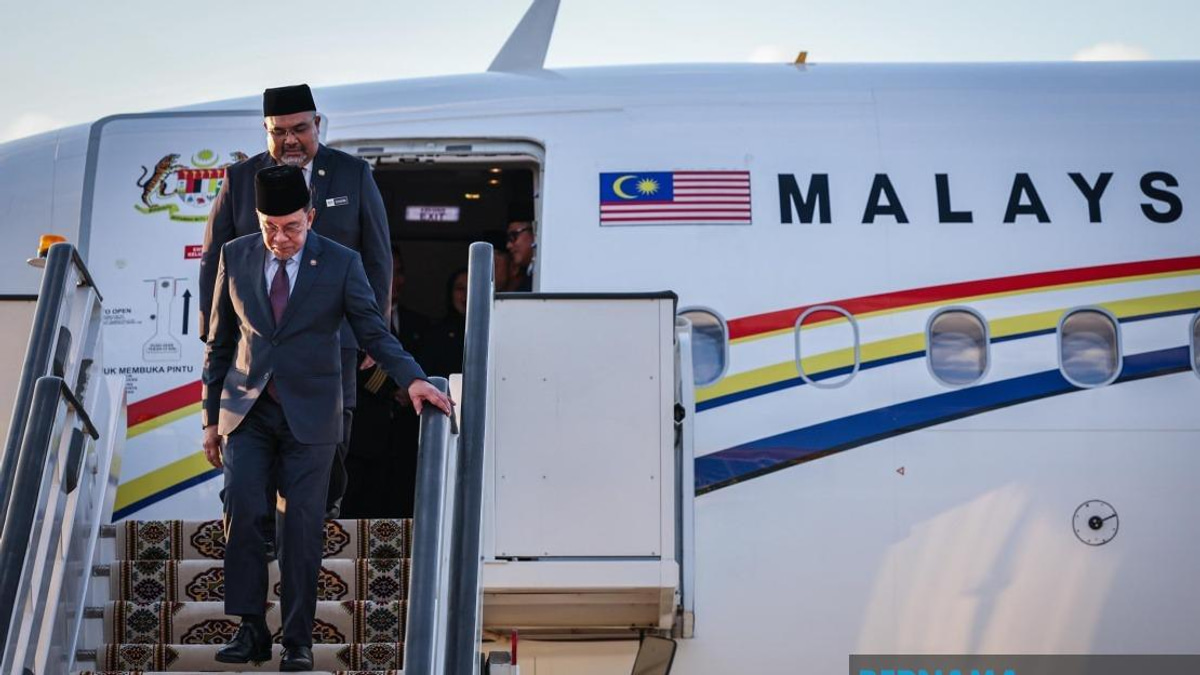
Prime Minister Anwar Ibrahim is heading to Russia on a working visit to hold crucial talks with President Vladimir Putin, underscoring the government's determination to lock in stable fuel supplies for Malaysia over the coming years. The bilateral engagement, which will include meetings between ASEAN leaders and Russian counterparts, represents a strategic effort to insulate the country from energy market volatility and supply chain disruptions that have already begun destabilising several neighbouring economies across Southeast Asia.
Anwar outlined his negotiating priorities during a community gathering in Muar, emphasising that maintaining robust diplomatic channels with major energy producers remains fundamental to Malaysia's economic resilience. He intends to press Putin on guaranteeing the continuity of Malaysian crude oil and diesel shipments, framing the initiative within a broader philosophy that strong international partnerships yield tangible economic dividends. This approach reflects a deliberate pivot toward diversifying Malaysia's energy relationships and reducing dependency on any single supplier or shipping route.
The timing of Anwar's Moscow journey carries particular significance given mounting geopolitical turbulence in West Asia. Recent military exchanges involving Israel, the United States, and Iran have heightened fears that the Strait of Hormuz—through which roughly one-third of global maritime-traded oil passes—could face disruption. Such a closure would ripple outward rapidly, inflating crude prices worldwide and threatening Malaysia's ability to maintain some of the world's most affordable domestic fuel retailing. At RM1.99 per litre for RON95 petrol, Malaysia's pump prices have become a touchstone of the government's economic stewardship, achieved through a combination of prudent fiscal policy and carefully cultivated international trade relationships.
The Prime Minister acknowledged the precarious nature of Middle Eastern stability, noting that diplomatic communications with neighbouring governments offer some ground for cautious optimism. According to Anwar, Pakistani leadership has signalled that a ceasefire agreement could materialise as early as Friday, potentially averting full-scale Strait of Hormuz closure. Nevertheless, this conditional outlook underscores Malaysia's vulnerability to external shocks beyond its control, motivating the administration to negotiate insurance against energy price spikes by securing preferential supply agreements with major oil-exporting nations.
For Malaysian policymakers, the Russia visit represents more than routine diplomacy; it reflects the delicate balancing act required to maintain affordable energy for domestic consumers while ensuring industrial competitiveness depends on predictable fuel costs. The government has staked considerable political capital on keeping petrol prices low, making supply security a non-negotiable priority. Any future regional conflict or shipping blockade that drove international oil past USD 150 per barrel would immediately threaten the fiscal arithmetic underlying Malaysia's pump-price subsidy framework.
The broader context reveals how Southeast Asian economies remain structurally dependent on uninterrupted oil flows through contested waterways and vulnerable to supply shocks originating thousands of kilometres away. Malaysia's approach—combining bilateral engagement with Moscow, continuous monitoring of West Asian developments, and coordinated ASEAN positioning—reflects both the constraints and opportunities facing medium-sized energy-importing nations. By engaging Russia directly, Anwar positions Malaysia as a serious partner willing to navigate geopolitical complexity rather than retreating into passive waiting.
Energy security considerations also carry implications for Malaysia's manufacturing sector, where competitiveness hinges partly on fuel-cost stability. Industrial users, shipping companies, and logistics operators all factor expected energy prices into investment and operational decisions. Prolonged uncertainty about oil supply or pricing would chill business confidence and complicate long-term planning. The government's preemptive diplomacy aims to eliminate such uncertainty by securing contractual assurances that transcend short-term market volatility.
Anwar's messaging to the fishing community and farmers in Muar signals that energy security extends beyond corporate boardrooms into grassroots economic life. Coastal fisherfolk depend on affordable diesel for their boats; agricultural producers rely on stable fuel prices to operate machinery and transport goods. By publicly tying his Russia visit to ordinary Malaysians' pocketbooks, the Prime Minister emphasised that diplomatic engagement yields concrete benefits for working families.
Looking forward, the success of the Moscow talks will likely determine whether Malaysia can maintain its competitive advantage on global energy prices while protecting vulnerable consumer groups from future shocks. The negotiation of supply guarantees with Russia—ideally backed by long-term contracts or preferential pricing arrangements—would represent a tangible achievement justifying the geopolitical risks of closer engagement with Moscow at a moment when Western nations maintain varying degrees of tension with the Kremlin over Ukraine and other disputes.