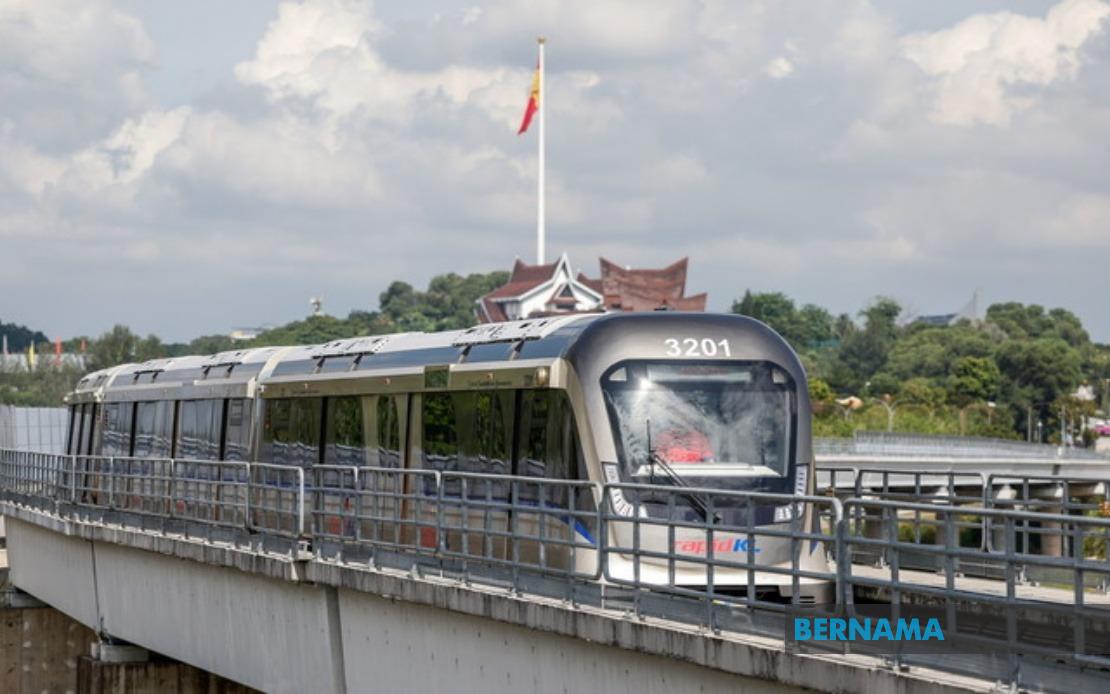
The Light Rail Transit 3 (LRT3) Shah Alam Line, a major infrastructure project spanning 37.8 kilometres from Bandar Utama to Johan Setia, has achieved full operational readiness and awaits passenger commencement following an official ceremony scheduled for Sunday, June 28. Prime Minister Datuk Seri Anwar Ibrahim will preside over the launch event, where the commercial opening date and time for the corridor will be formally announced. According to Shah Alam line chief Mohd Ariffin Idris, the new transit route is anticipated to serve approximately two million residents living along its corridor, representing a significant addition to the Klang Valley's public transportation network.
The LRT3 Shah Alam Line comprises 20 stations strategically positioned to maximise accessibility across the region. The first ten stations—Bandar Utama, Kayu Ara, BU 11 (Bandar Utama 11), Damansara Idaman, Subang, Glenmarie 2, Kerjaya, Stadium Shah Alam, Dato' Menteri, and UiTM Shah Alam—serve the northern corridor. The remaining stations, including Seksyen 7 Shah Alam, Bandar Baru Klang, Pasar Klang, Jalan Meru, Jambatan Kota, Taman Selatan, Seri Andalas, Klang Jaya, Bandar Bukit Tinggi, and Johan Setia, extend coverage southward through Shah Alam and into the Klang region. This distribution pattern addresses transportation gaps affecting diverse communities, from residential areas to commercial and educational hubs.
The new line features seamless integration with existing mass transit infrastructure, enabling commuters to transfer efficiently between different networks. Passengers boarding at Bandar Utama station can connect to the Kajang Line, whilst those at Glenmarie 2 gain access to the Kelana Jaya Line. Such connectivity transforms the Shah Alam Line from an isolated corridor into an interconnected component of the broader Klang Valley transportation ecosystem, enhancing journey flexibility for commuters whose daily movements span multiple zones.
Beyond rail connectivity, Prasarana has invested substantially in comprehensive feeder networks to facilitate last-mile connectivity. Forty feeder buses operating across thirteen routes with 323 designated stops offer affordable transportation at RM1 per journey, operating between 6 am and 11.30 pm daily. Complementing bus services, forty-four Rapid On-Demand vans serve twenty zones at RM2 per trip during identical operating hours. These multi-modal arrangements recognise that rail transit alone cannot adequately serve dispersed residential and employment areas, particularly in suburban regions where destination density remains lower than city centres.
The feeder network design incorporates flexibility for ongoing refinement, with Prasarana committed to adjusting routes and schedules based on observed travel patterns once the Shah Alam Line commences operations. This adaptive approach acknowledges that transportation demand forecasts, however sophisticated, require validation against actual commuter behaviour. Real-world usage data will inform decisions about service frequency, route optimisation, and resource reallocation, ensuring that the broader transit ecosystem evolves responsively to community needs.
Parking provision forms a critical component of the Shah Alam Line's integrated transportation strategy, particularly for commuters who initiate journeys via private vehicle. Six stations—Kayu Ara, Damansara Idaman, Pasar Besar Klang, Sri Andalas, Bandar Bukit Tinggi, and Johan Setia—offer parking facilities totalling 2,300 bays. This supply, whilst substantial, represents a measured approach that encourages public transport adoption by making parking slightly inconvenient compared to direct rail access, whilst accommodating longer-distance commuters for whom park-and-ride arrangements offer genuine benefits.
Operational projections indicate ambitious passenger uptake expectations. Prasarana forecasts 67,000 daily riders during the Shah Alam Line's first year, escalating to 117,708 passengers per day within five years. These targets, if realised, would position the line among Malaysia's busier transit corridors and vindicate the substantial infrastructure investment. However, achieving such growth requires sustained focus on service reliability, cleanliness, and customer experience alongside network expansion and complementary mobility options.
Environmental sustainability considerations have been embedded throughout the Shah Alam Line's design and operation. Light rail vehicles incorporate inverter-based air conditioning systems that reduce energy consumption compared to conventional climate control technology. Station architecture emphasises passive environmental strategies, with layouts maximising natural airflow and daylight penetration to minimise dependence on artificial ventilation and lighting. These features, whilst potentially increasing initial construction costs, align with Malaysia's climate commitments and reduce long-term operational expenditure, yielding financial returns alongside environmental benefits.
Accessibility remains a fundamental design principle rather than an afterthought addition. All twenty stations incorporate wheelchair-accessible ramps, and facilities include disability-compliant toilet provision. Within each light rail vehicle, dedicated seating ensures that persons with disabilities can travel with dignity and safety. Such comprehensive accessibility infrastructure reflects evolving international norms regarding inclusive public space design and acknowledges Malaysia's commitments under the United Nations Convention on the Rights of Persons with Disabilities.
Prasarana's development roadmap extends beyond the currently completed Shah Alam Line segments. Five additional stations—Tropicana, Raja Muda, Temasya, Bukit Raja, and Bandar Botanik—require reconstruction and are scheduled for commencement by year-end 2024. This phased expansion approach allows the operational Shah Alam Line to establish service stability and identify refinement requirements before connecting additional communities and increasing network complexity.
The LRT3 Shah Alam Line's imminent opening arrives at a moment when Malaysian urban centres confront persistent traffic congestion and air quality concerns. Enhanced public transportation alternatives offer commuters meaningful choices beyond private vehicle dependency, potentially reducing vehicular emissions and alleviating road pressure. For the two million residents along the corridor, the line's opening represents improved economic opportunity, reduced commute stress, and enhanced quality of life. The project also validates Malaysia's continued investment in large-scale infrastructure despite economic constraints, signalling governmental commitment to long-term regional development beyond short-term budget cycles.

