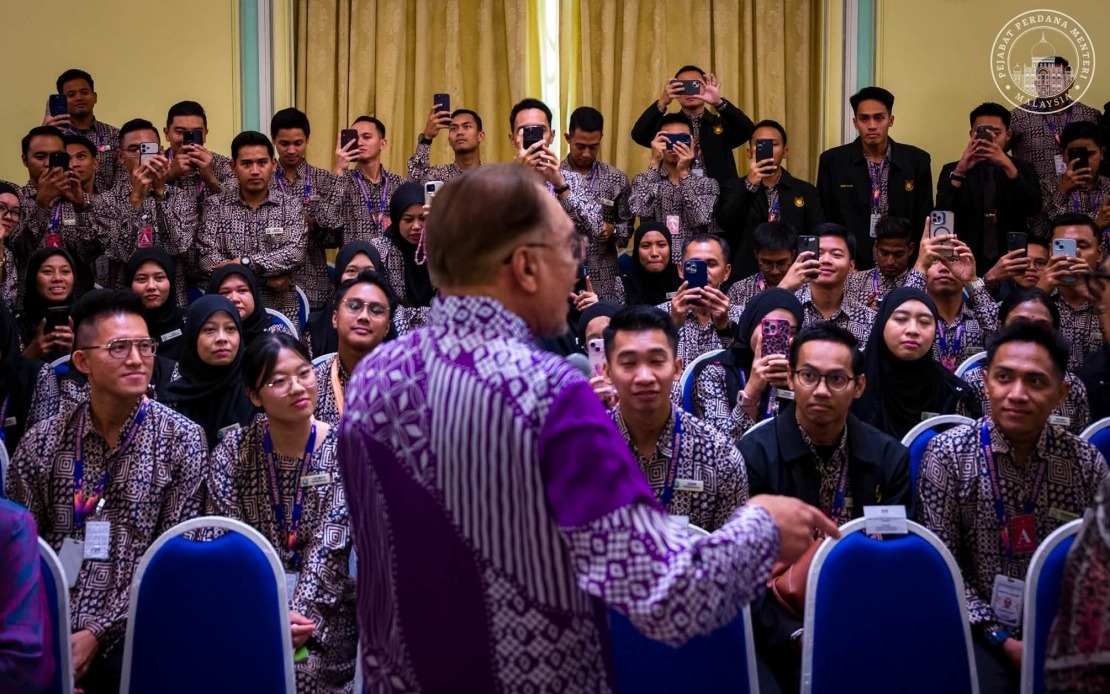
Prime Minister Datuk Seri Anwar Ibrahim has underscored the critical importance of integrity, efficiency and a genuine commitment to reform within Malaysia's civil service, framing these qualities as fundamental to building a stronger and more equitable nation. Speaking during an engagement with Administrative and Diplomatic Service (PTD) officer cadets participating in the Postgraduate Diploma in Public Management programme at his office in Putrajaya, Anwar stressed that public service represents far more than administrative function—it embodies a sacred responsibility to place national and collective interests above personal advancement or institutional inertia.
The Prime Minister's message reflects growing recognition within government circles that Malaysia's developmental trajectory depends not merely on policy formulation but on the calibre and ethical foundation of those implementing these policies. Anwar's emphasis on the courage required to embrace change carries particular resonance given Malaysia's evolving economic landscape, where traditional administrative approaches increasingly prove inadequate. The appointment of PTD cadets—considered among the nation's most elite civil service cohort—underscores the deliberate focus on instilling reform-minded principles within the upper echelons of the bureaucracy, a critical juncture given their future roles in shaping governance frameworks.
The concept of integrity that Anwar invoked extends beyond conventional anti-corruption measures, encompassing a broader commitment to transparency, accountability and ethical decision-making in public institutions. This framing suggests an understanding that Malaysia's civil service faces not merely isolated corruption cases but systemic challenges requiring cultural transformation. By addressing these cadets directly, the Prime Minister sought to establish foundational values before they ascend to senior positions where institutional cultures become entrenched and resistant to change.
Anwar's assertion that the nation's future depends on capable and principled leadership and public service reflects lessons learned from previous administrative shortcomings. Malaysia has witnessed instances where capable officials operated within systems that incentivised or tolerated questionable practices, demonstrating that competence alone without strong ethical moorings produces inadequate governance outcomes. The Prime Minister's dual emphasis on both capability and principle acknowledges that Malaysia requires civil servants who possess technical expertise and policy sophistication while maintaining unwavering commitment to collective welfare.
The timing of this intervention also carries significance within Malaysia's broader political and economic context. The nation faces challenges including economic restructuring, demographic shifts, and rising public expectations regarding service delivery and government responsiveness. Civil servants positioned to implement responses to these challenges must therefore possess not only traditional administrative skills but also adaptive capacity and innovative thinking. Anwar's emphasis on embracing change suggests official acknowledgement that rigid adherence to established procedures, however historically justified, may impede effective response to contemporary challenges.
The meeting with PTD cadets represents part of a broader institutional engagement strategy, wherein Malaysia's political leadership seeks to align the bureaucracy with government priorities and reform objectives. These cadets, selected through competitive processes and representing the service's intellectual core, serve as conduits through which values and directives penetrate the broader civil service apparatus. Their formative period, during which they absorb institutional culture and develop professional networks, represents a critical window for establishing normative frameworks regarding governance quality and ethical standards.
Anwar's invocation of good governance as essential to building a more progressive, just and prosperous Malaysia positions administrative integrity not as a peripheral ethical concern but as a driver of substantive developmental outcomes. This framing connects civil service reform directly to economic performance, social equity and national competitiveness, suggesting that organisational culture and ethical standards carry measurable consequences for citizen welfare. The integration of these themes within a single message to emerging civil service leaders indicates strategic understanding that sustainable institutional change requires embedding reformed values among individuals who will later exercise significant authority.
The emphasis on placing national and people's interests above all else addresses a longstanding tension within many civil services, where institutional self-preservation, departmental competition or factional loyalty occasionally compromises optimal policy implementation. By explicitly articulating this principle to a cohort of future decision-makers, Anwar sought to establish clear normative expectations regarding the hierarchy of loyalties and the primacy of collective welfare in administrative deliberation.
For Malaysian readers and observers, this intervention signifies continued official commitment to addressing governance quality through both structural reforms and ideological reinforcement. The message implies that administrative excellence and ethical conduct represent not constraints on efficiency but prerequisites for achieving it, challenging historically entrenched notions that governance shortcuts represent practical necessities. As Malaysia continues navigating economic transformation and addressing public trust deficits in institutions, the values articulated to these PTD cadets may substantially influence implementation capacity and policy effectiveness across government for decades.

