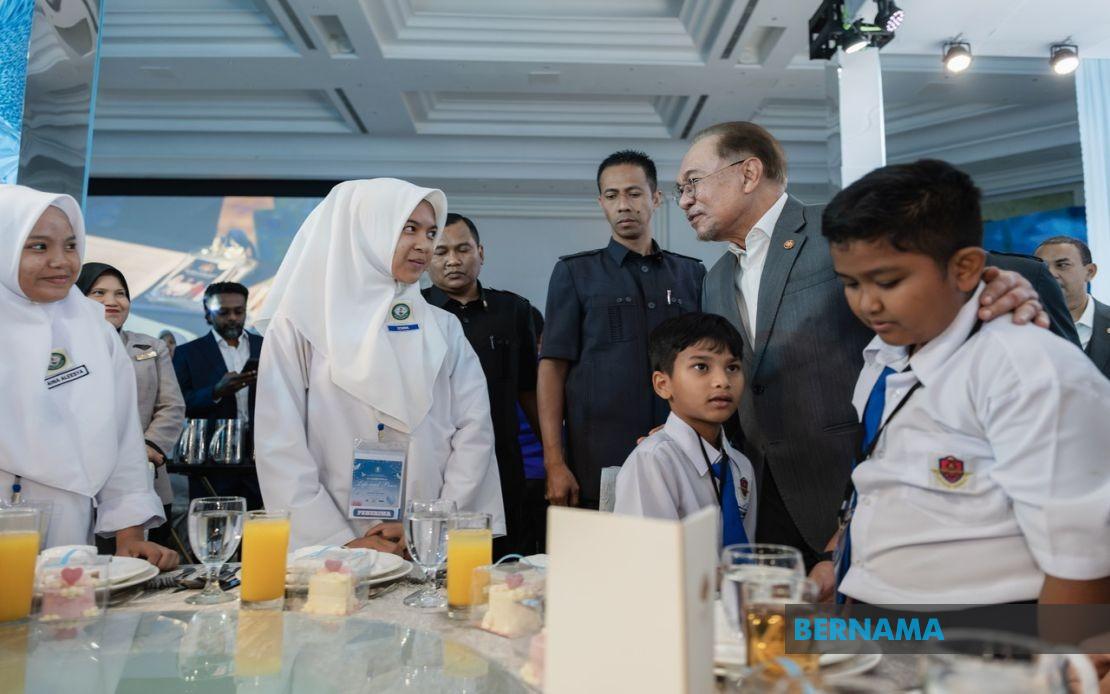
Prime Minister Datuk Seri Anwar Ibrahim has delivered a pointed message to Malaysia's education system and parents: intellectual achievement divorced from moral development creates a hollow victory. Speaking at the Celebration of Life and Peace event in Kuala Lumpur on July 15, Anwar emphasised that schools should cultivate wisdom and kindness in equal measure, not merely produce academically bright pupils who lack consideration for others.
Addressing 700 pupils from 47 schools across Kuala Lumpur and Putrajaya, the Prime Minister articulated a vision of education that transcends examination results and university placements. He questioned the fundamental purpose of schooling, suggesting that learners should emerge not just knowledgeable but morally grounded and respectful. This framing reflects growing concern among policymakers that Malaysia's education culture, often characterised by intense academic competition, may inadvertently neglect the development of empathy, integrity, and social responsibility in young people.
Anwar's remarks on bullying carry particular weight given the persistent problem of peer violence in Malaysian schools. The Prime Minister warned that aggressive behaviour towards classmates and deliberate exclusion jeopardise students' own futures, framing bullying not as a minor social irritant but as a serious threat to personal development and social cohesion. By casting bullying as incompatible with success and self-improvement, he attempted to reframe peer pressure around inclusive behaviour rather than aggressive dominance.
The event itself, organised by ERM Foundation and honouring founder Xin'er's birthday, provided the platform for this message. The attendance of Anwar's wife, Datuk Seri Dr Wan Azizah Wan Ismail, and his political secretary, Datuk Azman Abidin, underscored the government's commitment to youth welfare initiatives. The gathering brought together schoolchildren for celebration, material support, and—implicitly—moral instruction from the nation's highest office.
Xin'er's remarks during the event offered complementary perspective on childhood welfare and dignity. She highlighted the reality that many Malaysian children lack the security and joy of celebrations due to illness, poverty, or challenging circumstances. By creating an occasion to mark each child's birthday with peace and happiness, the foundation's initiative addresses not merely material deprivation but also emotional and psychological wellbeing. Xin'er's emphasis on children growing up without war or illness acknowledges both domestic and transnational threats to childhood safety, reflecting Southeast Asian anxieties about regional instability and health security.
The Prime Minister's direct appeal to the assembled children—framed as a request from "this grandpa"—employed accessible language and intergenerational framing to establish connection and moral authority. By asking for promises to study diligently, respect authority figures, and honour family bonds, Anwar articulated a traditional value framework centred on filial piety, educational effort, and institutional respect. This approach resonates with Malaysian cultural expectations while simultaneously addressing practical concerns about discipline and social order in schools.
Each pupil received RM500 in cash assistance, a material gesture reflecting government investment in youth welfare. Beyond the financial support, the event provided entertainment, performances, and communal celebration—acknowledgment that child development encompasses not merely cognitive and moral dimensions but also social participation and joy. For many children from modest backgrounds, such occasions represent rare access to the cultural and recreational experiences that wealthier peers take for granted.
The timing and scale of this initiative suggest that Malaysian leadership recognises education policy debates increasingly centre on holistic development rather than narrow academic metrics. Southeast Asian nations, including Malaysia, face growing scrutiny regarding mental health crises among students, rising anxiety disorders, and social fragmentation attributed partly to competitive educational cultures. Anwar's public statements position the government as responsive to these concerns, though the gap between symbolic commitment and systemic change remains substantial.
Implementing the Prime Minister's vision requires meaningful engagement with schools, teachers, and parents regarding curriculum, assessment methods, and institutional culture. Character education programmes exist in Malaysian schools, yet their effectiveness remains contested. Teachers report that examination pressures often override efforts to nurture critical thinking, creativity, or ethical reflection. Any serious attempt to prioritise kindness and social responsibility alongside academic excellence would necessitate structural reforms to assessment frameworks, teacher training, and school leadership development.
The initiative also reflects broader regional patterns, as Southeast Asian governments increasingly invest in youth engagement and welfare programmes. These initiatives serve multiple functions: addressing genuine social needs, building political legitimacy, and creating platforms for moral messaging. For Malaysia specifically, youth welfare and education quality remain central to national development narratives and competitive positioning within ASEAN economies.
Anwar's intervention touches on fundamental questions about education's purpose and society's values. Whether schools should prioritise economic competitiveness or character formation remains contested globally, but Malaysian context adds layers of complexity involving religious values, multicultural sensitivities, and postcolonial aspirations. The Prime Minister's emphasis on respect, family bonds, and community contribution aligns with traditional Malaysian values while avoiding explicitly religious language.
The success of such messaging ultimately depends on institutional follow-through and resource allocation. Celebrations and moral exhortations carry limited transformative potential without accompanying changes to teacher workload, curriculum design, school infrastructure, and examination systems. For Malaysian educators and parents observing the Prime Minister's call for balanced child development, the critical question remains whether government will provide the systemic support necessary to make kindness and character as measurable, valued, and rewarded as academic achievement currently is.

