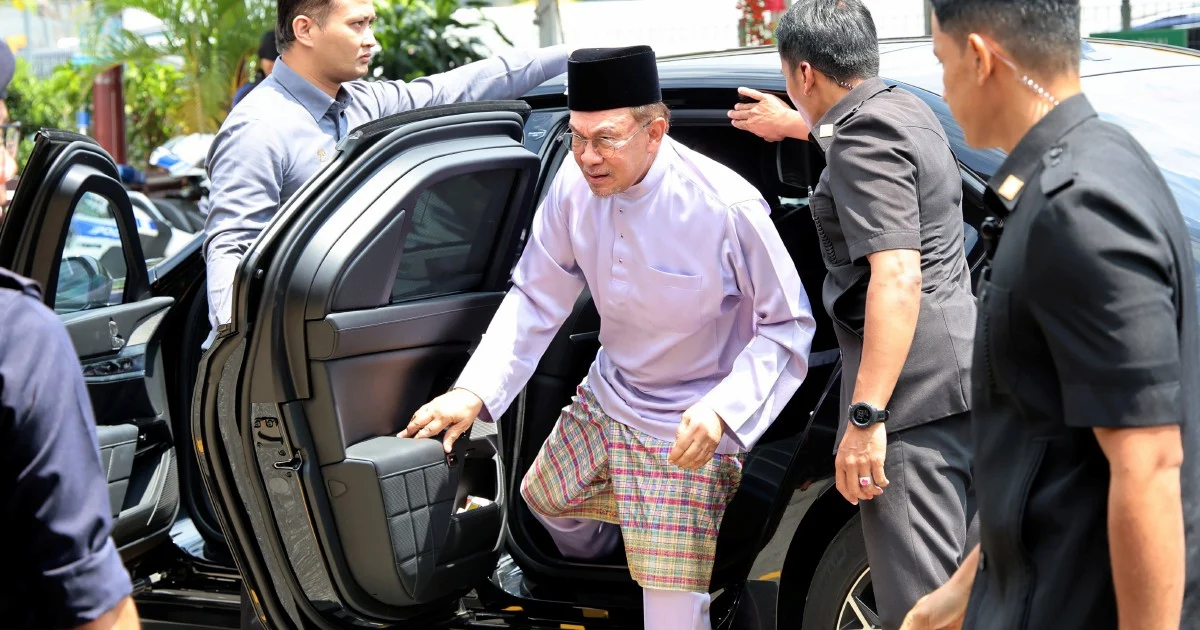
Prime Minister Datuk Seri Anwar Ibrahim has issued a direct appeal to political contestants in the forthcoming Johor election, urging them to adopt a campaign approach grounded in dignity, respect and moral integrity. Speaking at an event in Dengkil, the Prime Minister emphasised that political competition, while inherently competitive, need not descend into unseemly conduct or displays of arrogance that might undermine public confidence in the democratic process.
Anwar's intervention comes at a critical juncture as Johor prepares for state-level elections that will determine the direction of Malaysia's most industrialised state. His message reflects a broader concern within government circles about maintaining standards of political discourse and ensuring that campaign seasons do not become vehicles for divisive rhetoric or personal attacks that could fracture community cohesion. The reminder is particularly significant given Malaysia's recent political history, which has witnessed several campaigns marked by heated exchanges and allegations of unethical behaviour.
The Prime Minister's call for ethical campaigning extends beyond mere procedural niceties. His emphasis on upholding good values suggests a recognition that electoral competition carries broader societal implications. When politicians campaign with arrogance or disregard for established norms of conduct, public trust in institutions diminishes, and citizens may become increasingly cynical about the political system's capacity for fair competition and genuine service to communities.
For Malaysian voters in Johor and beyond, this appeal underscores an important principle: that electoral legitimacy rests not solely on numerical victory but on the manner in which that victory is pursued. A candidate or party that wins through aggressive tactics or arrogant assertions may claim electoral success, but such victories often come at the cost of damaged social relationships and weakened institutional credibility. Anwar's message thus carries an implicit challenge to contestants to consider whether short-term political gains are worth the longer-term costs to political culture.
The Johor state election holds particular significance for Malaysian politics given the state's economic importance and its status as a bellwether for broader electoral trends. As one of Malaysia's most populous states and a key economic contributor, how Johor campaigns are conducted may set precedents for future electoral contests across the country. The Prime Minister's intervention suggests that federal leadership takes seriously its responsibility to establish and reinforce standards of political behaviour that extend to state-level contests.
Anwar's timing in making these remarks deserves consideration. By articulating expectations before the campaign intensifies, the Prime Minister creates a framework against which subsequent campaign conduct can be measured. This approach allows voters to hold parties accountable against a clear standard articulated by a national leader, potentially shifting focus from personalised attacks to substantive policy discussions and community engagement.
The warning against arrogance carries particular weight in Malaysian political culture, where voters have demonstrated in recent elections that they value humility and service-oriented rhetoric from candidates. The successive electoral surprises of recent years—including unexpected results in the 2022 general election—suggest that voters punish what they perceive as overconfidence or disconnection from community concerns. Parties that campaign with the assumption that victory is assured, rather than recognising the need to earn voter trust, risk suffering electoral setbacks.
For parties contesting the Johor election, Anwar's remarks establish a baseline expectation that goes beyond legal compliance with election commission regulations. The Prime Minister is articulating a cultural standard that positions respectful, humble campaigning as not merely permissible but preferable and indeed expected of responsible political actors. This framing elevates the moral dimension of electoral competition beyond the merely transactional.
The broader context of Malaysian governance suggests that Anwar's emphasis on campaign integrity reflects his government's commitment to rebuilding public confidence in political institutions. Following years of political turbulence and governance challenges, the current administration has positioned itself as an agent of institutional renewal and ethical governance. By setting explicit expectations for electoral conduct, the Prime Minister seeks to demonstrate that this commitment extends to supporting fair, dignified competition even among parties that may oppose his government.
For regional observers, Malaysia's approach to managing political campaigns—through leadership appeals to ethical conduct rather than solely through regulatory mechanisms—offers an interesting case study in soft governance and norm-setting. The effectiveness of such appeals ultimately depends on whether political parties internalise the expectations and translate them into actual campaign behaviour that voters and independent observers can verify and acknowledge.
The Johor election will thus serve as a testing ground for whether Malaysian political actors can conduct competitive campaigns that maintain high standards of respect and integrity. The outcome will provide important signals about the state of Malaysian political culture and whether the national leadership's expectations align with actual political practice on the ground. For voters in Johor and across Malaysia, the Prime Minister's call represents an invitation to hold their political representatives accountable not merely for their policy positions but for the manner in which they campaign and engage with democratic processes.

