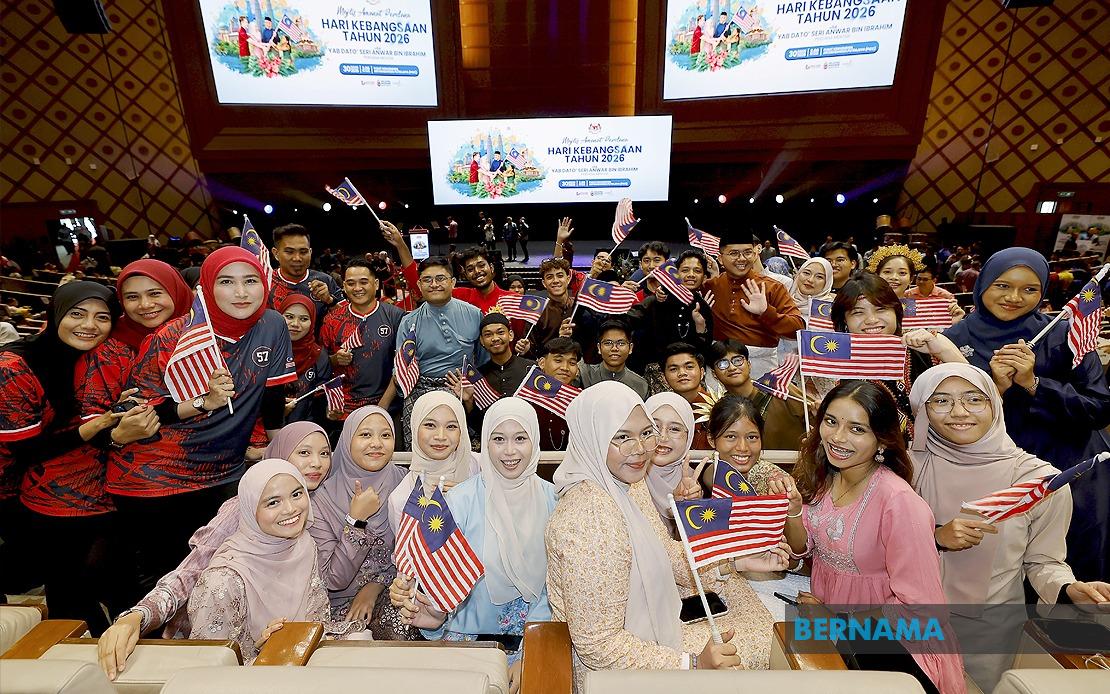
Prime Minister Datuk Seri Anwar Ibrahim has outlined six strategic initiatives designed to provide tangible assistance to multiple layers of Malaysian society, ranging from urban professionals to rural entrepreneurs. The announcement, made during his National Day address at the Putrajaya International Convention Centre, signals the government's intention to distribute economic support across income groups and demographic segments, reflecting a broad-based approach to addressing cost-of-living pressures and skills development.
At the centre of the package is a restoration of fuel subsidy entitlements that directly impacts the daily finances of vehicle owners. The Budi MADANI RON95 (BUDI95) programme will increase its basic allocation from 200 litres to 300 litres per month, addressing one of the most visible concerns affecting commuters and those dependent on personal transport for livelihood activities. Young professionals working in the private sector view this adjustment as meaningful relief. Mohd Aliff Rino, a 26-year-old company secretary, highlighted that the expanded allocation reduces anxiety around routine fuel purchases and acknowledges the genuine hardship faced by working-class Malaysians navigating inflation. The measure carries particular significance for those undertaking long-distance travel for employment, where fuel costs represent a substantial proportion of monthly expenditure.
Beyond traditional subsidies, the government is pivoting toward investment in digital literacy and technological capability. The AI for the People programme will provide free three-month subscriptions to artificial intelligence applications for 100,000 youths between 18 and 30 years old who complete prescribed training modules. This initiative reflects recognition that technological competence increasingly determines economic opportunity in the twenty-first century. Nur Liyana, a 24-year-old accounts assistant, stressed the practical utility of AI tools in accelerating professional tasks and enhancing productivity across sectors. For a generation entering the workforce amid rapid digital transformation, exposure to cutting-edge technology through subsidised access could reshape career trajectories and earning potential. The initiative also addresses skills gaps that persist across Southeast Asia, where AI adoption outpaces formal training availability.
Education infrastructure receives substantial boosts through the budget allocation announced. School maintenance budgets will increase by 50 per cent to RM1.5 billion in 2027, a commitment that addresses the deteriorating physical condition of educational facilities across the country. This expansion directly impacts learning environments for millions of students and reflects acknowledgment that quality infrastructure underpins educational outcomes. Coupled with improved facilities, this investment signals intent to standardise service quality across schools regardless of geographic location or socioeconomic profile of student populations.
Small business and informal economy support constitutes another pillar of the six-measure framework. The Geran Sejahtera MADANI grant programme allocates RM200 million specifically for hawkers, night market traders, and home-based entrepreneurs, predominantly women. This targeting recognises the crucial role that informal sector businesses play in household income generation and community economic resilience. Many traders operate with minimal capital buffers and face irregular cash flows, making targeted grants more appropriate than loan-based interventions. The measure acknowledges economic contributions from segments often overlooked in formal policy discussions.
Microfinance expansion represents a structural intervention designed to improve credit access for small enterprises. The government will increase microfinancing facilities by RM1 billion, raising total funding available in 2026 to RM6 billion. Enhanced microfinance capacity addresses a persistent challenge where small business operators struggle to access conventional banking credit due to insufficient collateral or formal business registration. By expanding microfinance availability, the government enables entrepreneurs to invest in inventory, equipment, and operational expansion without reliance on informal lending networks that often carry predatory interest rates. This measure particularly benefits the segment of small business owners aspiring to formalise and scale operations.
Tax compliance thresholds have been adjusted to reduce administrative burden on smaller enterprises. The e-Invoice exemption threshold will rise from RM1 million to RM3 million in annual revenue, allowing micro and small businesses to defer implementation of digital invoicing systems. This adjustment acknowledges capacity constraints within small firms where compliance costs may outweigh operational benefits. By extending exemption thresholds, the government reduces regulatory friction that might otherwise discourage business formalisation or divert limited resources from productive investment toward administrative overhead.
Diesel subsidy quotas have also been expanded, increasing the Budi Diesel allocation from 300 litres to 400 litres per month. This adjustment particularly benefits commercial operators, small hauliers, and agricultural producers whose operational viability depends on fuel cost management. Commercial vehicle operators face tighter profit margins than personal vehicle users, making fuel cost volatility especially consequential for business sustainability. Enhanced diesel quotas help stabilise operational expenses for transport-dependent livelihoods and agricultural production chains that feed consumer markets.
The cumulative effect of these six measures suggests a government strategy premised on distributed support rather than concentrated relief. By combining fuel subsidies, digital skills training, infrastructure investment, direct grants, microfinance expansion, and tax threshold adjustments, the administration addresses distinct pain points across economic sectors and demographic groups. This diversified approach contrasts with narrower interventions that might benefit select constituencies while leaving others unaddressed. For the M40 group specifically, fuel subsidy enhancements and microfinance expansion offer direct financial relief, while AI training opportunities signal investment in income mobility through skills development.
Youth engagement emerges as a particular policy emphasis, with the AI training programme explicitly targeting those aged 18 to 30. This cohort faces distinctive challenges including elevated unemployment rates, skills mismatches with evolving job market demands, and delayed economic independence. Subsidised access to artificial intelligence training alongside fuel subsidy expansion acknowledges both immediate cost-of-living pressures and longer-term capability building requirements. By investing in youth digital literacy while simultaneously addressing immediate financial hardship, the government attempts to balance short-term relief with human capital development.
Implementation quality will determine whether announced measures translate into meaningful impact for beneficiaries. Distribution mechanisms for the AI training subscriptions require clear communication about eligibility, application procedures, and module completion processes. Microfinance expansion necessitates institutional capacity to assess creditworthiness and manage loan portfolios effectively. School maintenance budget increases depend on transparent allocation formulae and project execution standards. The success of these initiatives will be assessed not merely by announcement but by tangible improvements in fuel expense management, skill acquisition, educational infrastructure quality, and business access to credit across targeted populations.

