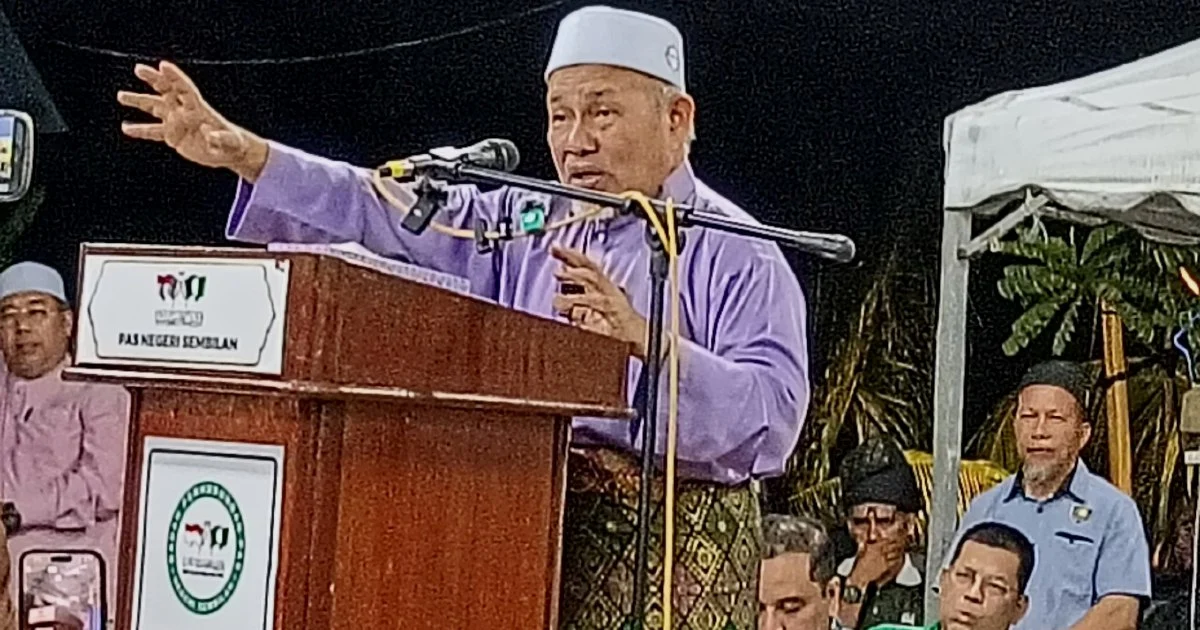
The debate over who truly holds sway within Perikatan Nasional intensified on Tuesday when PAS deputy president Datuk Seri Tuan Ibrahim Tuan Man rejected claims that the political coalition belongs exclusively to Bersatu. His remarks underscore the underlying tensions that periodically surface within Malaysia's second-largest political grouping, particularly as the bloc navigates its role both in federal politics and in the governments it controls across multiple states.
Tuan Ibrahim's intervention suggests that recent comments from a Bersatu figure, identified as Peja, had prompted the PAS leadership to clarify the foundational understanding upon which PN operates. The distinction is more than merely semantic—it speaks to fundamental questions about democratic governance within the coalition itself and how major strategic decisions are made. In Malaysian political coalitions, disagreements over hierarchical structure and decision-making authority have historically led to splits and realignments that reshape the electoral landscape.
Peikatan Nasional as currently constituted brings together PAS, Bersatu, and several other smaller parties across Peninsular Malaysia and East Malaysia. While Bersatu, as the party of Prime Minister Anwar Ibrahim's predecessor Muhyiddin Yassin, has wielded considerable influence within the grouping, the coalition has always been presented as a union of equals rather than a hierarchical structure dominated by a single party. This framing becomes particularly important when addressing their considerable number of supporters and coalition partners who may have their own expectations about representation and policy influence.
The ownership question carries practical implications for how PN operates both inside and outside government. If the coalition were effectively controlled by a single party, it would fundamentally alter the balance of power within PN-held state governments and affect how the bloc positions itself during coalition negotiations at the federal level. In Terengganu, Kedah, and other states where PN holds power, the internal power dynamics between PAS and its partners have already created friction over chief minister posts and resource allocation.
PAS has emerged as the strongest electoral performer within PN in recent years, particularly following strong performances in the 2022 general election and subsequent state polls. This electoral strength has naturally enhanced the party's bargaining position within the coalition, though party leadership has been careful to frame this not as dominance but as a reflection of voter confidence in PAS's vision and governance track record. The party's institutional strength—built over decades—means that PAS perspectives carry weight in coalition deliberations, but this differs substantially from outright ownership.
Bersatu's role within PN has evolved considerably since the coalition's formation. As a relative newcomer to Malaysian politics, Bersatu initially brought considerable prestige through Muhyiddin's premiership and his network of political associates. However, the party's electoral performance has been comparatively modest, winning only a handful of parliamentary seats in recent national elections. This gap between historical influence and current electoral clout creates dynamics that periodically require clarification and realignment of expectations among coalition partners.
The public airing of such disputes, while not uncommon in Malaysian politics, does carry risks for PN's cohesion during a period when the coalition faces significant challenges. The bloc's opposition status at the federal level requires unified messaging and coordinated strategy, particularly as it seeks to position itself as a credible alternative to the current Pakatan Harapan government. Internal bickering over ownership and control can undermine these efforts and provide ammunition to political rivals seeking to exploit fissures within the opposition.
Regionally, PN's trajectory matters beyond just national politics. The coalition controls significant state administrations in important electoral battlegrounds, and how successfully it manages its internal relationships directly affects governance quality and political stability in those territories. Disputes between coalition partners over resource distribution and policy direction have already created governance challenges in several states, and further deterioration could affect service delivery for constituents.
Tuan Ibrahim's intervention also reflects PAS's increasing confidence in its position within Malaysian politics. The party's grassroots organization and ideological consistency have earned it significant support, and its leaders are less inclined to accept secondary roles within coalitions compared to previous years. This assertiveness, while potentially constructive if channeled toward policy coherence, requires careful management to prevent it from becoming divisive within PN's ranks.
Moving forward, the coalition will need to establish clearer frameworks for decision-making and resource-sharing that genuinely reflect its stated character as a partnership of equals. Whether PN can institutionalize such arrangements—rather than relying on political personalities and informal understandings—will determine whether the grouping maintains sufficient cohesion to present an effective political force. The party that can articulate the most compelling governance vision while respecting the legitimate interests of all coalition members may ultimately determine PN's electoral fortunes and its potential contribution to Malaysia's political future.