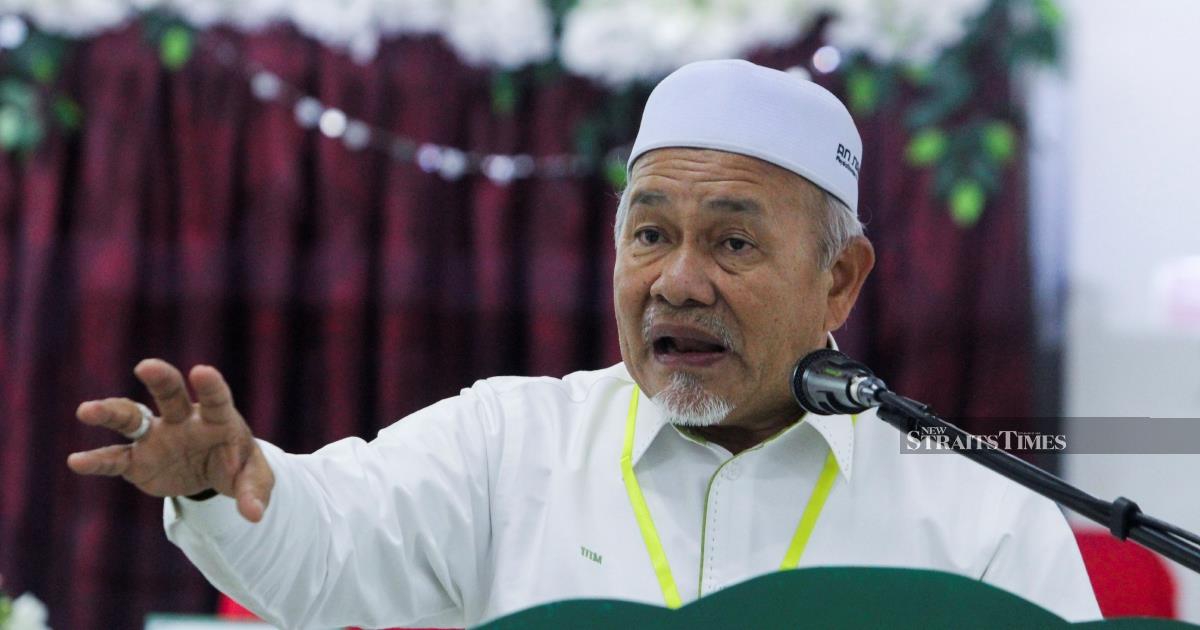
The political coalitions of Perikatan Nasional and Barisan Nasional have maintained effective coordination throughout their ongoing campaign in Negri Sembilan, according to statements from senior party leadership this week. Pas deputy president Datuk Seri Tuan Ibrahim Tuan Man characterised the working relationship between the two coalitions as functioning without significant friction, particularly at the grassroots level where ground-level operations ultimately determine electoral success.
The observation carries significance for understanding the current state of Malaysia's political landscape, where the collaboration between PN and BN represents a pragmatic alignment of competing power structures. Rather than operating in outright opposition, the two coalitions have established mechanisms for cooperation that allow their respective members to pursue electoral objectives without the mutual obstruction that could otherwise characterise their relationship. This arrangement emerged from the complex political negotiations that have defined Malaysian governance since the 2022 general election.
Grassroots coordination between party activists at the village and neighbourhood level typically proves more challenging to manage than top-level political agreements, given that local party members often retain stronger partisan loyalties and may view coalition partners with suspicion. The fact that such coordination is proceeding positively suggests that both coalitions have effectively communicated their shared objectives to local party machinery and that incentive structures exist to encourage cooperation rather than sabotage. In Malaysian electoral contexts, grassroots enthusiasm and door-to-door campaign effectiveness frequently determine outcomes in closely contested constituencies.
Negri Sembilan has traditionally represented a significant political battleground in national elections, with demographic diversity and relatively competitive seat distributions across different political groupings. The state's position in the central region of Peninsular Malaysia also gives it symbolic importance within broader national political strategies. Successful campaign coordination in Negri Sembilan could potentially set a template for managing PN-BN interactions in other states, particularly those where both coalitions maintain electoral presence.
The positive characterisation from Tuan Ibrahim suggests that potential friction points that emerged during earlier phases of PN-BN cooperation have been either resolved or successfully managed through established channels. Such friction had previously manifested in debates over seat allocation, campaign messaging consistency, and the division of spoils in areas where both coalitions claimed legitimate territorial influence. The maintenance of smooth machinery operation indicates that these mechanisms are proving functional in the current campaign context.
From a regional perspective, Malaysia's coalition politics carry implications beyond the nation's borders, as the stability and effectiveness of governing arrangements influence investor confidence and Southeast Asian regional politics more broadly. Coalition stability that translates into smooth campaign operations suggests institutional capacity to manage competing interests, a factor that observers of Malaysian governance typically view positively. Conversely, coalition breakdown would potentially signal renewed political instability.
The campaign machinery referenced by Tuan Ibrahim encompasses a complex network of party structures, volunteer organisations, media coordination units, and administrative bodies tasked with managing everything from candidate selection and voter contact to event organisation and public messaging. For such machinery to operate smoothly across two distinct coalitions requires continuous communication, clear demarcation of responsibilities, and mutual respect for established agreements. Breakdowns in any of these components typically produce visible campaign inefficiencies that undermine electoral performance.
The grassroots emphasis in Tuan Ibrahim's statement reflects a well-established principle in Malaysian electoral politics: that campaigns are ultimately won or lost in villages and urban neighbourhoods rather than in media coverage or high-level speeches. Voters typically respond to personal engagement from party representatives they know, to community initiatives that address local concerns, and to demonstrations of constituent service. Campaign machinery that functions smoothly at this level accumulates political capital that translates into votes during electoral contests.
Negri Sembilan's electoral significance extends beyond its nine state legislative assembly seats, as the state frequently serves as a testing ground for campaign strategies and coalition arrangements before their application across other regions. Political scientists studying Malaysian electoral dynamics often examine Negri Sembilan outcomes as indicators of broader coalition health and inter-party relationship quality. Successful coordination in this state therefore carries informational value for assessing the durability of the PN-BN arrangement.
The timing of such statements during an active campaign typically serves multiple purposes: reassuring coalition supporters that their preferred parties can work together effectively, signalling to undecided voters that political stability will characterise governance regardless of electoral outcomes, and projecting internal confidence within party hierarchies. Tuan Ibrahim's characterisation thus functions not merely as descriptive commentary but as a deliberate political communication designed to influence multiple audiences simultaneously.
Looking forward, the sustainability of this machinery cooperation will likely depend on several factors including the final allocation of electoral victories, the honoring of power-sharing agreements at state and federal levels, and the absence of major policy divergences between coalition partners that could strain relationships. Political scientists observing Malaysian governance will closely monitor whether the smoothness reported during the campaign translates into stable post-election cooperation or whether underlying tensions re-emerge once electoral pressure subsides.

