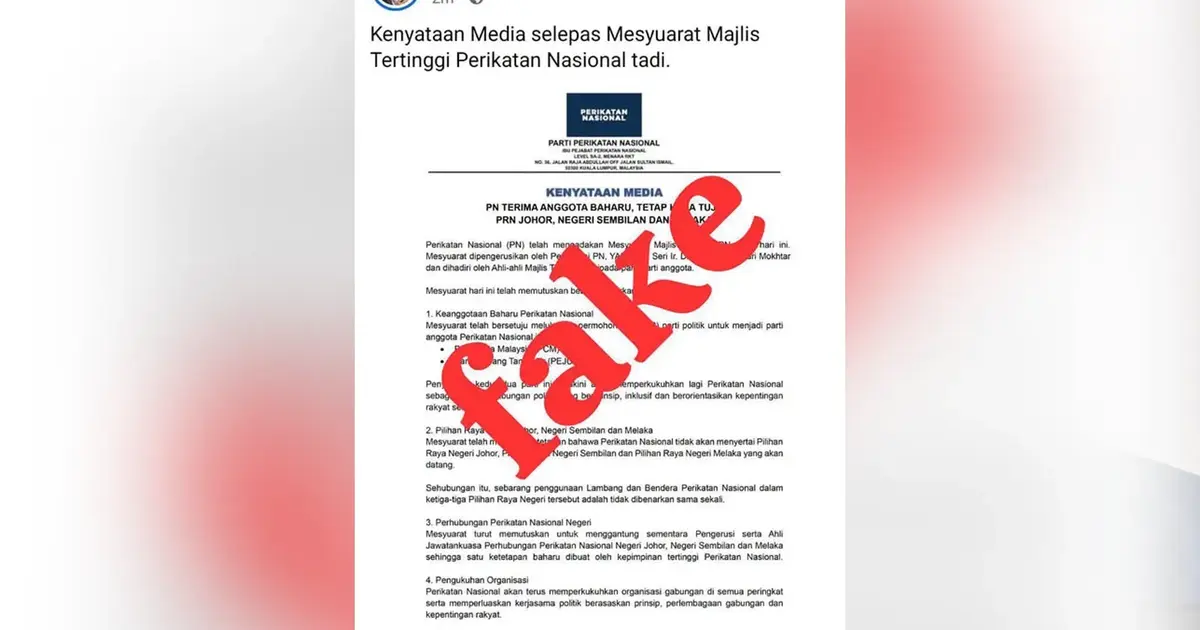
Perikatan Nasional moved swiftly to counter claims that the coalition intends to absent itself from three upcoming state elections, issuing a categorical denial that the statement circulating in political circles is both false and inaccurate. The response underscores the heightened sensitivity surrounding electoral strategy and the need for major political coalitions to publicly clarify their intentions as the Malaysian electoral calendar unfolds.
The emergence of such claims, whether originating from opposition sources, political observers, or social media speculation, reflects the intense scrutiny that applies to any coalition's election participation decisions. In Malaysia's multi-party system, where electoral success depends on strategic positioning and resource allocation, questions about which contests a coalition will contest have real implications for supporters, rival parties, and voters seeking to understand the political landscape.
Perikatan Nasional's swift public rebuttal suggests the coalition views the statement as potentially damaging to its credibility and organisational unity. For a coalition that has undergone significant recalibration in recent years, maintaining a coherent public message about electoral commitment is crucial for reassuring component parties, members, and supporters that the leadership remains committed to contesting available seats across the country. Any perception that the coalition might selectively withdraw from contests could undermine morale and raise questions about strategic confidence.
The specific claim about three state elections warrants examination within the context of Malaysia's staggered electoral cycle. While certain states have fixed election dates, others vote at intervals determined by dissolution of the state assembly. This unpredictability means that political coalitions must maintain flexibility in their planning while simultaneously projecting commitment to electoral competition. PN's denial reflects the balancing act required of any coalition seeking to maintain both strategic agility and public confidence.
Electoral mathematics in Malaysia's two-tier system—federal and state—create genuine complexities for coalition planning. Resources, candidates, organisational capacity, and the relative strength of component parties all influence decisions about where to concentrate effort. However, publicly signalling withdrawal from any state contest invites accusations of weakness, defeatism, or internal division. PN's response demonstrates the political cost of allowing such narratives to develop unchallenged, regardless of their factual basis.
The timing of such claims and denials often carries political significance. Whether the statement originated as speculation, opposition messaging, or internal party discussion that leaked publicly, PN's need to formally reject it indicates that the narrative had gained sufficient circulation to warrant senior leadership attention. In the digital age, unverified claims can spread rapidly through social media, traditional news outlets, and political networks, making proactive denial an essential communications tool.
For Malaysian voters and political observers, such controversies highlight the importance of distinguishing between official coalition statements and speculation or allegations circulating in political networks. PN's categorical rejection provides voters interested in the coalition's electoral plans with an authoritative position, though independent verification of claims in either direction remains important for informed political assessment.
The broader context involves PN's evolution as a coalition. Formed in 2020 and reconstituted in subsequent years following electoral competition and federal-state realignments, the coalition has worked to project stability and cohesion. Electoral decisions—particularly whether to contest in states where historical performance or factional strength might be weaker—inevitably generate internal discussion and external scrutiny. Managing both without allowing damaging narratives to calcify represents a significant communications challenge.
Regionally, Malaysia's coalition dynamics reflect patterns seen across Southeast Asia, where multi-party systems require complex negotiations about electoral participation and resource allocation. For observers of Malaysian politics in countries with similar democratic systems, how PN manages its electoral strategy and public communication offers insights into coalition maintenance and competitive positioning in diverse political environments.
Moving forward, the substantive question remains: which states will PN contest and with what level of resource commitment? The coalition's denial addresses the false claim but does not necessarily clarify the strategic thinking behind electoral decisions. Observers may expect further statements detailing PN's actual electoral plans for upcoming contests, providing the clarity that such denials, while necessary, cannot fully supply on their own.
The incident also underscores how electoral politics in Malaysia operates within a media and communications ecosystem where claims, denials, and clarifications shape public understanding of coalition intentions as much as actual decisions do. For PN and other major political actors, maintaining message discipline, responding promptly to false claims, and transparently communicating strategic decisions represents an ongoing requirement of contemporary electoral competition.