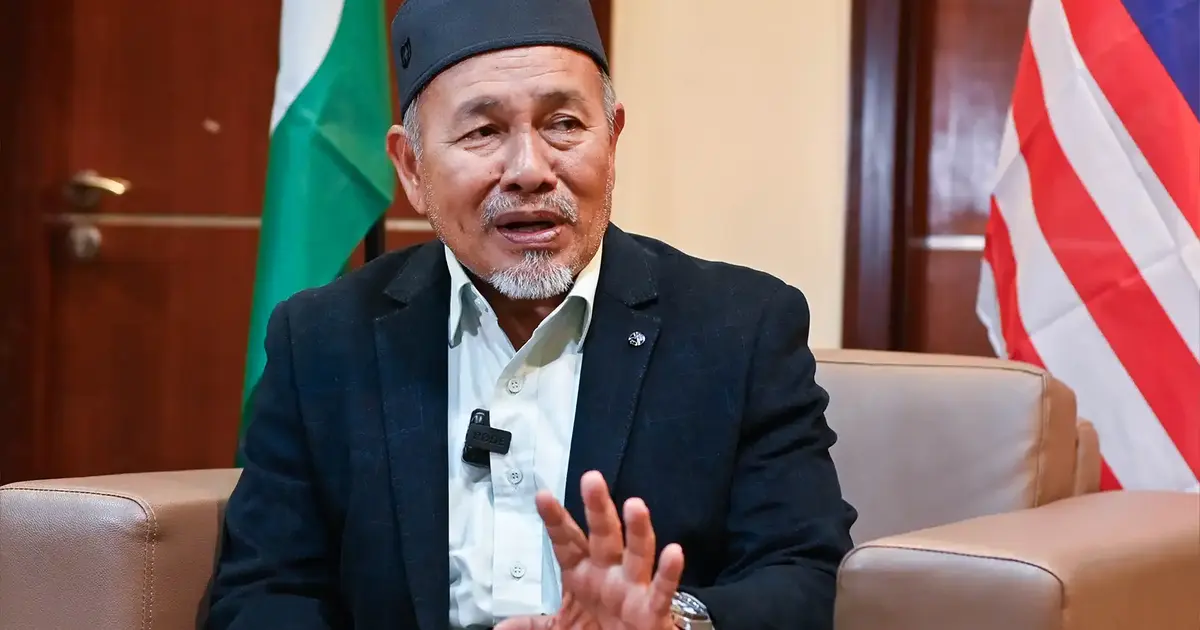
The Perikatan Nasional coalition has signalled confidence in its ability to work through potential electoral friction with BN ahead of the Melaka state elections, even as formal seat negotiations remain incomplete. PAS deputy president Tuan Ibrahim Tuan Man, speaking to reporters, downplayed concerns about competing claims for state constituencies, suggesting that any disagreements between the two coalitions would be settled through constructive dialogue rather than turning into major obstacles.
Tuan Ibrahim's measured tone reflects a broader political pragmatism within PN's leadership as both coalitions prepare for what is expected to be a keenly contested battle in Melaka. The absence of finalised seat-sharing arrangements typically poses significant risks during campaign periods, particularly in state-level contests where the distribution of winnable constituencies can make the difference between forming government and sitting in opposition. Yet the PAS strategist appeared unbothered by this uncertainty, implying that his coalition possessed sufficient confidence in its existing relationships with BN partners to navigate potential complications.
The backdrop to these remarks involves the complex triangular relationship between PN, BN, and other competing political forces seeking to influence governance in Melaka. As one of Malaysia's most strategically important states, Melaka represents far more than a provincial prize—it serves as a bellwether for broader shifts in national coalition-building and signals the health of partnerships that have been tested repeatedly since the 2022 general election. The state's electoral outcome could have ramifications for how both groupings calibrate cooperation strategies elsewhere across the country.
PN's relaxed public posture masks the inherent tensions that emerge whenever two major coalitions must divide a finite number of seats. The stakes are particularly high because Melaka's modest 36 state assembly seats mean that even marginal gains or losses in any one constituency hold outsized weight in determining which coalition secures the five-seat majority needed to control the state government. Historical precedent shows that negotiation breakdowns over seat allocation have derailed coalition agreements at state level, occasionally creating openings for rival groups or independent candidates.
Tuan Ibrahim's assertion that teething problems could be resolved amicably suggests PN believes it possesses sufficient leverage—or maintains sufficient goodwill—with BN to move past contentious issues. This confidence may stem from lessons learned during previous electoral cycles when premature public disputes over seat allocation proved damaging to both coalitions' electoral prospects. Malaysian voters have shown increasing sophistication in punishing coalitions that appear fractious or unable to demonstrate unified leadership, making behind-the-scenes accommodation preferable to open conflict.
The PAS deputy president's remarks also reflect institutional learning within PN itself. The coalition, which has undergone significant structural changes and party repositioning since its formation, has developed mechanisms for internal dispute resolution that, if functioning effectively, theoretically reduce the likelihood that disagreements with external partners like BN would spiral beyond management. Whether these mechanisms prove equal to the task during the pressurised final stages of campaign preparation remains to be tested.
For BN, which remains the larger and institutionally more established coalition despite electoral losses in 2022, seat negotiations with PN carry different implications. BN must balance its historical dominance in certain constituencies against the political reality that PN's core components—particularly PAS—have demonstrated significant mobilising capacity in heartland areas. The calculus differs dramatically from a decade ago, when BN could assume automatic victory in most contests; contemporary Malaysian electoral dynamics have shifted decisively toward more competitive dynamics.
The significance of this optimistic framing should not be underestimated. Public confidence-building from senior coalition figures serves multiple audiences simultaneously: it reassures wavering supporters within member parties that their leaders maintain control over critical decisions; it signals to voters that the coalition presents a unified front capable of governing; and it potentially deflates opposition narratives suggesting that PN and BN are fundamentally incompatible partners. Tuan Ibrahim's composed approach may therefore represent strategic communication as much as genuine assessment.
Looking ahead, the period between now and formal seat allocation announcements will test whether PN's optimism proves justified. Historical precedent suggests that seat-sharing negotiations inevitably produce winners and losers within each coalition, and these internal sensitivities can become public flashpoints if mismanaged. The window for diplomatic resolution of contested seats is finite, and as the election date approaches, opportunities for quiet compromise tend to narrow while pressure for clarity intensifies.
The broader context for Melaka's election extends beyond state-level considerations. Malaysia's national political landscape has settled into a pattern where no single coalition commands overwhelming dominance, meaning that state-level results acquire national significance. Results from Melaka could influence BN and PN's confidence in pursuing similar cooperative arrangements elsewhere, or conversely, could catalyse recalculations about coalition viability. Analysts and political observers will therefore scrutinise not merely the election outcome but equally the quality of pre-election cooperation and the ease or difficulty with which competing interests were harmonised.
Tuan Ibrahim's confidence, measured though it may be, ultimately rests on his coalition's belief that shared interests in preventing opposition parties from capturing Melaka outweigh the legitimate differences that arise over constituency allocation. Whether this supposition holds throughout the campaign period will substantially determine whether PN's optimism appears prescient or premature.

