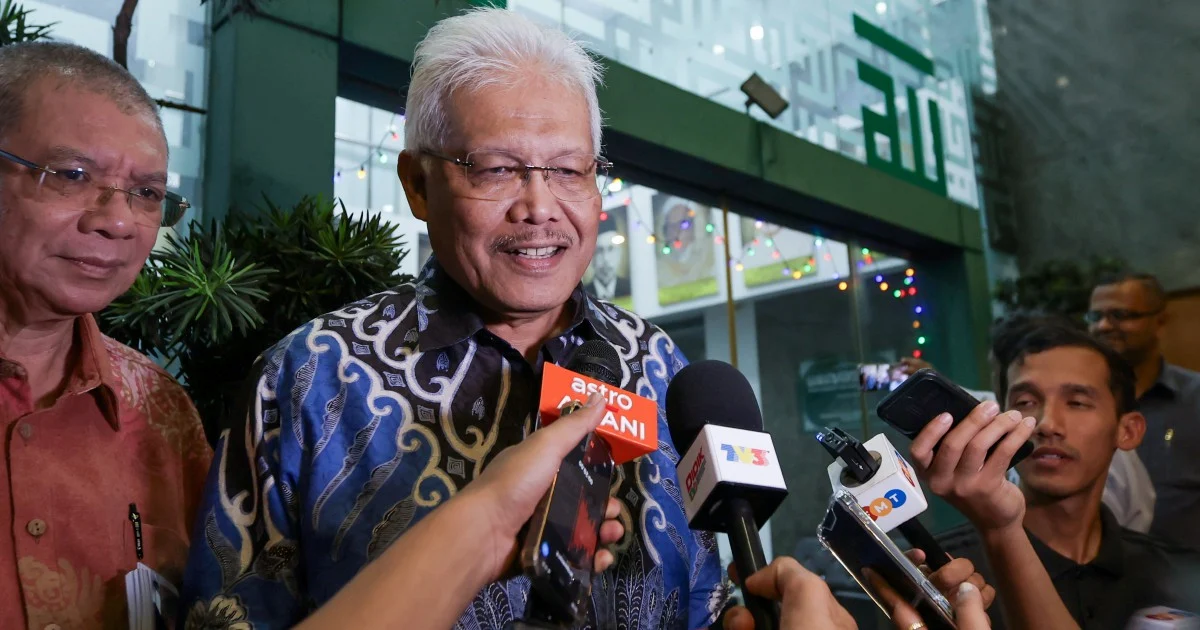
Perikatan Nasional's parliamentary machinery has formally registered Datuk Seri Hamzah Zainudin's return to the opposition leadership position through an official notification filed with the Dewan Rakyat Speaker's office. Chief whip Datuk Seri Takiyuddin Hassan initiated the procedural step, underscoring the coalition's consolidation following a period of political realignment on Parliament's opposition benches.
The notification represents more than mere administrative compliance. In Malaysia's parliamentary system, the designation of an opposition leader carries constitutional significance, triggering entitlements to allocated questioning time, priority seating arrangements, and formal recognition as the spokesperson for the non-government bloc. The filing confirms that Perikatan Nasional has resolved its internal arrangements regarding parliamentary representation and leadership hierarchy, a matter of some consequence given the fluid nature of Malaysian coalition politics over recent years.
Hamzah's trajectory through Malaysian politics has been notably complex. His appointment as opposition leader signals that Perikatan Nasional, the Malay-Muslim-centric coalition encompassing PAS and Bersatu alongside smaller partners, views him as the appropriate figurehead for articulating the coalition's parliamentary agenda and criticism of the incumbent government. The decision reflects calculations about parliamentary dynamics, media visibility, and factional considerations within the coalition's own structures.
The submission to the Speaker's office completes a formal requirement that legitimises Hamzah's position within Parliament's procedural framework. Without such notification, the opposition leader designation remains unofficial, potentially complicating the individual's ability to exercise parliamentary privileges typically reserved for that role. Takiyuddin's dispatch of the documentation suggests Perikatan Nasional leadership has achieved consensus—or at minimum, sufficient alignment—to proceed with this particular leadership configuration.
For Malaysian observers tracking coalition stability, the notification carries implications extending beyond symbolism. Opposition leadership positions in Westminster-derived parliaments often determine who occupies the most prominent non-governmental voice in legislative debates, who leads questioning of government ministers, and whose views receive amplified media attention. The formalisation of Hamzah's status therefore affects not just his personal standing but Perikatan Nasional's broader parliamentary influence during a period when the government coalition's own cohesion has faced periodic testing.
The timing of the notification warrants consideration against the backdrop of Malaysia's recent political developments. Perikatan Nasional has sought to position itself as a substantive alternative government formation, and the codification of its opposition leadership through proper parliamentary channels reinforces that ambition. The coalition controls a significant bloc of parliamentary seats, particularly following its strong performance in the 2022 elections, making the designation of a coherent leadership structure a matter of practical consequence for parliamentary proceedings.
Takiyuddin's role as chief whip places him at the intersection of parliamentary discipline and procedural compliance. His submission of the notification indicates that the parliamentary secretariat has been properly apprised of Perikatan Nasional's internal determination regarding opposition leadership. This formality, while procedural on the surface, ensures that the Dewan Rakyat's administrative apparatus correctly records the opposition's structural configuration and leadership hierarchy.
The reappointment of Hamzah underscores the political consensus within Perikatan Nasional regarding parliamentary strategy and public presentation. Opposition leaders in Malaysia's system bear responsibility for coordinating responses to government initiatives, managing media relations on behalf of their blocs, and providing coherent counter-narratives to government policy pronouncements. The coalition's decision to proceed with Hamzah in this capacity suggests confidence in his ability to execute these functions amid Malaysia's increasingly complex political landscape.
Regional observers recognise that Malaysian parliamentary procedures, whilst inherited from Westminster traditions, operate within a distinctly local political ecosystem. The opposition leadership position carries less formal power than in some comparable systems but assumes outsized importance in Malaysia's media and political discourse. The notification therefore represents Perikatan Nasional's deliberate staking of a claim to prominence in parliamentary opposition narratives and legislative proceedings as the government navigates its term.
The submission also reflects the institutional processes through which Malaysia's political parties manage their public positioning and parliamentary function. Party machinery, working through designated functionaries like chief whips, executes the procedural choreography that translates internal political decisions into formal parliamentary recognition. Takiyuddin's filing of the notification exemplifies this largely invisible but essential apparatus of Malaysian parliamentary governance, ensuring that political choices translate into institutional reality and procedural legitimacy.
%22%2F%3E%3C%2Fpattern%3E%3C%2Fdefs%3E%3Crect%20width%3D%22100%25%22%20height%3D%22100%25%22%20fill%3D%22url(%23ph46pesg)%22%2F%3E%3Crect%20width%3D%22100%25%22%20height%3D%22100%25%22%20fill%3D%22url(%23ph46pesp)%22%2F%3E%3Ctext%20x%3D%2250%25%22%20y%3D%2250%25%22%20text-anchor%3D%22middle%22%20dominant-baseline%3D%22central%22%20fill%3D%22rgba(255%2C255%2C255%2C0.95)%22%20font-family%3D%22Georgia%2C%20'Times%20New%20Roman'%2C%20serif%22%20font-weight%3D%22700%22%20font-size%3D%22226%22%20letter-spacing%3D%22-0.02em%22%3EPenang%3C%2Ftext%3E%3C%2Fsvg%3E)
%22%2F%3E%3C%2Fpattern%3E%3C%2Fdefs%3E%3Crect%20width%3D%22100%25%22%20height%3D%22100%25%22%20fill%3D%22url(%23ph3a1shg)%22%2F%3E%3Crect%20width%3D%22100%25%22%20height%3D%22100%25%22%20fill%3D%22url(%23ph3a1shp)%22%2F%3E%3Ctext%20x%3D%2250%25%22%20y%3D%2250%25%22%20text-anchor%3D%22middle%22%20dominant-baseline%3D%22central%22%20fill%3D%22rgba(255%2C255%2C255%2C0.95)%22%20font-family%3D%22Georgia%2C%20'Times%20New%20Roman'%2C%20serif%22%20font-weight%3D%22700%22%20font-size%3D%22272%22%20letter-spacing%3D%22-0.02em%22%3EFahmi%3C%2Ftext%3E%3C%2Fsvg%3E)