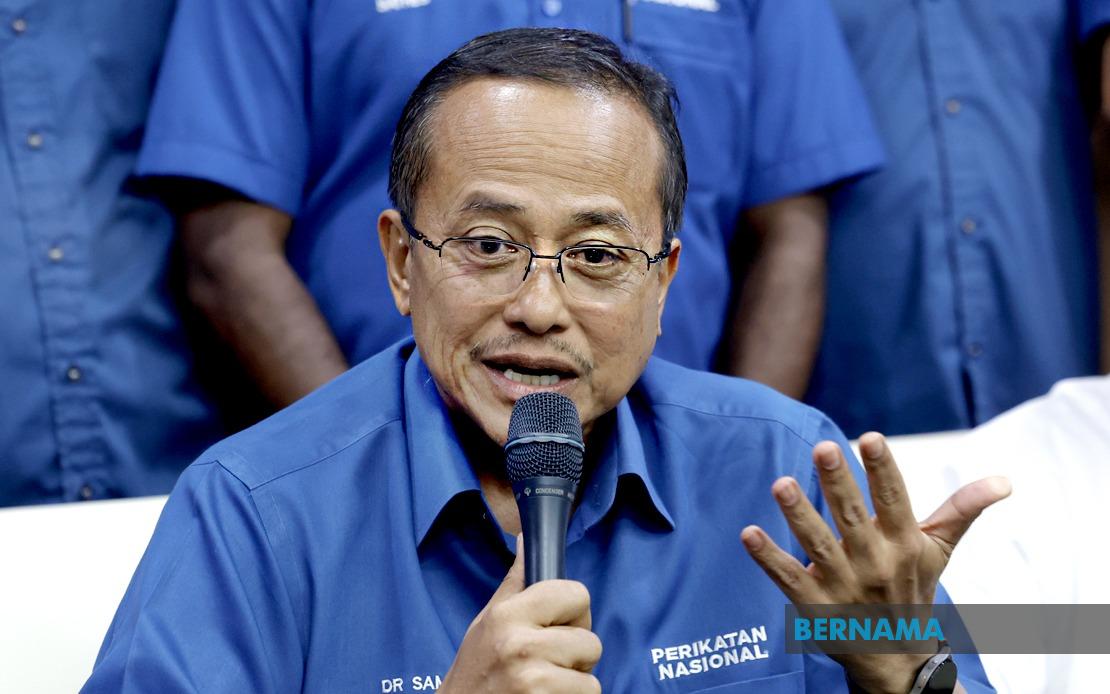
Perikatan Nasional has signalled its willingness to pursue coalition negotiations with Barisan Nasional ahead of the forthcoming Melaka state election, according to PN chairman Datuk Seri Dr Ahmad Samsuri Mokhtar, who made the announcement during the 23rd Perak PAS Convention in Taiping on August 9. The overture represents a potential shift in regional political dynamics, particularly as neither coalition has dominated state politics in recent years and the prospect of a united front could reshape the electoral landscape significantly.
While Ahmad Samsuri emphasised that formal talks between PN and BN have not yet commenced, he indicated that substantial opportunities remain for productive dialogue given the Melaka State Legislative Assembly has not yet been dissolved. The timing of any prospective negotiations would be crucial, as the window for coalition-building would narrow considerably once the formal dissolution process begins, transforming the political environment into a campaign footing where flexibility and compromise become considerably more difficult to execute. This underscores why PN leadership views the pre-dissolution period as the optimal moment for meaningful discussions.
Addressing delegates at the convention, Ahmad Samsuri presented a striking analytical assessment, suggesting that a partnership between PN and BN would carry approximately 75 per cent probability of successfully forming the next Melaka state government. This statistical projection, if accurate, would represent a commanding advantage over contesting separately and reflects the mathematical reality that combined parliamentary representation from both coalitions could effectively guarantee administrative control. For Malaysian political observers, such confidence from a coalition chairman typically signals extensive behind-the-scenes calculations regarding seat distributions and voting patterns.
However, Ahmad Samsuri tempered his optimism with a candid acknowledgment of the substantial obstacles facing any coalition arrangement. He characterised the path toward government formation as neither straightforward nor simple, invoking the metaphor of a challenging journey devoid of comfortable rest stops. This language suggests awareness that bridging the ideological and strategic differences between PN and BN would demand considerable political capital, mutual concessions on candidate selection, and agreement on policy priorities that might not naturally align given their distinct constituent bases and historical competition.
The PN chairman's remarks carried implicit recognition that achieving unity would require exceptional levels of tolerance and patience from party members and grassroots supporters who have grown accustomed to viewing the opposing coalition as adversarial. Trust-building between parties that have frequently deployed sharp rhetoric against one another represents perhaps the most intangible but critical requirement for successful coalition operations. The success or failure of such arrangements ultimately depends on whether party structures can suppress internal resistance to cross-coalition partnerships that might seem unnatural to ordinary members.
For Melaka specifically, the electoral context adds layers of complexity to any potential bargaining. The state has experienced considerable political volatility in recent years, with government transitions occurring more frequently than in other Malaysian states, suggesting voters are unpredictable and electoral outcomes remain genuinely competitive. Neither PN nor BN has consolidated stable control, meaning that seat projections, however carefully calculated, contain genuine uncertainty. The 75 per cent success estimate, while suggesting strong prospects, implicitly acknowledges a 25 per cent possibility of failure, which could materialise through unexpected voter behaviour or tactical missteps during campaign phases.
Ahmad Samsuri's framing of a potential coalition as a transformative development reflects PN's current status as an opposition force in Melaka seeking a pathway to executive power. From an opposition position, the party structure lacks resources, patronage capacity, and administrative machinery that governing coalitions command. The transition from opposition to government through coalition building would fundamentally alter PN's operational capabilities and member incentives, which partly explains the appeal despite requiring uncomfortable compromises with former rivals. This dynamic has historically proven powerful enough to overcome significant obstacles in Malaysian coalition politics.
The broader Southeast Asian context adds another dimension to these negotiations. Coalition governments have become increasingly common throughout the region as parties recognise that parliamentary fragmentation often prevents single-coalition dominance. Malaysia's constitutional framework, which distributes executive authority at both federal and state levels, has historically encouraged such partnerships, particularly when no single coalition commands insurmountable advantages. The Melaka scenario fits into established regional patterns where pragmatic political consolidation frequently supersedes ideological consistency.
From a governance perspective, PN and BN partnerships would represent intriguing policy combinations given their different emphases. BN's traditional focus on urban development, business-friendly policies, and federal coordination contrasts with PN's emphasis on Islamic governance principles and rural community development. A coalition government would need to synthesise these approaches, potentially creating hybrid policy frameworks that neither coalition would develop independently. Such synthesis could benefit Melaka if executed constructively, though integration challenges might equally generate friction during implementation.
The dissolution timeline remains strategically significant, as Ahmad Samsuri indicated. Once dissolution occurs, the political calendar compresses dramatically, leaving limited negotiation windows. Constitutional requirements typically mandate that elections occur within sixty days of dissolution, meaning post-dissolution negotiations become hasty affairs conducted under intense public scrutiny. This reinforces why PN leadership emphasises the current period as optimal for foundational discussions regarding seat allocations, candidate agreements, and campaign coordination frameworks.
Looking forward, the prospects for PN-BN coordination in Melaka will likely influence similar calculations in other states and at the federal level. Should negotiations succeed and produce election victory, the model would become available for application elsewhere, potentially reshaping Malaysia's political architecture. Conversely, failure to reach accommodation would reinforce separate competition and possibly harden positions for future interactions. The Melaka situation thus carries implications far transcending the state's borders, establishing precedents that other political actors will study intently.
The coming weeks will prove decisive for determining whether PN and BN can progress from expressions of openness toward substantive negotiations. Ahmad Samsuri's public signalling establishes PN's negotiating posture and removes formal obstacles to discussion, effectively shifting responsibility toward BN to reciprocate or decline. The response from BN leadership will indicate whether receptivity extends beyond PN or represents cautious political positioning designed to forestall separate competition without genuine commitment to coalition formation. Malaysian political observers should monitor official statements from both coalitions' senior figures closely, as such announcements frequently precede concrete bargaining.

