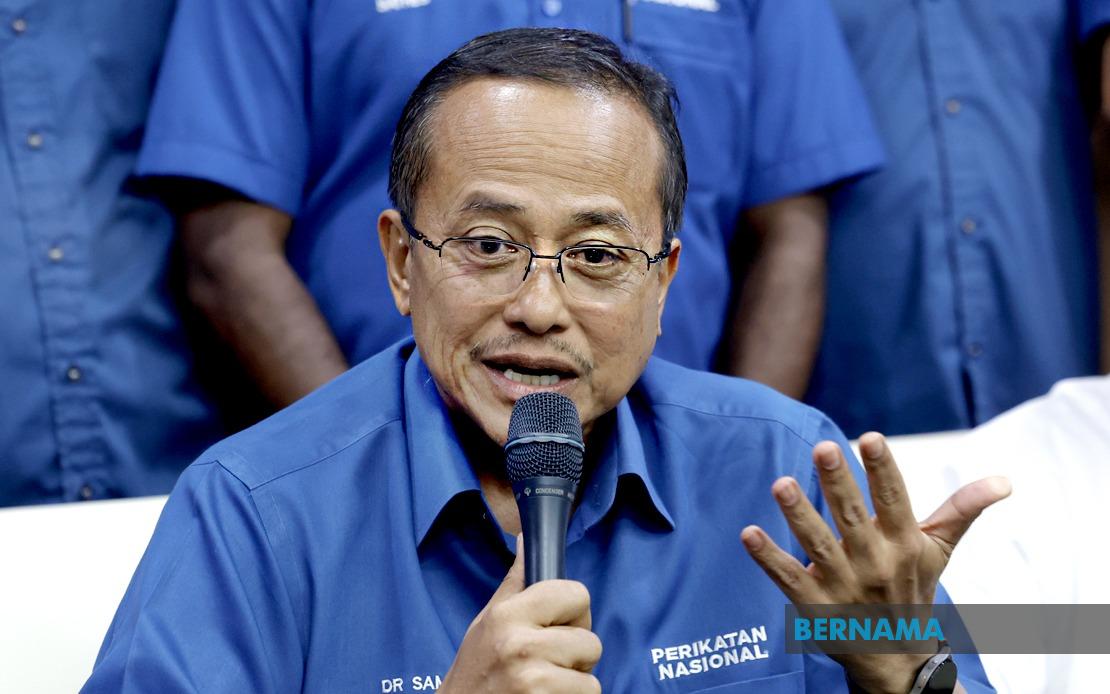
Perikatan Nasional formally introduced its electoral blueprint for the 16th Negeri Sembilan State Election on July 25, positioning the coalition's campaign around six interconnected policy pillars designed to address the state's immediate and long-term development priorities. The launch, anchored by the tagline 'PN Sepakat Hebatkan Negeri Sembilan', signals the coalition's intent to present a comprehensive governance roadmap extending beyond traditional populist messaging to encompass structural economic and social reform.
Chairman Datuk Seri Dr Ahmad Samsuri Mokhtar presided over the manifesto presentation, reflecting PN's leadership commitment to the state contest, which represents a critical barometer of the coalition's electoral performance in Malaysia's heartland. Negeri Sembilan, traditionally a competitive battleground between major political blocs, holds symbolic and strategic importance given its mixed demographic composition and swing-voter characteristics that often foreshadow broader electoral shifts.
The governance pillar addresses institutional transparency and administrative efficiency, responding to voter demands for accountable leadership structures. This framework suggests PN intends to distinguish itself through institutional reform messaging rather than relying solely on incumbent advantage or opposition vulnerability. For Malaysian voters accustomed to governance pledges that rarely materialise, the specificity and measurability of such commitments will likely determine their electoral resonance in Negeri Sembilan's competitive environment.
Economic revitalisation constitutes a central thematic component, reflecting widespread concern across Malaysia regarding cost-of-living pressures, employment volatility, and regional economic competitiveness. The coalition's economic pillar presumably addresses manufacturing diversification, services sector development, and small-to-medium enterprise support—sectors that directly impact household incomes across Negeri Sembilan's urban and semi-rural constituencies. Economic messaging carries particular weight in state elections where voters evaluate incumbent performance against observable improvements in local employment and business conditions.
The youth and family portfolio acknowledges demographic realities in which younger voters represent an increasingly decisive electoral cohort while family stability concerns—spanning housing affordability, childcare accessibility, and intergenerational wealth transmission—dominate household decision-making. PN's inclusion of this pillar alongside traditional economic messaging reflects political calculations that family-centric policies resonate particularly strongly among swing voters in suburban and peri-urban constituencies throughout Negeri Sembilan.
Social welfare commitments extend beyond poverty alleviation to encompass healthcare accessibility, elderly care provisions, and disability support systems. The prominence accorded this pillar suggests PN recognises that welfare policy represents a meaningful electoral differentiator, particularly among lower-income voters and older demographic segments that constitute substantial portions of Negeri Sembilan's electorate. Specific welfare commitments, once translated into budgetary allocations, offer tangible evidence of political promises converted into material benefit.
Education and employment linkages form the manifesto's human capital dimension, addressing the structural challenge of ensuring educational outcomes translate into meaningful employment opportunities. This pillar carries particular significance for Negeri Sembilan given the state's position within Malaysia's broader economic geography—neither as dominant as Kuala Lumpur and Selangor nor as peripheralised as certain East Malaysian states. Educational quality and employment generation capacity directly influence whether young professionals remain in Negeri Sembilan or migrate to higher-opportunity centres.
The electoral calendar presents considerable logistical and momentum considerations for PN's campaign operations. Early voting commences on July 28, providing a compressed window for intensive campaign messaging and ground mobilisation before the August 1 general polling date. This abbreviated timeline compresses campaign cycles, intensifying competition for voter attention and media coverage while favouring coalitions possessing superior organisational infrastructure and resource deployment capacity.
For Malaysia's broader political landscape, the Negeri Sembilan election functions as a consequential mid-term assessment of PN's governing legitimacy and electoral sustainability. The coalition's performance metrics—vote share, seat distribution, and demographic voting patterns—will illuminate whether PN can consolidate support beyond its 2023 electoral breakthrough or whether the coalition faces consolidation pressures and strategic realignment. Southeast Asian observers monitoring Malaysia's political trajectory will scrutinise Negeri Sembilan results as indicators of whether Malaysia's contemporary coalition-based system demonstrates stability or continued volatility.
The manifesto's six-pillar structure reflects contemporary electoral expectations that comprehensive policy platforms supersede personality-driven or narrow sectarian appeals. Whether PN's manifesto succeeds in mobilising voters depends fundamentally on implementation credibility—whether voters perceive the coalition as genuinely committed to translating pledges into measurable administrative outcomes. In competitive electoral environments like Negeri Sembilan, voters increasingly demand not merely aspirational rhetoric but credible evidence that political parties can deliver on substantive commitments.

