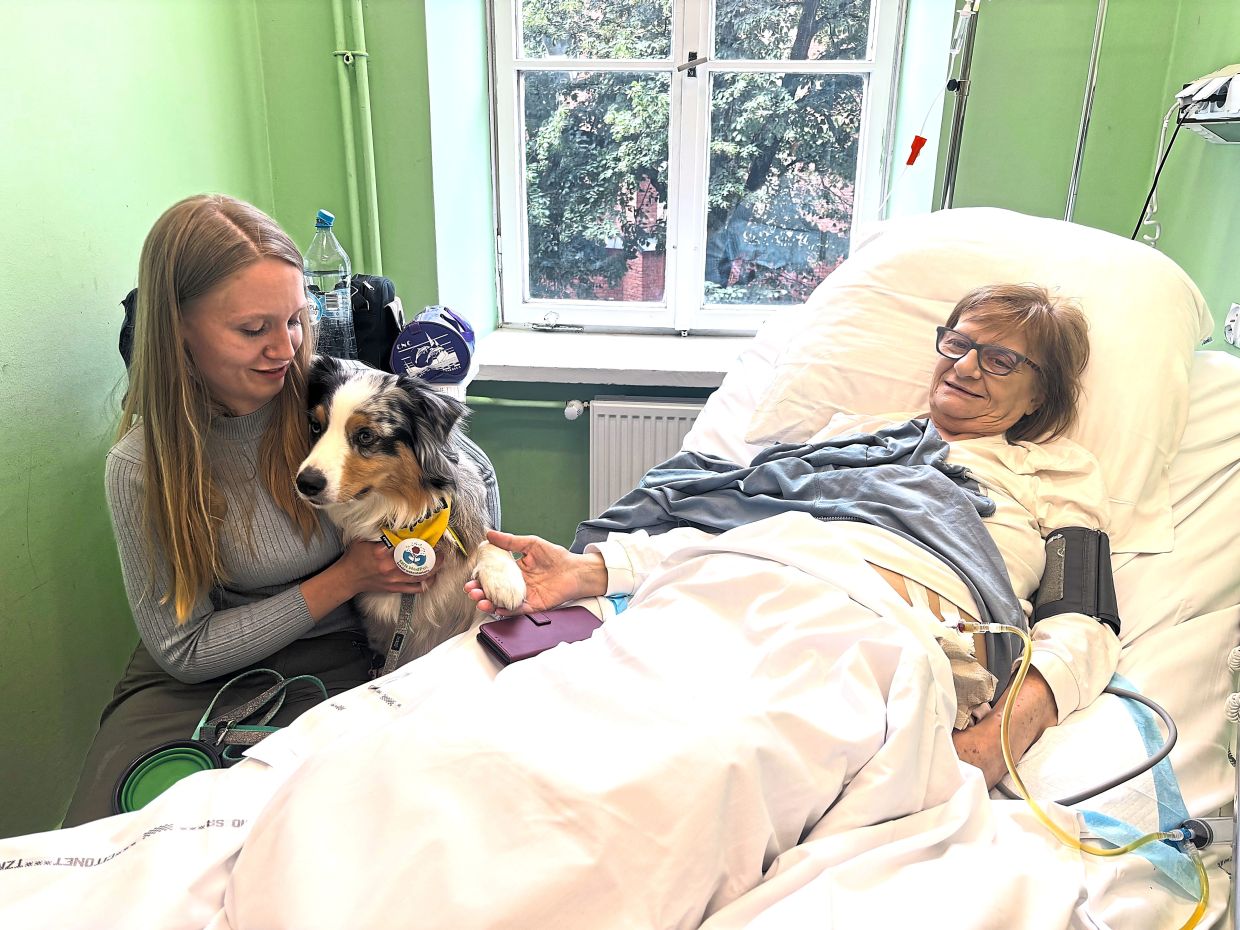
When 70-year-old Ewa Lutka-Krawczyk received her diagnosis of gallbladder cancer, her primary concern was not for herself but for Gaja, a shelter dog she had rescued and raised over three years. The emotional bond between patient and animal was so profound that her first request to her physician was assurance that she would survive long enough to ensure her canine companion would not be abandoned. That hope proved fleeting. As her condition deteriorated and she entered the palliative ward of a Warsaw hospital, Gaja remained at home with Lutka-Krawczyk's husband, her appetite failing as she waited for her absent owner. The separation underscored a growing recognition in Poland that terminal care facilities have largely ignored a simple but profound source of comfort: the presence of pets during humanity's final chapter.
Parliamentary action on this issue reflects both mounting evidence and the advocacy of medical professionals who have witnessed the transformative power of animal companionship in end-of-life care. Dr Tomasz Dzierzanowski, director of the Palliative Medicine Clinic at the Medical University of Warsaw, has spearheaded a legislative proposal now under consideration in Poland's health committee, with backing from a member of Prime Minister Donald Tusk's centrist party. While informal pet visits already occur in numerous clinical settings across Poland, the lack of a formal legal framework leaves patients and families uncertain of their rights and leaves healthcare institutions without clear guidelines. Dzierzanowski's initiative seeks to establish an unambiguous legal entitlement to such visits, transforming what is now an occasional courtesy into a recognised standard of palliative care.
The doctor's commitment to this cause emerged from a singular moment of human connection that crystallised his understanding of what palliative medicine ultimately requires. A seriously ill cancer patient named Waldemar had confided his deepest worry: the fate of his two beloved cats should he not survive. Dzierzanowski arranged for the animals to be brought into the ward, and the emotional reunion that followed—marked by the patient's tears of joy and the profound reactions of both the cats and witnessing staff—galvanised his determination to address this oversight systematically. "I realised that this issue finally needed to be addressed," he reflected, recognising that such moments of reconnection represent a crucial dimension of dignified end-of-life care that hospitals and policy-makers had largely neglected.
Beyond individual sentimentality, Dzierzanowski articulates a broader epidemiological concern confronting contemporary society: an unprecedented epidemic of loneliness particularly affecting the terminally ill. Many elderly patients in palliative care have outlived their contemporaries, with friendship networks diminished by time and circumstance. Simultaneously, younger patients in hospice settings often lack the robust social bonds that characterised earlier generations, their relationships dispersed across digital platforms rather than grounded in physical presence and mutual obligation. In this landscape of isolation, Dzierzanowski contends that pets occupy a vital niche. "When someone is suffering, it is important that someone is there for them," he explains. "Ideally, that should be another human being. Sometimes, however, there is no one." In such circumstances, a beloved animal provides irreplaceable solace—a living presence that does not judge, demand, or withdraw.
The experience of patients currently permitted visits from their own animals, and those receiving therapy dog sessions, demonstrates the scope of animal-assisted benefits within palliative wards. Lutka-Krawczyk, who learned that Gaja would be permitted to visit her under Dzierzanowski's current clinical protocols, visibly brightened at the prospect. When an Australian shepherd named Kluska—whose name translates from Polish as "dumpling"—made her rounds through the ward during a recent visit, patients responded with palpable enthusiasm. Lutka-Krawczyk gently held the therapy dog's paw and smiled, a moment of levity in her diminishing days. Wojciech Zelik, a 58-year-old tumour patient also under care in the ward, similarly rallied to admire and stroke the dog's coat, remarking on its softness and attending to the animal's tricks with evident pleasure.
Critically, the therapeutic benefits extend well beyond patient welfare to encompass the entire ecosystem of hospital staff engaged in the emotionally demanding work of caring for the dying. Malgorzata Brzozowska, a medical student who brings Kluska into the palliative ward, has observed that nursing staff, kitchen workers, and other hospital employees visibly decompress during the dog's visits. Multiple staff members were observed crouching in hallways to pet Kluska, with even the hospital cook offering ham slices to the animal—small gestures of human warmth in an environment otherwise saturated with clinical necessity and existential gravity. Such informal moments of respite and affection create psychological breathing room for those whose professional obligation is to witness and facilitate the dying process.
Brzozowska emphasises, however, that the therapeutic dividends are substantially larger when patients encounter their own animals rather than therapy dogs introduced by volunteers. Personal pets occupy a unique psychological space in patients' lives, embodying years of intimate history, unconditional presence, and the continuity of home and identity that hospitalisation threatens to erase. When such animals visit, the calming effects permeate multiple layers of the care environment simultaneously. Patients find their anxiety diminished and their sense of self reinforced. Family members experience emotional reassurance that their loved one remains connected to the life they have built. The animals themselves, Brzozowska notes, appear to comprehend something essential about their owners' circumstances. "The dog isn't as stressed," she observes. "We interpret this as meaning that he simply knows what's happening, that he knows where the owner, who was always there before, has disappeared to." This mutual understanding—the animal's instinctive recognition of altered circumstances—seems to facilitate a non-verbal communication that sustains both patient and companion through crisis.
Lawmaker Katarzyna Piekarska, who introduced the legislation into parliament's health committee, has framed the initiative as formalising a reality already quietly occurring in Polish healthcare institutions. "In reality, animals in hospitals are already there anyway," she noted, emphasising that the proposed legislation would not introduce an unprecedented or burdensome practice but rather provide explicit legal sanction and standardised protocols for what dedicated clinicians have already begun implementing on an ad hoc basis. This pragmatic approach acknowledges that Polish palliative care units harbour informal compassion that merely requires legal crystallisation into policy.
For patients like Lutka-Krawczyk facing the final season of their existence, the distinction between informal discretion and guaranteed rights carries profound significance. The proposed legislation would transform pet visitation from a privilege contingent on individual physician goodwill into a protected entitlement, ensuring that no terminally ill patient must endure the additional anguish of separation from their animal companion. Dzierzanowski's commitment to ensuring that "no patient dies alone" extends beyond human relationships to encompass the full spectrum of bonds that render human life meaningful—including the simple, wordless companionship that animals offer.
The Polish initiative reflects a broader global recognition that end-of-life care requires reimagining institutional protocols to honour the multidimensional sources of human comfort and meaning. As Malaysia and other Southeast Asian nations grapple with ageing populations and the expansion of hospice and palliative care infrastructure, Poland's experience offers a template for comprehensive policy-making that acknowledges emotional and spiritual wellbeing alongside clinical necessity. The contentious question—whether pets belong in hospitals—appears increasingly to be answered affirmatively by patients, doctors, and animals themselves, suggesting that enlightened legislation legalising what compassion already practises may represent not innovation but overdue recognition of therapeutic necessity.

