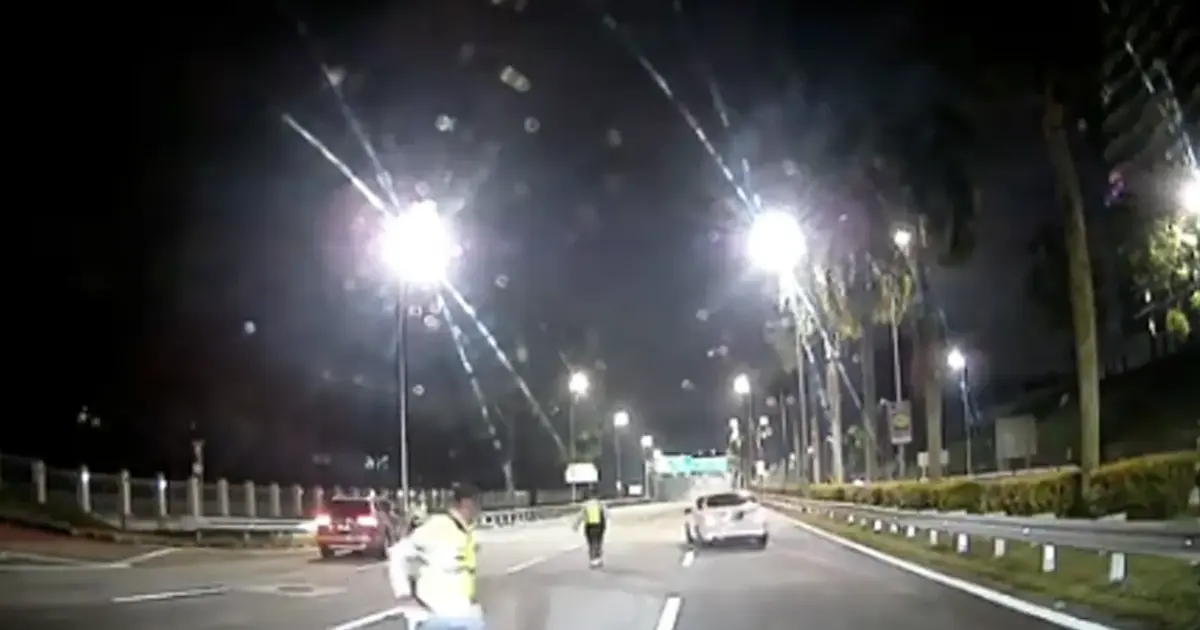
A 20-year-old motorist operating a Mercedes vehicle has been taken into custody following an incident at a police roadblock where he declined to stop and instead accelerated through the checkpoint. The arrest marks another case in which drivers have resisted lawful traffic control measures implemented by law enforcement authorities across the nation.
The motorist's decision to breach the roadblock has resulted in formal charges related to his failure to comply with a police officer's lawful instructions. Such violations carry significant legal consequences under Malaysian traffic and criminal statutes, reflecting the seriousness with which authorities treat obstruction of police operations. Witnesses at the scene described the driver as appearing visibly anxious during the incident, though his nervous demeanor did not translate into compliance with the officers' directions.
Roadblocks remain a critical tool in Malaysia's broader traffic and public safety strategy. These checkpoints serve multiple enforcement purposes, from verifying vehicle registration and insurance documentation to identifying drivers operating under the influence or those with outstanding traffic violations. The checkpoint system also allows authorities to respond to specific public safety concerns, including vehicle theft investigations and anti-smuggling operations. When drivers circumvent these measures, they not only violate traffic regulations but potentially compromise ongoing enforcement initiatives.
The arrest underscores persistent challenges faced by traffic police in maintaining order at checkpoints. Despite clear signage and visible police presence, some motorists continue to attempt passage through roadblocks, whether due to panic, poor judgment, or deliberate defiance. This pattern has prompted ongoing discussions among law enforcement agencies about checkpoint safety protocols and the need for enhanced driver education regarding compliance with police instructions.
Malaysian traffic laws contain explicit provisions requiring motorists to halt when signaled by police officers at roadblocks. Failure to do so constitutes a separate offense distinct from any underlying violations the checkpoint might uncover. Courts have consistently upheld prosecution of such cases, recognizing that allowing drivers to bypass checkpoints would undermine the entire enforcement framework. The offense can result in fines, license suspension, or imprisonment depending on the circumstances and the driver's prior record.
This incident occurs within a broader context of traffic enforcement intensification across major highways and urban centers. Authorities have ramped up checkpoint operations in recent months, particularly around peak travel periods and high-incident areas. The objective extends beyond simple traffic citation issuance to accident prevention, identification of dangerous drivers, and disruption of criminal networks that utilize vehicles for illicit purposes. Each checkpoint breach represents a failure of the system and potential risk to public safety.
The psychological element evident in this case—the driver's apparent nervousness—raises questions about what prompted such a response. Whether the motorist harbored concerns about outstanding violations, vehicle documentation issues, or other legal complications remains unclear from available information. Nevertheless, attempting to evade a checkpoint invariably compounds any existing legal problems while creating new charges. Drivers facing legitimate documentation or registration concerns would benefit far more from cooperation with authorities than from attempted evasion.
For Malaysian motorists, the takeaway remains straightforward: compliance with police roadblock procedures is both a legal requirement and a practical necessity. Attempting to force through a checkpoint creates immediate legal jeopardy, potential physical danger, and escalates the seriousness of any underlying violations. Modern enforcement protocols ensure that roadblock operations proceed efficiently, minimizing inconvenience to law-abiding drivers while focusing on genuine public safety concerns.
The arrest also reflects resource deployment by law enforcement agencies. Police presence at roadblocks requires significant personnel allocation, and disruptions occasioned by non-compliant drivers necessitate additional officers and potential backup resources. When drivers resist lawful instructions, they impose costs on the entire system while reducing authorities' capacity to manage traffic flow and respond to other incidents. This makes each breach not merely an individual violation but a broader public resource issue.
Moving forward, this case will likely proceed through the court system where the specific charges will be formally adjudicated. The outcome may influence similar cases and reinforce precedent regarding roadblock compliance. For the driving public, it serves as a reminder that cooperation with traffic authorities protects both individual interests and collective road safety objectives.

