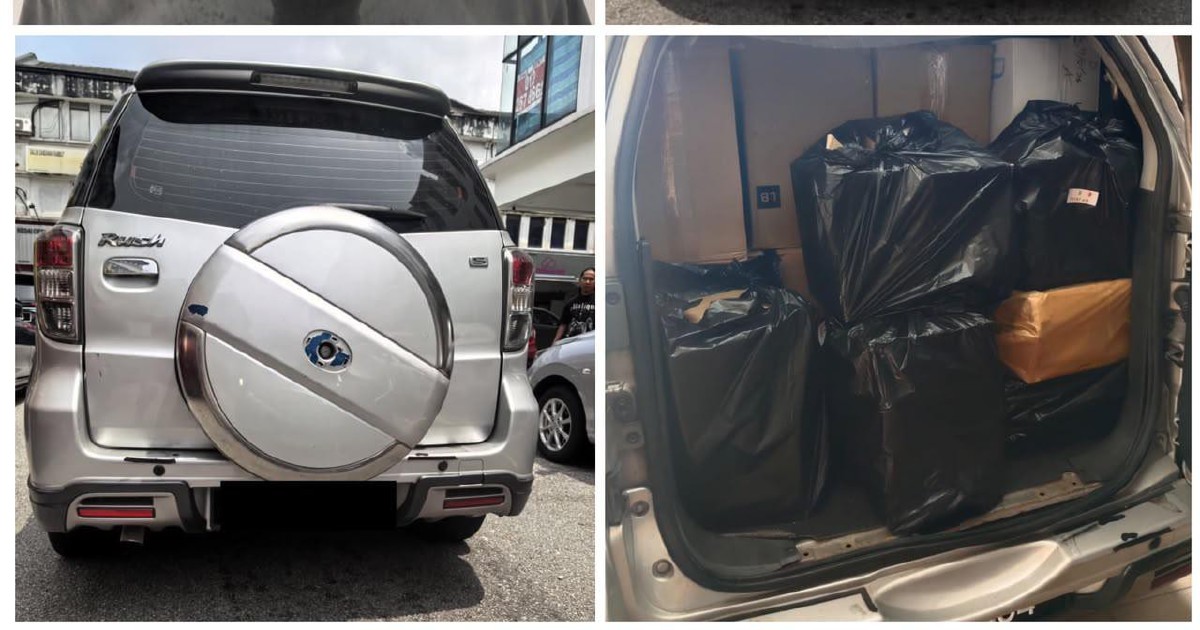
Law enforcement authorities in Kuala Lumpur have moved against an illegal cigarette distribution operation, resulting in the arrest of two men suspected of orchestrating a storage and sales network for smuggled tobacco products. The action, carried out as part of Ops Taring Alpha 1, yielded contraband items worth RM1.66 million across locations within the densely populated Klang Valley region.
The operation represents another chapter in Malaysia's ongoing battle against illicit tobacco trafficking, a persistent problem that costs the government substantial tax revenue and creates unfair competition for legitimate retailers. Contraband cigarettes, often sourced from outside Malaysia or produced through unlicensed channels, undercut legal market prices significantly and have become increasingly prevalent in urban areas where demand remains robust despite rising official prices.
Ops Taring Alpha 1 reflects law enforcement's targeted approach to dismantling organised networks rather than simply addressing street-level sales. The syndicate structure uncovered during this investigation suggests a sophisticated operation capable of both warehousing substantial quantities and distributing them through established channels, indicating connections potentially extending beyond the Klang Valley itself. The scale of the seizure—nearly RM1.7 million—suggests this was no casual trafficking effort but rather a professionally managed enterprise.
The Klang Valley's role as a major logistics and commercial hub makes it particularly vulnerable to smuggling operations. The region's dense population, extensive port facilities, and proximity to major highways create ideal conditions for rapid distribution networks. Criminal groups exploit these advantages to move illicit goods from entry points to retail markets throughout the country with remarkable efficiency.
Contraband cigarettes represent a significant drain on Malaysia's tax base. Official cigarette taxation generates billions in annual government revenue, funding crucial public services and health initiatives. When smuggled products capture market share, they directly undermine these collections. The Customs Department and various law enforcement agencies have prioritised tackling this issue through intelligence-led operations targeting supplier networks and major warehouses rather than focusing exclusively on end users.
The arrests of the two suspects mark an important victory in this ongoing enforcement effort. Disrupting distribution hubs proves more impactful than apprehending individual retailers, as it interrupts supply chains and raises operational costs for criminal networks. When major storage facilities are discovered and dismantled, syndicates must establish new distribution channels and incur replacement losses, creating friction that sometimes forces them out of business entirely.
For Malaysian consumers, contraband cigarettes pose health and safety concerns beyond their illegality. Unregulated production facilities may employ substandard manufacturing processes, resulting in inconsistent product quality and potentially hazardous additives. Furthermore, the black market in cigarettes has attracted increasingly dangerous criminal organisations, some with connections to other illegal enterprises including drug trafficking and weapons smuggling. Combating this trade therefore serves broader public safety objectives.
The tobacco industry itself suffers from the prevalence of counterfeit and smuggled products. Legitimate manufacturers lose significant sales volume to illegal competition, while consumers risk purchasing counterfeit branded cigarettes manufactured to profit criminal networks. This dynamic has prompted major international tobacco companies to collaborate with law enforcement agencies on anti-smuggling initiatives throughout Southeast Asia.
Ops Taring Alpha 1 demonstrates law enforcement coordination across relevant agencies in pursuing complex criminal enterprises. Such operations typically require cooperation between police, customs, and intelligence units to identify storage locations, map distribution networks, and execute coordinated raids that prevent suspects from relocating contraband or destroying evidence. The success of this particular operation depended on reliable intelligence and meticulous planning.
Regional context matters significantly here. Southeast Asia has emerged as a critical battleground in the global fight against cigarette smuggling, with multiple nations grappling with similar challenges. Singapore, Thailand, and Indonesia have all launched major anti-smuggling initiatives in recent years, indicating the scope of the problem across the region. Cross-border trafficking adds complexity, as criminal networks exploit differences in tax regimes and enforcement capacity between neighbouring countries.
Looking forward, the challenge for Malaysian authorities lies in sustaining enforcement pressure against well-resourced criminal networks that continuously adapt their methods. The arrest of two individuals and recovery of RM1.66 million in products represents meaningful progress, yet supply-demand imbalances mean replacement networks often emerge quickly. Authorities increasingly recognise that suppressing demand through public education and raising excise taxes on legal cigarettes, though economically sensitive, remains essential to reducing market attractiveness for illicit alternatives.
The operation also highlights the importance of civilian cooperation and intelligence gathering. Many successful enforcement actions depend on tips from members of the public or commercial partners who observe suspicious activity. Public awareness campaigns that encourage reporting of known smuggling operations contribute significantly to maintaining pressure on criminal syndicates. As these networks become increasingly sophisticated, communities must remain vigilant partners in the fight against contraband distribution.
This latest seizure will likely feature in the government's public health communications, reinforcing the message that illegal tobacco products represent both legal risk and health concern. Whether this operation ultimately proves to be a decisive blow against the particular syndicate or merely a temporary setback depends partly on investigation outcomes and prosecution success rates. For now, however, it demonstrates that law enforcement remains actively engaged in disrupting supply chains that cost Malaysia hundreds of millions annually in lost tax revenue.

