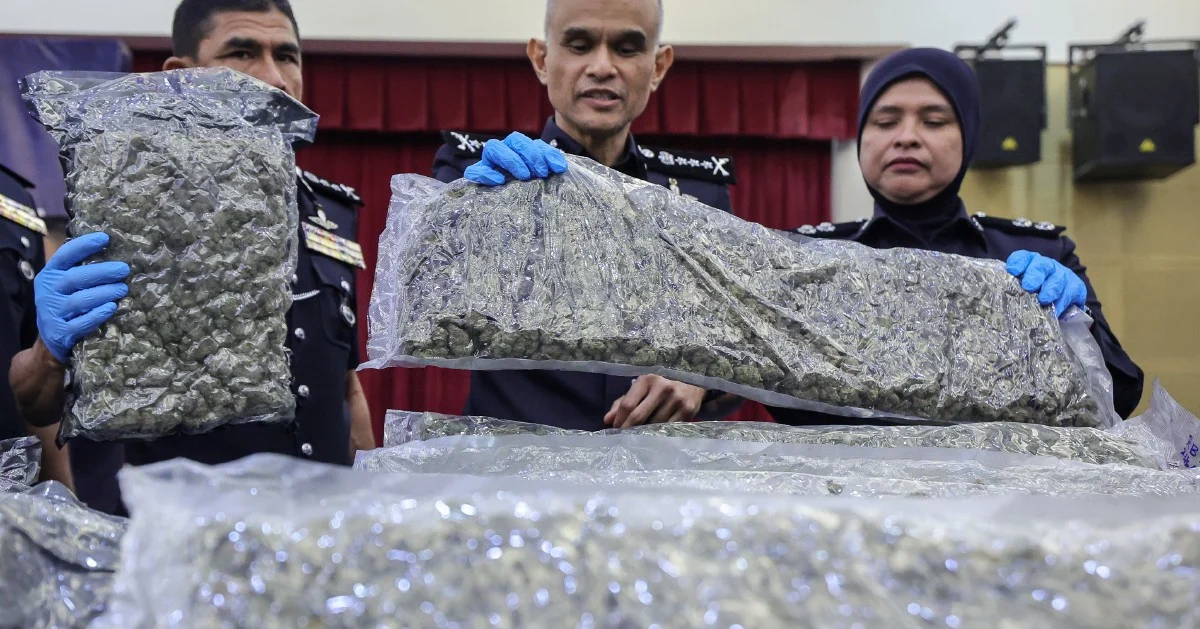
Law enforcement authorities have successfully intercepted a substantial shipment of illicit cannabis at Malaysia's primary air gateway, signalling intensified efforts to combat drug trafficking operations at the nation's busiest international hub. The Kuala Lumpur International Airport has become the focal point of a major drug investigation that has yielded the seizure of more than half a tonne of cannabis buds since the beginning of January, with police operations resulting in the arrest of 38 individuals engaged in trafficking activities.
The scope of the operation, which extends beyond Malaysia's borders given the involvement of foreign nationals among those detained, underscores the transnational nature of drug smuggling networks that attempt to exploit international travel corridors. By apprehending suspects from different countries, the investigation has exposed how organised criminal syndicates orchestrate complex logistics chains to move narcotics through commercial aviation routes. This development reflects a pattern that has become increasingly familiar to Southeast Asian law enforcement agencies, where international airports serve as critical chokepoints for drug distribution networks attempting to reach markets across the region.
The 650kg haul represents a substantial quantity by regional standards and demonstrates the scale at which sophisticated trafficking operations function. Such volumes typically indicate not casual smuggling but rather organised criminal enterprises with established supply chains, distribution networks, and financial infrastructure. The quantity seized at KLIA likely represents only a fraction of total trafficking activities, suggesting that narcotics entering Malaysia through air cargo and passenger channels constitute a significant security concern that extends beyond the airport itself.
Kuala Lumpur International Airport's status as a major regional aviation hub makes it an attractive target for drug smugglers seeking to exploit the high volume of daily passenger and cargo movements. The sheer number of flights connecting Malaysia to destinations across Asia, the Middle East, Europe, and beyond creates numerous opportunities for concealment and distribution. The airport's role in connecting Malaysian cities to global markets has inadvertently positioned it as a transit point where contraband can be repackaged and rerouted to secondary destinations throughout Southeast Asia.
The involvement of foreign nationals in this particular network suggests coordination across multiple countries, potentially indicating that Malaysia serves as either a distribution hub or a stepping stone in longer smuggling routes. This international dimension complicates enforcement efforts and necessitates cross-border intelligence sharing and cooperation between Malaysian authorities and counterparts in other nations. The successful dismantling of such networks depends increasingly on coordinated action between regional police forces and international drug enforcement bodies.
The arrest of 38 individuals represents substantial progress in understanding the structure and operations of this trafficking organisation. Each arrest potentially yields intelligence about suppliers, distribution channels, financial arrangements, and customer networks. Interrogations of detained suspects typically uncover information about the origins of the cannabis, intended destinations, methods of concealment, and corrupt officials or facilitators who may have enabled the smuggling operation. Such intelligence becomes invaluable for preventing future smuggling attempts and identifying higher-level operatives within trafficking hierarchies.
Cannabis trafficking has emerged as an increasingly visible challenge for Malaysian law enforcement in recent years, with seizures at airports and ports reflecting growing demand in regional markets. Unlike some narcotics that face strict supply constraints, cannabis cultivation in various countries means that smugglers can relatively easily source large quantities for export. The drug's lower street price compared to heroin or methamphetamine makes it commercially viable for large-scale trafficking, even accounting for significant seizure rates and law enforcement interdiction.
The ongoing investigation suggests that police operations at KLIA remain active and intelligence-driven, with authorities developing better capacity to identify suspicious shipments and passengers. Modern screening technologies, including advanced scanning equipment and canine detection units, have become standard at major airports, yet the continued flow of contraband indicates that smugglers constantly adapt concealment techniques and exploit vulnerabilities in security systems. The concentration of arrests since January indicates either increased smuggling activity or improved police intelligence and enforcement focus during this period.
For Malaysian readers and businesses, this development carries multiple implications. The airport's security and reputation remain critical factors in Malaysia's position as a regional hub and gateway for commerce and tourism. Large-scale drug busts, while demonstrating effective law enforcement, also highlight security challenges that could affect passenger confidence and commercial operations if they suggest systemic vulnerabilities. Simultaneously, the successful interdiction demonstrates that authorities possess the capabilities to detect and disrupt major trafficking operations, providing reassurance about border security measures.
The investigation's progress also reflects broader efforts within Malaysia's National Narcotics Agency and police force to combat organised crime through intelligence-led operations rather than reactive enforcement alone. By focusing resources on high-volume trafficking corridors like KLIA, authorities concentrate efforts where interdiction yields maximum impact. The coordination between different police units and agencies suggests improving institutional capacity to tackle drug trafficking as an organised crime problem rather than isolated incidents.
Regional implications of this bust extend beyond Malaysia's borders, as disrupting trafficking networks that operate across Southeast Asia protects neighbouring countries from downstream distribution and consumption. Malaysia's effectiveness in airport security directly influences whether local and regional traffickers consider alternative transit routes through less secure gateways. The successful seizure and arrests at KLIA therefore contribute to broader regional security architecture against organised narcotics crime, even as the persistent flow of contraband indicates that the challenge remains far from resolved.