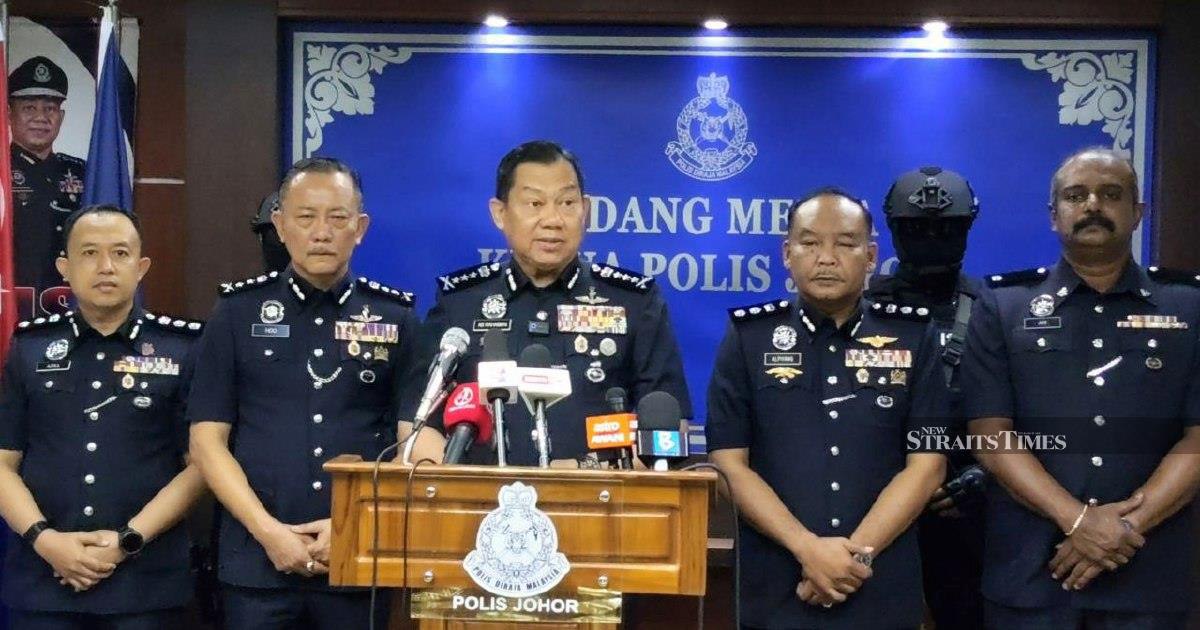
Law enforcement authorities in Johor Baru have dealt a substantial blow to an underground drug trafficking operation, uncovering a substantial stash of controlled substances and arresting multiple individuals connected to the illicit network. Saturday's coordinated raids resulted in the confiscation of 60.78 kilograms of methamphetamine, with an estimated street value exceeding RM3.04 million, marking a significant seizure in the state's ongoing campaign against narcotics distribution.
The eight detainees taken into custody include members across different rungs of the distribution hierarchy, suggesting the police investigation had successfully identified layers within the trafficking structure. Notably, one of those arrested was a teenager functioning as a courier—a school dropout who had apparently been recruited to handle physical transportation of the drugs. The involvement of such a young individual in the supply chain underscores a concerning recruitment pattern among traffickers, who often exploit economically vulnerable youth with limited educational prospects.
Methamphetamine, commonly known in Malaysia as "ice" or "kristal," represents one of the most pervasive drug threats across Southeast Asia. The synthetic stimulant commands significant demand in Malaysia's underground markets, commanding premium prices compared to traditional narcotics. The sheer weight of the seizure—nearly 61 kilograms—demonstrates the scale at which this particular operation was functioning, suggesting distribution networks extending well beyond Johor itself.
The police operation exemplifies intensified enforcement efforts targeting major traffickers rather than street-level consumers. By focusing resources on dismantling supply chains and disrupting wholesale distribution networks, authorities aim to constrict the availability of drugs in communities. However, experts note that such raids, while operationally important, represent only momentary victories in the broader context of persistent drug trafficking across the region.
The recruitment of schoolchildren as transporters reveals how trafficking syndicates have adapted their operational methods to minimize individual risk exposure. By employing young couriers, networks rely on the assumption that youth are less likely to face severe penalties or that their arrests generate less investigative attention than apprehending adult traffickers. This tactic also exploits the economic desperation of dropouts who lack formal employment pathways, creating a vulnerable pool for criminal recruitment.
The RM3.04 million valuation attached to the seizure reflects not wholesale cost but estimated retail market prices—a distinction important for understanding the economic scale of illicit drug markets. At street-level transactions, this quantity would generate substantially higher revenues, highlighting the substantial profit margins that motivate trafficking organizations to maintain supply despite enforcement risks.
Johor's position as a major trading hub connecting Malaysia to Singapore and Indonesia makes the state particularly significant in regional drug trafficking routes. The presence of substantial methamphetamine networks in the state reflects its geographic importance as a transit corridor, where drugs are frequently consolidated before onward distribution to other Malaysian states or neighboring countries.
The Saturday operation contributes to ongoing enforcement against synthetic drugs that have increasingly displaced heroin in Malaysian street markets over the past decade. Authorities have noted evolving consumption patterns, with amphetamine-type stimulants now representing a significant proportion of drug-related arrests, particularly among younger demographics. This shift has required corresponding adjustments in interdiction strategies and public health responses.
The arrests will likely trigger investigations into the upstream sources of the drug supply and downstream distribution networks. Tracing these connections could reveal organizational structures, financial flows, and potentially international trafficking links. Malaysian authorities have previously collaborated with regional and international partners to pursue cross-border trafficking investigations, though such operations remain challenging given jurisdictional complexities.
The involvement of the teenage transporter raises questions about rehabilitation and prevention approaches targeting at-risk youth. While criminal justice responses address immediate enforcement concerns, longer-term drug suppression requires addressing root factors driving recruitment of young people into illicit economies. Educational reintegration programs, vocational training, and economic opportunity creation represent complementary strategies that authorities and social agencies must pursue parallel to enforcement.
The seizure's publicity value serves multiple functions within law enforcement communication strategies—demonstrating operational capacity, deterring potential traffickers, and reassuring communities of ongoing security efforts. However, the frequency of similar announcements suggests that despite substantial resources dedicated to drug enforcement, trafficking networks retain sufficient operational resilience and financial resources to quickly replace confiscated inventory and arrested personnel.
Moving forward, authorities will continue targeting major synthetic drug operations while also addressing demand-side factors through treatment and rehabilitation services. The challenge remains balancing enforcement intensity with approaches addressing the socioeconomic drivers of both trafficking and consumption—a comprehensive strategy that requires coordination across police, health, education, and social welfare agencies throughout the region.

