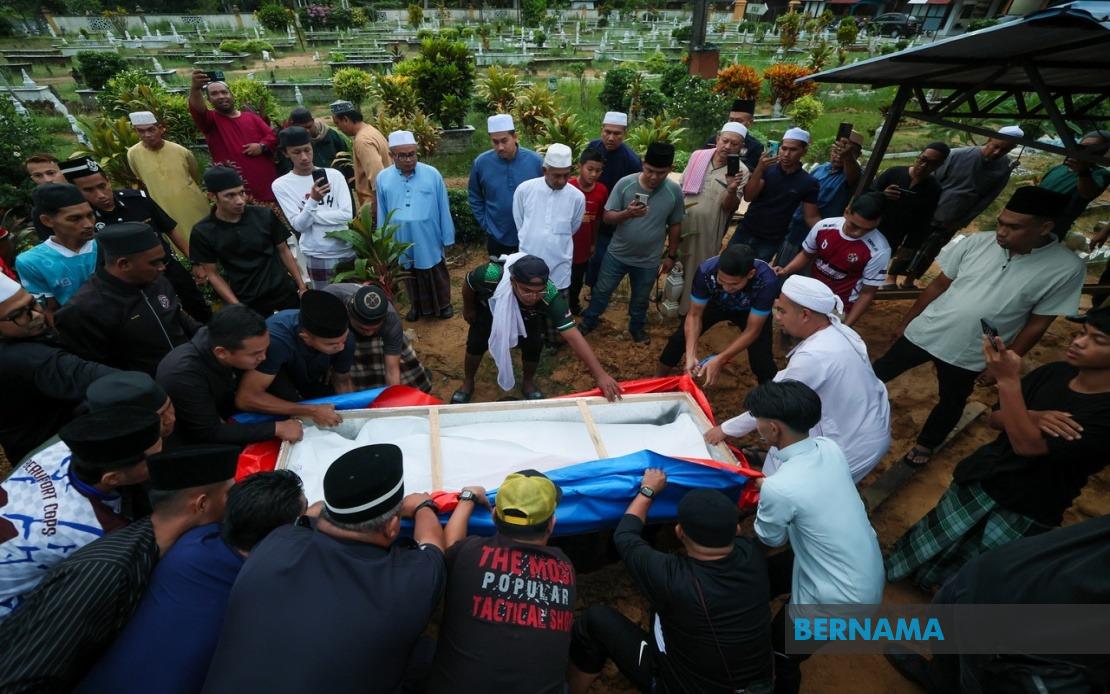
Corporal Mohamad Nur Hafiz Rahim, a 29-year-old police officer who died in a fatal electrical accident at Beaufort in Sabah, was buried on Thursday morning at the Kampung Pangkal Kuang Muslim Cemetery in Ketereh, Kelantan. The service concluded a chapter of mourning for his family, who had gathered at their home in Kampung Hutan Pasir for funeral prayers before proceeding to the graveside.
The incident that claimed his life occurred on Wednesday evening at approximately 5.50 pm outside Weston Police Station in Beaufort. Mohamad Nur Hafiz and two fellow officers stationed there were electrocuted while handling a 29-foot-long metal pole designed for harvesting coconuts. The pole came into contact with an electrical source near the station compound, adjacent to Sekolah Kebangsaan Weston. The tragedy claimed three lives in total, marking one of the most serious workplace accidents involving police personnel in recent years.
Besides Mohamad Nur Hafiz, the other two victims were Corporal Chiu Teck Siong, 40, originally from Sarawak, and Constable Muhammad Raimi Ismarubee, 26, from Terengganu. All three were confirmed dead at the scene, highlighting the extreme danger posed by the electrical hazard they encountered. The simultaneous deaths of three serving officers has raised urgent questions about workplace safety protocols at police installations across Malaysia, particularly in remote or rural postings where infrastructure maintenance may be inconsistent.
At the cemetery, Mohamad Nur Hafiz's eldest sister Nurlella Rahim, 34, expressed the family's gratitude to the Royal Malaysia Police for their support in repatriating her brother's remains from Sabah to Kelantan. The vehicle transporting his body arrived at 4.45 am, requiring coordination across two states to ensure a dignified homecoming. Speaking to reporters, Nurlella emphasized how the police force had made the logistical arrangements seamless during what was an emotionally taxing period for the grieving family.
The closeness of the Rahim siblings became evident through Nurlella's recollections of their daily communication patterns. Despite living in different parts of the country—with Nurlella based in Ipoh, Perak, and her brother stationed in Sabah—the family maintained near-constant contact through video calls, social media interactions, and a shared WhatsApp group. This modern digital connectivity provided the family with a lifeline across geographical distance, allowing them to remain emotionally tethered despite physical separation.
Nurlella recounted the final video interaction between Mohamad Nur Hafiz and their mother, which occurred on Thursday afternoon, just hours before his death. During that call, he appeared fatigued and somewhat withdrawn, though he still managed to offer reassurance to their mother before mentioning he needed to return to his duties. The poignant detail of his tiredness—now grimly viewed through the lens of his imminent death—underscores how ordinary his final hours appeared to those communicating with him, unaware of the tragedy that awaited.
Even during brief work breaks, Mohamad Nur Hafiz prioritized staying connected with his family, initiating video calls whenever his schedule permitted. Such habits reveal the personality of a dedicated officer who balanced professional responsibilities with familial bonds. Nurlella's last conversation with her brother occurred on Sunday, when she saw him at the beach with his wife Fatimah Shahira and their young child—an image of domestic contentment that would become increasingly precious to the family in the wake of his sudden death.
The electrocution incident has triggered substantial concern within Malaysian law enforcement circles regarding occupational hazards and safety standards at police facilities nationwide. Questions have emerged about whether the coconut-harvesting pole should have been used near electrical installations, and whether proper safety protocols and equipment were available to officers at the Beaufort station. The simultaneous deaths of three personnel suggest a systemic failure in hazard assessment or emergency response procedures.
Prime Minister Datuk Seri Anwar Ibrahim responded swiftly to the tragedy, ordering an exhaustive, transparent, and immediate investigation into the circumstances surrounding the deaths. In a Facebook post, Anwar underscored the critical importance of determining the root causes and implementing corrective measures to prevent similar tragedies in the future. This high-level political response signals recognition of the incident's severity and the government's commitment to accountability within security force operations.
The investigation ordered by the Prime Minister is expected to examine multiple dimensions of the incident: the electrical infrastructure at the station, the maintenance protocols for potentially hazardous equipment, the training provided to officers on electrical safety, and the emergency response procedures activated when the electrocution occurred. For Malaysian law enforcement agencies operating across the archipelago in varying conditions—from urban centers to remote rural and maritime postings—the findings will likely inform broader workplace safety reviews.
For the families of all three deceased officers, the investigation represents not merely an administrative exercise but a pathway toward understanding how such a preventable tragedy occurred and what systemic changes might protect other personnel from similar fates. The deaths highlight the occupational risks faced by police and security personnel that extend beyond the conventional dangers typically associated with law enforcement work. The Rahim family's dignified observance of funeral rites, marked by appreciation for institutional support, reflects both their grief and their hope that accountability will follow.
The incident serves as a stark reminder that modern workplaces, regardless of sector or location, must maintain rigorous safety standards and ensure officers have access to proper equipment and training. For Malaysia's police force—the nation's primary law enforcement agency—this tragedy represents an inflection point where operational procedures and facility management will likely face renewed scrutiny to safeguard the welfare of personnel serving in all corners of the country.

