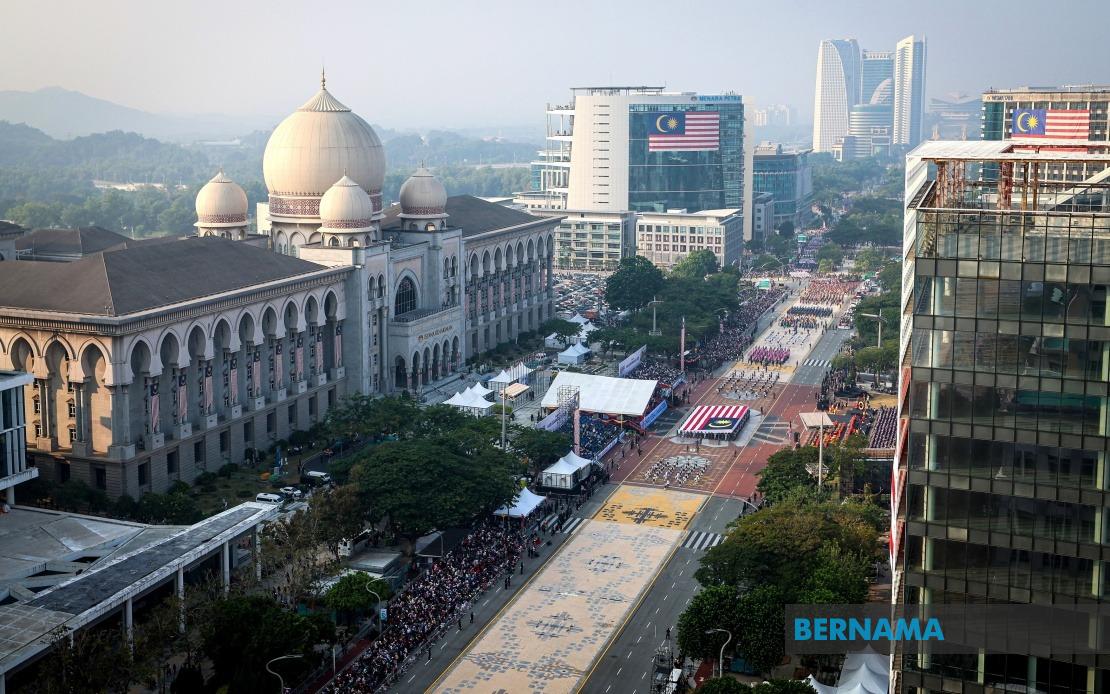
Malaysia's police force is gearing up for large-scale security operations at this year's National Day festivities, with the Royal Malaysia Police confirming the deployment of 2,354 personnel across Dataran Putrajaya for the August 31 event. The assignment represents a significant mobilisation of law enforcement resources aimed at safeguarding the 69th National Day celebration, which organisers anticipate will draw more than 80,000 members of the public to the nation's administrative capital.
ACP Aidi Sham Mohamed, the Putrajaya district police chief, outlined the operational scope during a media briefing held after a comprehensive rehearsal of the ceremony. The deployment encompasses both static checkpoints and dynamic traffic management across strategically selected locations surrounding the main celebration venue. This multi-layered security approach reflects the authorities' commitment to balancing public access with robust protection measures, particularly given the anticipated crowd size and the symbolic importance of National Day observances.
The 2026 National Day celebration carries the theme "Malaysia MADANI: Kesejahteraan Dinikmati," emphasising collective wellbeing and prosperity. Communications Minister Datuk Seri Fahmi Fadzil confirmed during the rehearsal that the event would proceed according to established protocols, maintaining continuity in how Malaysia commemorates its founding. This thematic focus on societal advancement and shared prosperity underscores why security arrangements remain paramount—the event functions both as a public spectacle and a statement of national values.
For Malaysian citizens and visitors planning to attend, the police have issued detailed guidance emphasising civic responsibility and personal safety awareness. The authorities have specifically requested that attendees arrive early to Dataran Putrajaya, allowing sufficient time for security screening and crowd management procedures without creating bottlenecks. This advance arrival recommendation proves particularly important given the scale of expected attendance and the need to maintain orderly flow throughout the celebration grounds.
Parking and traffic regulations represent a key focus of the police advisory. Attendees are explicitly cautioned against utilising prohibited parking areas and reminded to avoid obstructing traffic flow in the vicinity of Dataran Putrajaya. These seemingly routine directives carry practical significance—unauthorised parking and traffic disruptions can cascade into broader security challenges and compromise emergency access routes that might prove critical should any incident occur during the event.
Personal security and property protection form another cornerstone of the public guidance. Police have urged attendees to exercise heightened vigilance regarding the safety of their children and personal belongings, recognising that large public gatherings inevitably attract pickpockets and create environments where inattention can result in theft or family separation. This advisory reflects lessons learned from previous major public events and represents accumulated operational experience.
Perhaps most significantly, the police have instituted a strict prohibition on weapons of any kind. The explicit warning against bringing dangerous weapons to the National Day celebration underscores the seriousness with which authorities treat security at high-profile national events. This measure represents both a preventive security control and a statement about the parameters of acceptable conduct at state-sponsored celebrations in Malaysia. The language employed—requesting citizens not to bring weapons "for the purpose of enlivening our National Day"—frames compliance as a patriotic responsibility rather than merely a regulatory obligation.
The comprehensive nature of these security preparations reflects broader realities facing large public gatherings in contemporary Southeast Asia. Malaysia, like regional neighbours, must balance the openness and public accessibility that democratic societies value with the protective measures that modern security environments demand. The 2026 National Day celebration exemplifies this tension—organisers seek to welcome 80,000 or more citizens and residents to participate in a patriotic observance while simultaneously implementing layered security protocols that necessarily constrain certain freedoms of movement and action.
The scale of police deployment also illustrates the administrative capacity required to execute major national events. Coordination of 2,354 personnel across multiple functions—from static security positions to mobile traffic management teams—demands sophisticated planning, command structures, and real-time communication systems. The rehearsal attended by Communications Minister Fahmi Fadzil served precisely this function: testing operational readiness, identifying procedural gaps, and ensuring that all participating agencies understand their respective roles within the broader security architecture.
For Malaysian residents in Putrajaya and surrounding areas, the security preparations may generate minor disruptions to normal routines. Enhanced police presence, temporary traffic diversions, and crowd management measures could affect local mobility and commercial activity on August 31. Yet such temporary inconvenience reflects the deliberate choice by authorities to prioritise security and orderly conduct over maximal convenience—a trade-off that public opinion surveys consistently show Malaysians understand and accept during major national occasions.
The forward-facing nature of this security announcement—coming weeks in advance of the actual celebration—serves multiple purposes. It allows citizens time to plan their attendance strategically, adjust transportation schedules, and prepare psychologically for the security environment they will encounter. Simultaneously, it communicates to potential troublemakers that authorities have invested significantly in protective measures and remain vigilant against disruption. This transparency about security preparations can itself function as a deterrent while demonstrating governmental commitment to safeguarding the event.
Looking toward August 31, the combination of 2,354 deployed police personnel, comprehensive public guidance, and rehearsed operational procedures positions Malaysia's security apparatus to deliver a National Day celebration that fulfils its symbolic and communal functions while protecting all participants. The event will proceed as a showcase of Malaysian national identity and values, underpinned by professional law enforcement work that largely remains invisible to celebrants—present precisely because its effectiveness renders dramatic incident unlikely.

