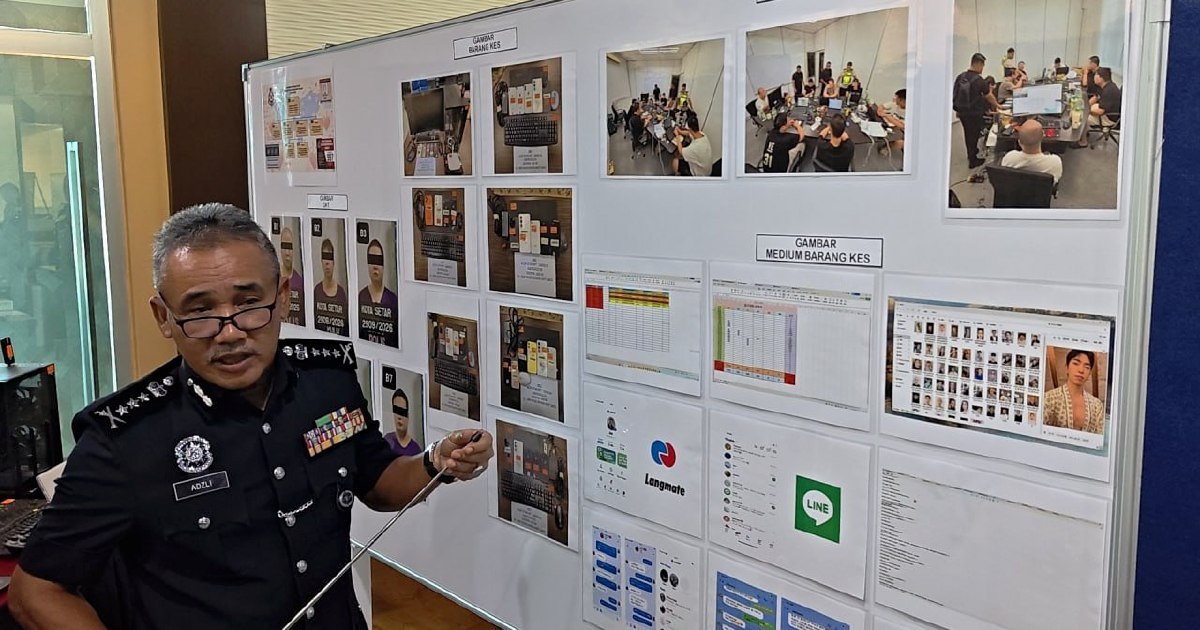
Authorities in Kedah have successfully disrupted a coordinated online romance scam operation that had been systematically defrauding Japanese nationals, marking another significant blow against transnational cybercrime networks operating from Malaysian soil. The breakthrough came through a targeted operation at a commercial unit within Kristal Light Industrial Park in Alor Star last Sunday, where enforcement teams apprehended seven Chinese nationals believed to be key operatives within the criminal syndicate.
Romance scams represent one of the most psychologically damaging forms of financial crime, exploiting victims' desire for genuine human connection and emotional vulnerability. These schemes typically involve perpetrators establishing fake online identities on social media platforms and dating websites, gradually building relationships with targets over weeks or months before introducing financial emergencies or investment opportunities. The emotional investment victims make during these extended interactions frequently causes them to override normal scepticism and provide large sums of money, even when red flags become apparent.
The focus on Japanese nationals suggests a deliberate targeting strategy by the syndicate, indicating perpetrators had likely researched victim demographics, analysing which populations might be particularly susceptible to these schemes or which would be geographically distant enough to minimise detection risks. Japan's ageing demographic profile and high internet penetration among older populations may have made Japanese citizens appear attractive targets to these criminals, as research globally indicates romance scams disproportionately affect older adults who are often more trusting of online interactions.
The operation's location in an industrial park rather than a residential compound demonstrates the increasingly sophisticated operational infrastructure these criminal networks employ within Malaysia. Rather than hiding in residential areas that draw greater police attention, sophisticated syndicates establish seemingly legitimate business fronts that blend into commercial landscapes, allowing them to operate multiple computers, phone lines, and banking infrastructure while maintaining a veneer of legitimacy to landlords and neighbouring businesses.
Malaysia has become a significant hub for transnational scam operations, with law enforcement consistently identifying new syndicates targeting victims across Asia, Australia, and Western countries. The country's combination of developed telecommunications infrastructure, availability of cheap labour, and porous financial systems creates an attractive operating environment for international cybercrime rings. Previous police operations have uncovered similar networks preying on various nationalities, suggesting these operations operate with remarkable interchangeability—adapting their victim selection based on market intelligence and operational opportunities rather than ideological or cultural attachment to particular targets.
The seven arrests represent potential disruption of daily operations, but police success in such cases frequently raises questions about downstream investigation and asset seizure. Determining the total losses, identifying how many victims were compromised, and tracing financial flows through potentially multiple money mule accounts and overseas banking channels will require substantial follow-up investigation. International coordination with Japanese law enforcement will be essential for victim identification and compensation efforts, though recovery rates in such cases remain dismally low globally.
Japanese authorities have increasingly raised concerns about their citizens falling victim to international scams orchestrated from Southeast Asia, with romance fraud consistently ranking among top reported cybercrime categories. These incidents damage diplomatic relations and create pressure on Malaysian authorities to demonstrate robust counter-scam capacity. Notably, Japanese victims often prove reluctant to report fraud due to cultural shame factors, suggesting actual victim numbers may substantially exceed officially reported figures.
The syndicate's operational methodology likely involved using stolen or fabricated identity photographs and information harvested from social media to construct compelling fake profiles. Victims would be wooed through consistent daily contact, emotional declarations, and carefully constructed narratives designed to establish deep pseudo-relationships before financial exploitation commenced. Perpetrators frequently claimed to require funds for business emergencies, medical crises, travel expenses, or investment opportunities that would generate returns benefiting both parties.
Beyond the immediate criminal matter, this case illustrates broader vulnerabilities within Malaysia's cybercriminal landscape. The ease with which foreign nationals can establish operational bases for international scamming suggests inadequate landlord verification requirements and insufficient information-sharing between property management, financial institutions, and law enforcement. Internet service providers and telecommunications companies also face questions about whether adequate monitoring systems exist to detect anomalous account activity patterns consistent with mass scamming operations.
For Malaysian residents and those doing business internationally, these revelations underline the importance of extreme caution regarding online relationships that progress rapidly toward financial requests. Legitimate connections rarely demand money transfers, unusual payment methods, or expressions of secrecy regarding financial discussions. The psychological manipulation inherent in romance scams often proves remarkably effective even for sophisticated individuals, making prevention through awareness the most practical defence mechanism available.
Police investigations continue into the full scope of the operation, including identifying all victims, determining total financial losses, and pursuing financial trails that may lead to syndicate leaders and money laundering operations. International coordination protocols will determine whether perpetrators face prosecution solely within Malaysian jurisdiction or whether cases might be transferred to Japanese authorities for prosecution in victims' home country. Such operational disruptions provide temporary relief but addressing the fundamental factors attracting these criminals to Malaysia—accessible infrastructure, profitable victim populations, and inadequate prevention mechanisms—remains a longer-term challenge requiring multifaceted government and private sector responses.

