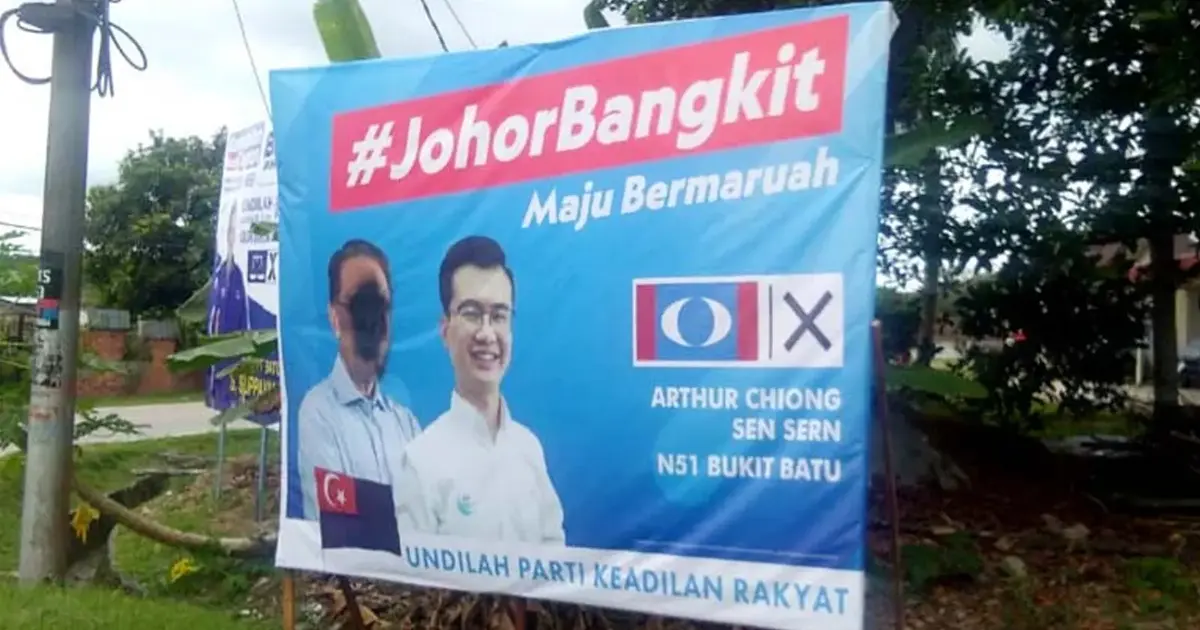
Malaysia's law enforcement responded to 90 separate police reports filed across the nation during the recent election campaign period, according to Inspector-General of Police Khalid Ismail. Of these complaints, investigators proceeded to formally open 25 probe papers for further examination and potential prosecution, marking a relatively low incident rate given the typically contentious nature of electoral campaigns throughout Southeast Asia.
The Inspector-General characterised the bulk of infractions as unrelated to the conduct of political parties or their candidates, instead pointing to everyday crimes that coincided with the campaign timeline. Vandalism emerged as the predominant offence category, suggesting that property damage rather than partisan violence or electoral misconduct dominated the police workload. This distinction carries significant weight, as it indicates that the electoral process itself proceeded without major security challenges or widespread political tensions that might have triggered direct complaints against campaign activities.
The relatively modest volume of reports and probe papers reflects positively on Malaysia's electoral administration and public conduct during what has become an increasingly competitive political environment. Election campaigns across the region have occasionally been marked by heated confrontations, property destruction tied to political messaging, and allegations of improper conduct. The Malaysian experience, by contrast, suggests that institutional frameworks and voter awareness around acceptable campaign behaviour functioned adequately during this particular cycle.
Vandalism as the primary reported offence category warrants closer examination. Acts of graffiti, sign destruction, and poster defacement are persistent problems during campaigns worldwide, as supporters express allegiance through sometimes destructive means. In Malaysia's multicommunal context, such incidents carry added sensitivity, as they can inadvertently spark broader communal tensions if perpetrators are perceived as acting along ethnic or religious lines. The police emphasis on characterising these as isolated infractions rather than coordinated political attacks suggests authorities managed to prevent escalation and public alarm.
The decision to open 25 formal probe papers from 90 initial reports indicates a filtering process whereby law enforcement distinguished between actionable violations and complaints lacking sufficient evidence or legal weight. This proportional approach reflects appropriate police discretion, avoiding both overreach and dereliction of duty. Investigators apparently applied consistent standards, opening cases where sufficient grounds existed while declining to pursue matters that fell below investigative thresholds.
The campaign period itself remains significant context for interpreting these figures. Elections generate heightened social activity, increased public gatherings, and intensified communication through both traditional and digital channels. Against this backdrop, 90 reports represent a manageable volume that police departments across developed and developing democracies might consider routine. The absence of mass complaints about electoral irregularities, voter intimidation, or widespread violence suggests the mechanics of voting unfolded without extraordinary security incidents.
Inspector-General Khalid Ismail's public statement serves multiple functions within Malaysia's political ecosystem. By transparently releasing these figures and providing context, the police force demonstrates accountability and professionalism to the electorate. Such disclosure counters potential narratives about selective law enforcement or hidden security crises. It also establishes baseline data against which future campaign cycles can be measured, creating institutional memory about the relationship between electoral activity and public order.
The characterisation of reported issues as largely unconnected to parties and candidates is significant because it deflates potential concerns about partisan law enforcement or biased policing. Voters across the political spectrum benefit from confidence that police resources are deployed against common crimes rather than weaponised against particular political movements. In Malaysia's context, where electoral competition has intensified and trust in institutions remains contested, such assurances hold practical importance for democratic legitimacy.
Regional observers monitoring Malaysian electoral administration would recognise that 90 reports during a full campaign period compares favourably to standards in comparable democracies. While no campaign is entirely free from disorder, the police data suggests Malaysia avoided the mass protests, violent confrontations, or security crises that have marked some neighbouring electoral cycles. This relative stability reflects both effective law enforcement and public acceptance of electoral processes, even among losing camps.
Looking forward, the 25 probe papers opened will likely proceed through Malaysia's justice system over coming months, with outcomes that may involve warnings, charges, or acquittals depending on evidence and legal arguments. These cases collectively represent the formal enforcement mechanism through which electoral and public order laws are actualised. The transparency around both the total complaint volume and the investigated subset establishes standards for evaluating future campaign conduct.
The Inspector-General's comments also implicitly establish a baseline for police expectations during subsequent campaigns. By publicly stating that most issues were minor and unrelated to partisan activity, the force signals to political actors and the public alike that professionalism and restraint characterised this cycle. Whether future campaigns maintain similar patterns remains uncertain, but this reporting provides measurable benchmarks against which the health of Malaysia's democratic institutions can be assessed. The relatively low incident rates suggest that despite Malaysia's political complexities and occasional tensions, the machinery for conducting elections continues to function with reasonable effectiveness and public order.

