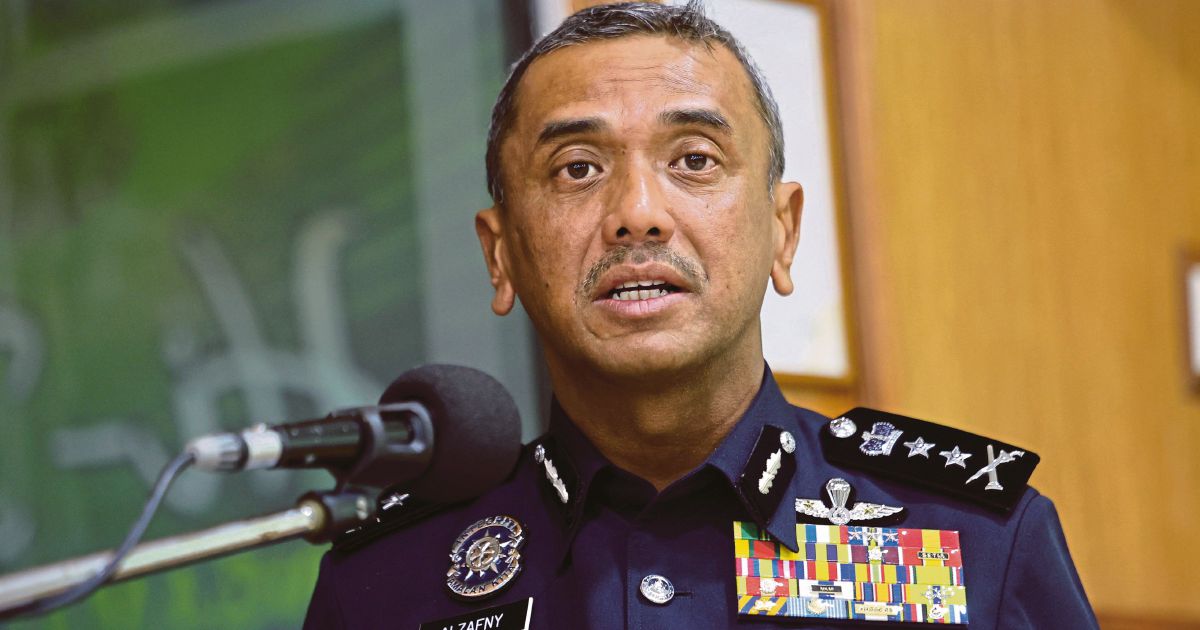
Law enforcement authorities in Negri Sembilan have issued fresh guidance to all political parties participating in the forthcoming state election, emphasising the need to maintain decorum and responsibility when addressing the electorate. The cautionary statement, delivered in Port Dickson, underscores a long-standing protocol that seeks to preserve social harmony during electoral contests by discouraging parties from weaponising historically divisive topics.
The warning specifically identifies three broad categories as potentially inflammatory: matters pertaining to religion, the institution of royalty, and racial relations. These so-called 3R issues have long been recognised by Malaysian authorities as capable of stirring communal tensions if deployed carelessly during political campaigns. By flagging these boundaries early, the police aim to establish clear expectations before campaigning gains momentum and emotions run high among supporters.
For Malaysian political campaigns, such reminders have become routine yet necessary protocol. The nation's plural society comprises multiple religious communities, ethnic groups, and constitutional arrangements that warrant special sensitivity. Elections, by their nature, create competitive environments where parties seek to differentiate themselves and mobilise supporters. Without explicit guardrails, some contestants may be tempted to cross lines that could inflame religious sensibilities, undermine respect for traditional institutions, or exploit inter-communal grievances for tactical advantage.
The timing of this advisory reflects the authorities' commitment to ensuring elections proceed smoothly without sparking the kind of social friction that could extend beyond polling day. Negri Sembilan, as a state with its own sultanate and diverse demographic composition, requires particular attention to these sensitivities. The presence of a reigning monarch within the state structure means that any perceived disrespect toward the institution carries added weight locally.
Political parties operating in Malaysia's electoral landscape understand these constraints and generally accept them as part of the social contract governing democratic competition. However, the police reminder serves as a reinforcement, particularly for newer candidates or grassroots activists who may not fully appreciate the implications of unguarded rhetoric. Campaign volunteers managing social media accounts, organising rallies, and conducting door-to-door outreach need to internalise these boundaries to prevent individual missteps from triggering wider incidents.
The framework of 3R restrictions reflects constitutional arrangements enshrined in Malaysia's founding documents. Articles guaranteeing the position and privileges of Malay-Muslim rulers, protecting religious freedom, and establishing Bumiputra rights are foundational to the nation's social compact. These are not negotiable political points but rather structural elements that transcend electoral cycles. By reinforcing this during campaign periods, authorities signal that certain institutional foundations remain beyond the scope of partisan contestation.
From a regional perspective, Malaysia's approach to managing electoral conduct around sensitive issues offers lessons about balancing democratic expression with social stability. Unlike some neighbouring democracies where such topics become fair game during elections, Malaysia's framework attempts to quarantine these areas while permitting vigorous debate on policy, governance, and economic matters. This approach has, for the most part, enabled the country to conduct regular elections without spiralling into communal violence, though tensions occasionally surface despite the guardrails.
For political operatives and candidates, the implication is clear: campaigns must focus on substantive governance issues, development agendas, economic policies, and administrative performance. These domains offer ample ground for differentiation without venturing into prohibited territory. Parties can legitimately argue about healthcare provision, infrastructure investment, education quality, or anti-corruption efforts without needing to invoke religion, royalty, or race as electoral weapons.
The police guidance also carries an implicit enforcement message. While authorities typically investigate complaints post-facto rather than pre-emptively censoring campaigns, the explicit warning creates documentary evidence of standards that parties have been placed on notice about. Should violations occur, enforcement actions can reference this prior advisement, strengthening the case that contraventions were deliberate rather than inadvertent.
Observers monitoring the Negri Sembilan campaign will watch whether parties adhere to these boundaries throughout the contest. Campaign rhetoric, social media content, public statements by candidates, and rally speeches will all be scrutinised for compliance. The true test comes not from the official warning itself but from how effectively parties internalise and operationalise these constraints among their supporters and activists in the field.
The broader challenge in Malaysian elections remains calibrating free speech and campaign freedom against communal harmony. While the 3R restrictions are constitutionally justified and historically necessary, they do create a zone of protected topics that cannot be openly debated through electoral politics. Whether this ultimately strengthens democratic culture by ensuring elections don't become destructive communal contests, or constrains necessary conversations about sensitive governance issues, remains a tension inherent to Malaysia's political system.
As Negri Sembilan voters prepare to exercise their democratic franchise, the police advisory reminds all participants that electoral competition, while robust, operates within social boundaries. Respecting these limits is presented not as censorship but as collective responsibility toward maintaining the conditions under which regular democratic contests remain possible in a diverse society.

