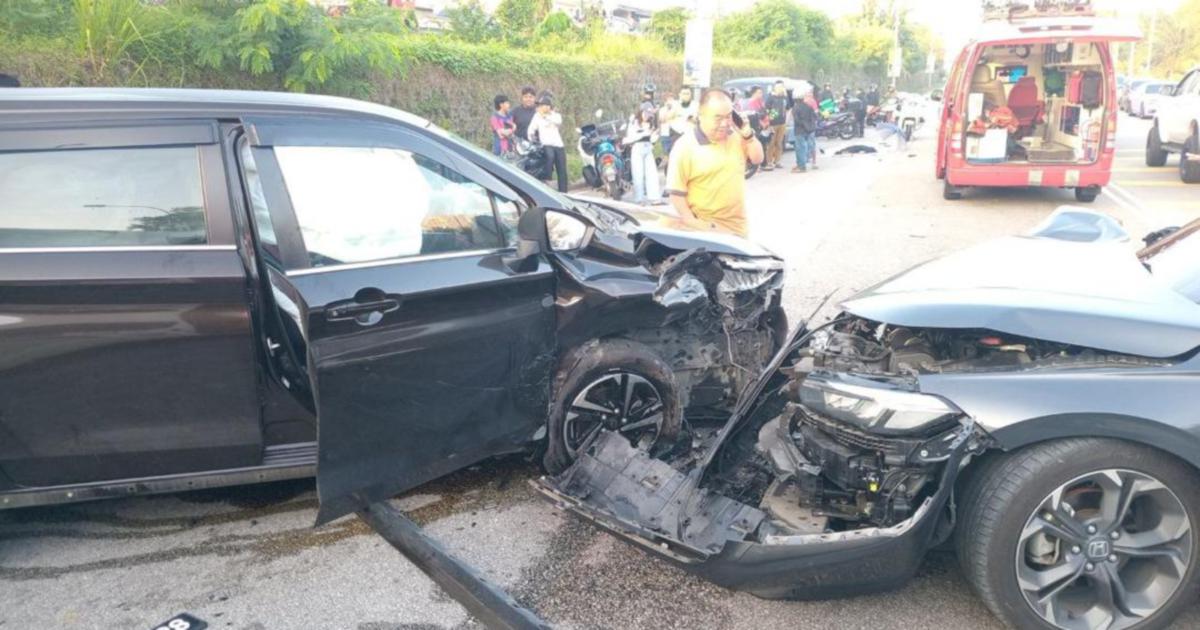
A fatal multi-vehicle collision on Jalan Permas Utama in Johor Baru this morning has claimed the life of a factory operator, prompting authorities to initiate a comprehensive investigation into the circumstances surrounding the tragedy. The victim was violently ejected from a van during the impact and subsequently crushed underneath the vehicle after it overturned, according to initial reports from the scene.
The incident has raised fresh concerns about road safety on major thoroughfares within the Johor Baru metropolitan area, where traffic congestion and high vehicle density create challenging conditions for motorists during peak hours. The collision involved four vehicles, suggesting a chain-reaction scenario that investigators will need to reconstruct meticulously to determine the sequence of events and identify any contributing factors.
Particulars of particular concern centre on the presence of multiple passengers within the affected vehicles. A father was travelling alongside three children at the time of the crash, adding a tragic dimension to an already devastating incident. The welfare and condition of these passengers have not been fully detailed, but their involvement underscores the unpredictable nature of traffic accidents and their capacity to affect entire families in moments.
Police units responded promptly to emergency dispatch calls and secured the accident scene, which remained active for investigation and vehicle recovery operations. The positioning of vehicles at the point of impact, tyre marks, and debris scatter patterns will form crucial elements of the forensic examination that collision reconstruction specialists conduct.
The victim's occupation as a factory operator suggests she was likely en route to or from workplace commitments when the collision occurred. This contextual detail may assist investigators in establishing the route and intended destination, potentially revealing whether environmental factors such as working fatigue or time pressure contributed to the circumstances of the crash.
The overturning of one vehicle represents a particularly violent component of the collision, indicating significant forces were at play during the impact. Vehicles that rotate or flip typically result from either high-speed lateral impacts or pronounced vertical loading that exceeds the structural limits of normal driving conditions. The fatal outcome—with the victim being crushed beneath the overturned van—demonstrates the catastrophic consequences when vehicles are involved in such energetic events.
Jalan Permas Utama serves as a critical arterial route within the Johor Baru transportation network, connecting residential, commercial, and industrial zones. The stretch where the collision occurred may present particular hazards depending on road geometry, visibility conditions, traffic signal timing, or the presence of vulnerable road users such as motorcyclists or pedestrians at adjacent areas. Investigators will assess whether environmental or infrastructural factors compounded the severity of the incident.
The comprehensive nature of the investigation police have committed to undertaking will likely extend beyond immediate causation to encompass vehicle mechanical condition, driver behaviour, speed analysis, and witness statements. The presence of multiple vehicles means numerous perspectives and evidence trails require careful documentation. Surveillance footage from nearby commercial establishments or traffic monitoring systems may provide valuable recorded evidence of the moments preceding the collision.
This incident arrives amid ongoing discussions throughout Malaysia regarding road safety initiatives and the efficacy of enforcement measures. Johor Baru, as one of the nation's largest metropolitan areas, experiences substantial daily traffic volumes that inevitably heighten the statistical probability of serious collisions. The concentration of heavy commercial vehicles, public transport buses, and private cars on major routes creates a complex traffic ecosystem where single driver errors or mechanical failures can cascade into multi-vehicle catastrophes.
The implications for road safety extend beyond the immediate investigation, potentially informing discussions about traffic calming measures, intersection design modifications, or enhanced monitoring at accident-prone locations. Families affected by traffic fatalities have increasingly advocated for greater emphasis on preventive measures rather than post-incident response alone. The presence of a father and children in the vicinity of this tragedy underscores the vulnerability of all road users, regardless of their relationship to the directly affected parties.
As the investigation progresses, police will likely release statements clarifying the preliminary findings, vehicle ownership details, and any factors identified as contributory causes. Depending on findings, authorities may determine whether prosecutions are warranted or whether the incident should trigger broader reviews of safety protocols at the location. Malaysian traffic fatalities have remained a persistent public health challenge, with the Ministry of Transport regularly campaigning for enhanced awareness and compliance with traffic regulations.
The incident serves as a sobering reminder that road accidents remain unpredictable and often occur despite individual drivers exercising caution. The presence of children as co-passengers amplifies the emotional weight of such tragedies and frequently motivates community demands for enhanced safety interventions. As investigations proceed, the identity and family circumstances of the deceased may emerge, placing a human dimension on the statistical reality of Malaysia's annual road toll.

