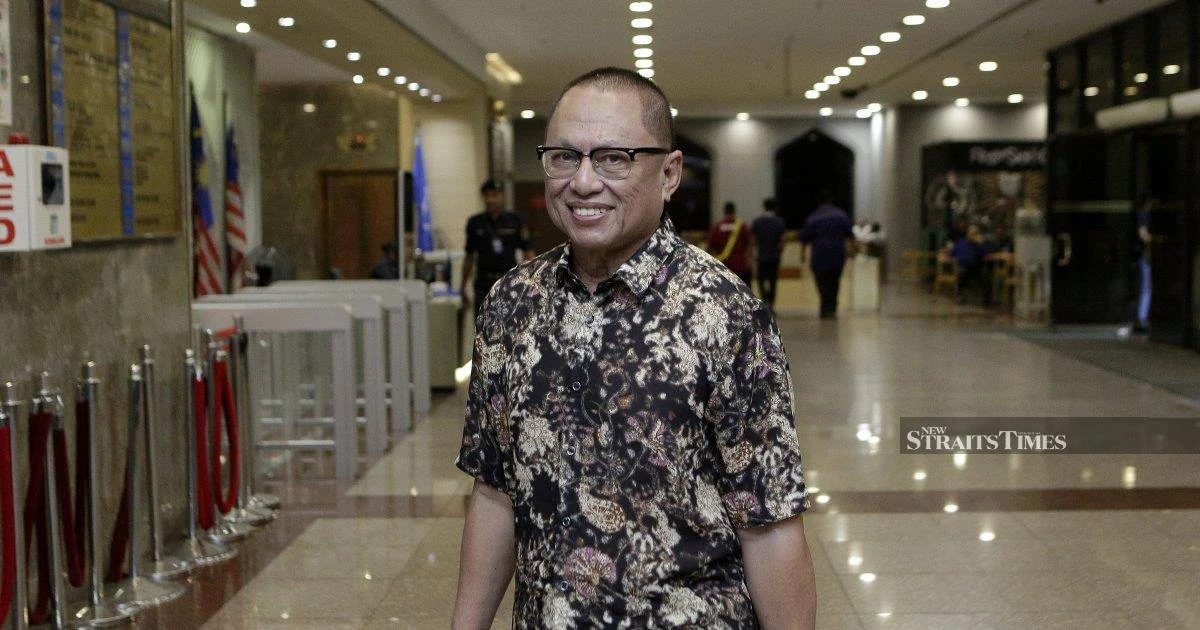
Police have initiated a comprehensive investigation into alleged remarks made by prominent Umno veteran Datuk Dr Mohd Puad Zarkashi on social media platforms, after a significant wave of police reports swept across Malaysia. The move comes as 153 separate reports were lodged with authorities nationwide in what appears to be a coordinated response to the controversial statements, highlighting the intensifying sensitivity surrounding public discourse in the current political climate.
The sheer volume of reports filed simultaneously suggests the statements in question touched upon matters of considerable concern to a broad cross-section of the Malaysian public. The filing of over 150 reports from different jurisdictions indicates that the issue has transcended local boundaries and sparked reactions in communities across the nation. For a matter to trigger such widespread formal complaints to law enforcement reflects the polarising nature of the alleged comments and the level of public feeling they have generated.
Datuk Dr Mohd Puad Zarkashi, a veteran figure within the Umno establishment with decades of involvement in Malaysian politics, occupies a position of considerable influence within ruling coalition circles. His statements, whether intended as personal commentary or political positioning, carry weight given his seniority and historical prominence. The fact that his social media posts have become the subject of formal police investigations demonstrates how the digital sphere has become an integral battleground in Malaysian political discourse, where established figures continue to wield significant reach and impact.
The decision to open a police investigation represents an escalation in the response to his comments. Rather than remaining confined to online debate and public discourse, the matter has now entered the formal law enforcement domain. This transition underscores how Malaysian authorities are increasingly scrutinising social media content from public figures, particularly when such content generates substantial public complaint. The investigation will likely examine whether any statements contravene existing laws related to public order, sedition, or other legislative provisions that govern speech in Malaysia.
The scale of the reporting phenomenon raises important questions about digital mobilisation and collective action in Malaysia's political sphere. Whether these 153 reports emerged organically from individual citizens or represent a coordinated campaign remains an open question with significant implications for understanding contemporary Malaysian political activism. The timing and volume suggest a degree of organisation, pointing to how social media can be leveraged to amplify complaints and trigger official responses to political narratives.
For the broader Umno ecosystem, this development presents a complex challenge. While Umno remains the largest component party within the ruling Barisan Nasional coalition, internal figures have occasionally become lightning rods for controversy. The involvement of a senior party member in a police investigation may generate internal discussions about party discipline and the appropriate boundaries of public commentary by senior leaders. The party leadership will likely need to navigate between defending a senior member and managing the fallout from widespread public concern about the statements in question.
The investigation also reflects the complex relationship between social media platforms, public expression, and law enforcement in contemporary Malaysia. Umno, as part of the federal government, maintains substantial influence over policing priorities and resource allocation. However, when investigations touch upon senior party members themselves, they necessarily involve delicate questions about political neutrality and the appearance of impartiality. Public confidence in law enforcement may partly depend on how visibly these investigations are pursued and whether outcomes appear determined by objective legal analysis rather than political considerations.
From a regional perspective, Malaysia's approach to social media regulation and police investigation of political figures offers a case study in how Southeast Asian democracies balance freedom of expression with public order concerns. The volume of complaints and the official response will likely be observed closely by analysts tracking Malaysia's trajectory on issues of democratic governance and media freedom. International observers frequently monitor how governments handle investigation of their own senior officials, viewing such matters as indicators of institutional independence and rule of law principles.
For ordinary Malaysians, the incident illustrates the evolving nature of political accountability in the digital age. Previously, controversial statements by established political figures might have circulated within limited circles before fading from public memory. Today, social media enables rapid amplification and coordination of public responses. The capacity of citizens to file police reports en masse creates direct channels through which public pressure can translate into formal government action. This democratisation of complaint mechanisms has fundamentally altered the political calculus for public figures considering what they communicate on social platforms.
The investigation's scope and methodology will determine its eventual outcome and political implications. Police will need to examine the precise content of the alleged statements, their context, and whether they contravene specific legal provisions. The process of investigation itself will remain in the public eye, particularly given the intense interest in the case. How quickly authorities move and what findings emerge could significantly influence perceptions of institutional fairness and political accountability within Malaysia's governance system.

