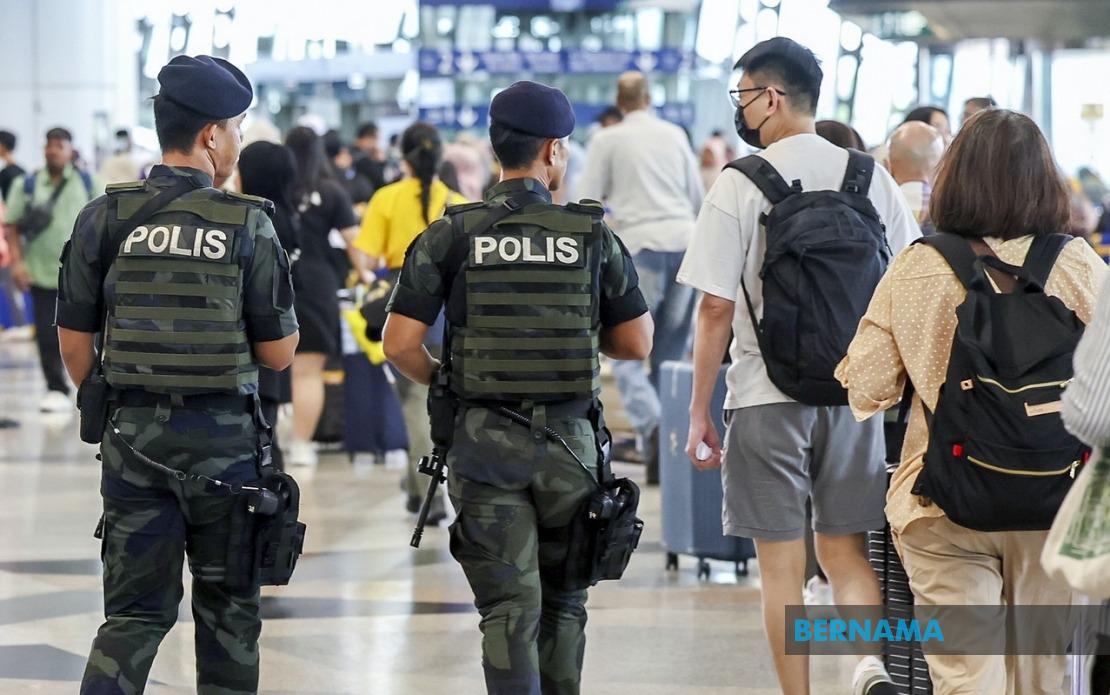
The Malaysian government has initiated a swift security overhaul at its airports in response to the arrest of a 39-year-old pilot in Indonesia on drug smuggling charges. Communications Minister Datuk Seri Fahmi Fadzil announced at a press conference in Putrajaya that personnel from the Royal Malaysia Police (PDRM) will be stationed at Aviation Security (AVSEC) units nationwide, marking a significant shift in how Malaysia manages airport safety. This deployment represents one of several immediate corrective measures approved by Cabinet following briefings from the Home Ministry and Transport Ministry about vulnerabilities exposed by the incident.
The decision to reassign AVSEC responsibilities underscores official concerns about existing gaps in personnel expertise. Currently, these critical security units are staffed by auxiliary police, a force structure considered insufficient given the sensitive nature of aviation operations and the sophisticated smuggling methods increasingly employed by criminal syndicates. By integrating full-fledged PDRM officers into these positions, authorities expect enhanced investigative capability and stronger enforcement protocols at entry and exit points. The move acknowledges that airport security transcends routine screening; it requires trained law enforcement personnel capable of recognizing complex threats and responding with appropriate authority.
The catalyst for these changes emerged when Indonesian authorities intercepted the Malaysian pilot at Soekarno-Hatta International Airport's Terminal 3 with suspected narcotics worth an estimated RM45 million at Indonesian street prices. Police investigations revealed 15 packages concealing 70,114 ecstasy and methamphetamine capsules, quantities that reflect sophisticated trafficking operations rather than personal use. The incident raises uncomfortable questions about how such volumes could have been assembled and moved through Malaysian airports without detection, suggesting that security lapses extend beyond individual screening weaknesses into systemic organizational problems.
Beyond personnel deployment, the Cabinet has directed Malaysia Aviation Group (MAG) to comprehensively review its vetting procedures for pilots and co-pilots. These protocols encompass background screening and health assessments, areas where irregularities or insufficient due diligence could enable individuals with criminal inclinations or substance abuse issues to access sensitive aviation positions. The instruction to MAG reflects governmental recognition that airport security is not solely a government function; commercial aviation operators bear substantial responsibility for ensuring their workforce maintains the highest professional standards. A pilot's position grants extraordinary access to aircraft, cargo systems, and airport operations, making personnel integrity paramount.
The Royal Malaysia Police and the Malaysian Border Control and Protection Agency (AKPS) have been tasked with conducting a comprehensive security audit to identify and eliminate loopholes that criminals might exploit. This investigative mandate extends beyond the immediate case, recognizing that sophisticated smugglers typically employ trial-and-error methods to discover vulnerabilities in security systems. Understanding how this particular operation functioned—which checkpoints were circumvented, how cargo was concealed, what official processes were compromised—becomes essential intelligence for preventing copycat attempts. Such systemic reviews often uncover procedural gaps, inadequate training, corruption, or coordination failures between different security agencies.
Fahmi indicated that the government has not yet received comprehensive documentation of the Indonesian investigation, emphasizing that any Malaysian response must await full details about the case. This measured approach reflects diplomatic sensitivity; Indonesia's investigation remains active, and premature Malaysian action could inadvertently compromise Indonesian prosecutorial efforts or create jurisdictional complications. However, the interim measures announced—police deployment and protocol reviews—demonstrate that Malaysia need not wait for complete foreign investigation results to strengthen domestic defenses. The government is pursuing parallel tracks: supporting the Indonesian process while simultaneously fortifying Malaysian vulnerabilities.
The question of establishing a specialized investigation task force remains under consideration pending receipt of the complete Indonesian police report. Such a team could focus specifically on determining whether the arrested pilot operated as part of larger Malaysian networks, whether other aviation personnel were complicit, and whether institutional failures facilitated the smuggling operation. Understanding the full scope of involvement becomes crucial for prosecution strategy and for determining whether Malaysia's own law enforcement agencies should pursue charges independent of Indonesian proceedings. The government's indication that those responsible must face justice suggests readiness to prosecute if Malaysian nationals or territory were implicated in preparation or facilitation.
For Malaysia's aviation sector and broader regional stability, this incident carries significant implications. The industry depends on maintaining confidence that commercial flights operate safely and that cargo and passenger screening genuinely protect travelers and legitimate commerce. News of a pilot involved in large-scale drug trafficking inevitably raises public concerns about what other anomalies might exist within the system. International aviation bodies and foreign carriers will scrutinize Malaysia's response, and inadequate corrective measures could eventually affect Malaysia's standing in global aviation networks or create pressure for enhanced foreign monitoring of Malaysian airports.
The timing of these developments also intersects with broader Southeast Asian challenges regarding synthetic drug trafficking, where criminal organizations continuously adapt methods to circumvent national borders and security apparatus. The 70,000-plus capsules seized represent just one shipment; regional authorities acknowledge that substantially larger volumes traverse Southeast Asia's porous maritime and aviation corridors annually. By addressing airport-specific vulnerabilities, Malaysia contributes incrementally to regional efforts, though comprehensive solutions require coordinated action across the Association of Southeast Asian Nations and with international partners. Individual national security improvements, while necessary, cannot substitute for multilateral intelligence sharing and coordinated enforcement.
The government's announcement reflects a recognition that institutional capacity and resource allocation matter profoundly in security operations. Upgrading AVSEC from auxiliary to regular police staffing carries budget implications and requires redirecting trained personnel from other assignments. Such trade-offs involve genuine opportunity costs. However, the reputational and security damage from aviation-related smuggling scandals justifies these investments. Malaysia's credibility as a stable, secure jurisdiction depends partly on demonstrating that when vulnerabilities emerge, corrective institutional responses follow swiftly and comprehensively, not merely symbolically.

