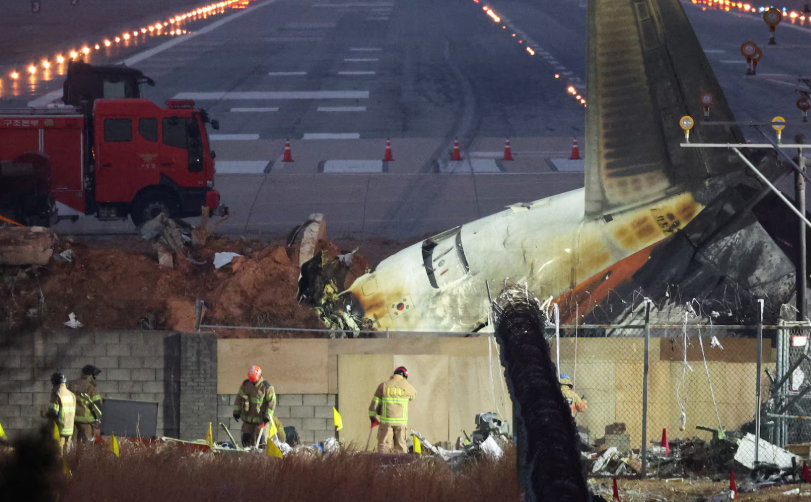
South Korean police launched coordinated raids across multiple government agencies on Tuesday in pursuit of fresh evidence relating to their expanding investigation into the Jeju Air disaster that killed 179 people last December. The Korea Airports Corp, the national transport ministry, and the Busan Regional Office of Aviation were all targeted in the operation, with investigators working to construct a comprehensive understanding of both the incident's underlying causes and the institutional response to it.
The Korea Airports Corp oversees the country's principal domestic aviation hubs with the notable exception of Incheon International Airport, which falls under separate administration. This breadth of portfolio places the organisation at the centre of South Korea's aviation infrastructure, making its operational practices and safety protocols central to the ongoing probe. The raids represent a significant escalation in the investigation's scope, with authorities apparently seeking to establish a clearer picture of how standard procedures were executed and potentially circumvented.
Police have now charged a total of 74 suspects in connection with the accident, which occurred when a Jeju Air flight attempted to land at Muan International Airport on December 29, 2024. The charges currently levelled focus predominantly on professional negligence resulting in death or injury—allegations that suggest investigators believe relevant officials failed in their duty of care towards passengers and crew. A spokesperson for the special investigative team indicated that the evidence-gathering operation was specifically designed to reinforce these existing charges.
This latest raid marked the third occasion on which the transport ministry has been subjected to police scrutiny. The repetitive nature of these searches underscores the complexity of determining institutional culpability in aviation disasters, where responsibility often becomes diffused across multiple levels of bureaucratic structure. Each successive investigation appears to have uncovered additional lines of inquiry requiring deeper examination, suggesting the authorities are methodically working through an extensive documentary and procedural landscape.
Beyond the narrow charge of professional negligence, police have indicated that prosecutors may pursue additional charges framed as causing a serious public disaster. This classification carries considerable legal weight within South Korean law, signalling that authorities view the incident as potentially stemming from systemic failures rather than isolated human error. Such charges typically apply when evidence suggests widespread neglect or institutional dysfunction contributed to loss of life.
The investigation's dual focus reflects the multiple dimensions of aviation accidents. While determining the precise technical cause of the crash remains paramount—whether mechanical failure, pilot error, or environmental factors played the decisive role—investigators must simultaneously examine how relevant agencies managed their responsibilities. Were safety protocols properly maintained? Were warning signs adequately communicated through appropriate channels? Did regulatory oversight function as intended? These institutional questions prove as crucial as the mechanical ones.
For Southeast Asian observers, the intensity of South Korea's investigative response offers instructive precedent. The region has experienced its own aviation tragedies, and the Korean approach demonstrates how advanced democracies with developed civil service traditions pursue accountability when disasters occur. The willingness to subject government agencies themselves to intense scrutiny, rather than allowing institutional self-protection to obstruct investigation, reflects institutional maturity that remains inconsistently developed across Asia.
The raids also reveal how modern governments deploy forensic investigation techniques when examining complex institutional failures. Gathering documentary evidence, communications records, and procedural documentation from multiple sites simultaneously allows investigators to cross-reference information and identify inconsistencies that might otherwise remain obscured. This coordinated approach reflects investigative sophistication that goes well beyond the immediate incident itself.
Muan International Airport's operational status since the December crash remains significant. The facility must continue functioning while remaining the subject of intensive police investigation, creating genuine tension between maintaining aviation services and conducting exhaustive inquiry. This balancing act itself becomes a matter of public policy concern, requiring careful management to ensure neither investigative thoroughness nor operational necessity is compromised.
The scale of the death toll—179 people representing one of South Korea's deadliest aviation accidents in recent decades—necessarily intensifies pressure on authorities to leave no investigative stone unturned. Public expectation for thorough accountability grows proportionally with loss of life, particularly when victims include both citizens and international passengers whose families reside beyond Korea's borders. The extended investigation timeline reflects these heightened expectations.
As the probe continues, the distinction between individual criminal responsibility and institutional liability becomes increasingly important. While the 74 suspects will face judgement as individuals, the broader investigation into whether government agencies failed collectively in their safety obligations will likely influence future policy reforms. Such systemic lessons often prove more valuable than individual prosecutions, potentially preventing similar incidents across the aviation industry.
The transport ministry and aviation authorities face considerable pressure to demonstrate that this disaster constitutes an aberration rather than a symptom of deeper structural problems. How authorities respond to investigative findings, whether reforms are implemented, and how international regulatory bodies view Korean aviation oversight will collectively determine whether this tragedy translates into meaningful institutional change.

