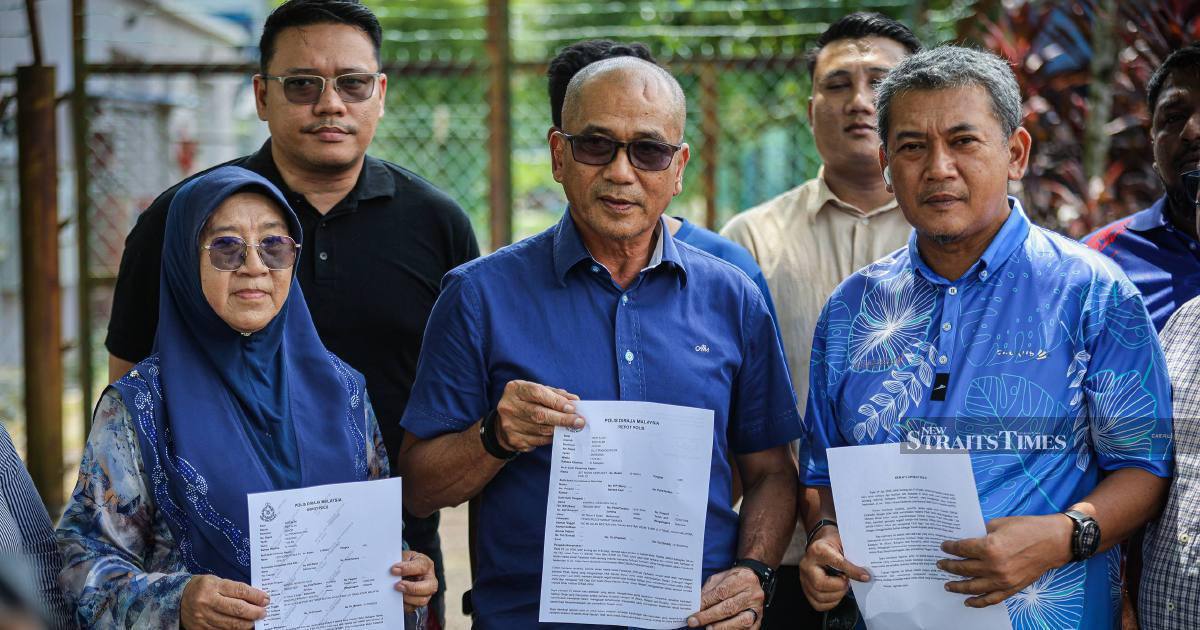
Johor Barisan Nasional members have escalated tensions within the coalition by lodging police reports against Datuk Dr Mohd Puad Zarkashi, a former Umno supreme council member, following controversial statements he made implicating the Johor palace in ongoing political dynamics at the state level. The action reflects deepening rifts within the ruling coalition and demonstrates how sensitive institutional relationships remain in Malaysian politics, particularly when the monarchy becomes implicated in partisan disputes.
Puad's public allegations have struck at the heart of one of Malaysia's most enduring political sensitivities: the proper boundary between constitutional monarchy and party politics. By suggesting that the Johor palace wielded influence over state Umno affairs, he crossed into territory that coalition members viewed as damaging to both institutional respect and party unity. The decision to file police reports rather than address the matter through internal party mechanisms signals that some Johor BN figures viewed his statements as sufficiently serious to warrant formal legal action.
The filing of police reports represents an unusual escalation in what appears to be an intra-coalition dispute. Rather than containing disagreements within party structures, where senior leaders typically manage such matters through closed-door discussions, the decision to involve law enforcement suggests the controversy had already reached a public scale difficult to manage quietly. For Malaysian politics, where institutions typically operate with considerable discretion around royal matters, this willingness to formalize complaints indicates genuine frustration among Johor BN members with Puad's conduct.
Puad's former position on the Umno supreme council lends weight to his public statements, even as it complicates the party's response. As an insider with direct knowledge of party deliberations, his allegations carried credibility that could not easily be dismissed. At the same time, his insider status means his comments invited closer scrutiny regarding whether he was speaking from reliable knowledge or making claims based on rumour and interpretation. The tension between his credentials and the seriousness of his allegations has clearly created discomfort within Umno's leadership.
The allegations themselves touch on a recurring pattern in Malaysian state politics, where questions arise about the extent to which rulers exercise influence beyond ceremonial functions. In Johor particularly, with its distinctive constitutional position and history of assertive royal engagement in governance matters, such tensions are neither unprecedented nor entirely unexpected. However, the decision to air such concerns publicly, rather than through private representations to relevant authorities, marks a departure from conventional political practice in the country.
For Johor Umno specifically, the controversy arrives at a potentially vulnerable moment. The state has experienced significant political flux in recent years, with competition between factions and questions about leadership direction creating underlying instability. When combined with broader tensions within the national Umno hierarchy, internal allegations about external interference from the palace could undermine party cohesion at precisely the moment when unity matters most. The filing of police reports effectively weaponizes the dispute, making it a matter of official record rather than internal discussion.
The Barisan Nasional coalition has long depended on maintaining strong relationships with state rulers and traditional institutions. In Johor, where the Sultan holds particular prominence both within the sultanate system and as a key political stakeholder, maintaining this equilibrium proves especially critical. Any public fracturing of the coalition's unified stance on this relationship creates openings for opposition parties to exploit the divisions and cast doubt on BN's capacity to govern effectively. The immediate response through police reports thus serves partly to contain potential damage to the coalition's broader institutional standing.
Puad's background as a former supreme council member means his removal from this position carries its own narrative weight. Whether he departed willingly or was sidelined remains relevant context for interpreting his subsequent public statements. Former party insiders who fall out with leadership occasionally become vocal critics, and understanding his motivations helps frame whether his allegations represent principled concern or personal grievance. For observers, distinguishing between these possibilities determines whether the controversy signals genuine institutional problems or represents a personality-driven conflict.
The police reports also raise questions about what specific legal offences authorities might investigate. Allegations involving institutional arrangements or political influence typically exist in grey zones where criminal liability remains uncertain. Unless Puad made defamatory statements with demonstrable falsehoods, or allegations that could constitute sedition under Malaysian law, the precise legal foundation for police investigations may remain unclear. This ambiguity itself becomes politically charged, as both supporters and critics of the action will interpret it through their existing perspectives on palace-politics relationships.
For Malaysian readers and Southeast Asian observers watching Johor politics, this episode illustrates how constitutional monarchies in the region navigate the relationship between traditional authority and democratic representation. Unlike fully constitutional monarchies with generations of settled practice around such boundaries, Malaysia's system remains relatively young and sometimes contentious. When senior figures make public allegations about undue royal influence, even if they target a specific state rather than the federal monarchy, they invite scrutiny of institutional arrangements affecting the entire system.
The broader implications extend to questions about whether institutional tensions in Malaysian politics can be resolved through legal processes or require political settlement. Filing police reports transfers the matter from the political sphere into the legal domain, but resolution may ultimately depend on political understanding between senior figures. If Puad's allegations carry weight within party circles despite public denials, the filing of reports addresses symptoms rather than underlying causes. Conversely, if the allegations reflect only personal disagreement, then formalizing the complaint through police channels risks legitimizing claims that might otherwise dissipate.
Moving forward, the investigation's trajectory will signal whether authorities view the matter as genuinely warranting criminal inquiry or as a political dispute that the legal system is being asked to help manage. How Johor Umno leadership manages this controversy, and whether it prompts reflection on palace-party relationships more broadly, will shape perceptions of institutional health across Malaysia's political system. The incident ultimately reflects how sensitive questions about power, tradition, and governance remain in Malaysian politics despite decades of independent practice.

