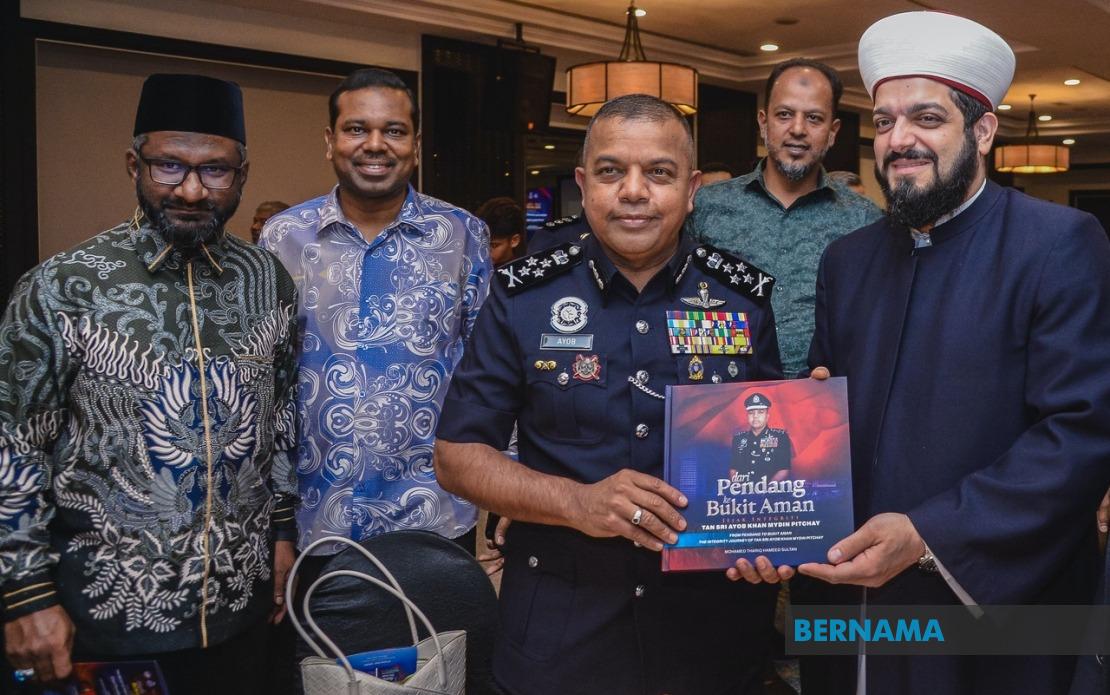
Militant and extremist organisations operating in Malaysia and the region are rapidly adapting their recruitment methods to exploit digital technologies, with law enforcement officials warning that this transformation represents an escalating threat that demands urgent and sustained police vigilance. Deputy Inspector-General of Police Tan Sri Ayob Khan Mydin Pitchay delivered this stark assessment during a public engagement in Kuala Lumpur, emphasising that the nature of radicalisation has fundamentally shifted in ways that traditional counter-terrorism strategies may struggle to address effectively.
The migration of recruitment activities from conventional in-person religious study circles, or usrah sessions, to digital spaces marks a significant tactical evolution that poses particular challenges for Malaysian authorities. These groups are now leveraging mainstream entertainment platforms, including the widely popular online game Roblox, as recruitment channels where potential targets can be identified, isolated, and gradually introduced to extremist messaging. This approach exploits the inherent privacy of digital environments and the difficulty law enforcement faces in monitoring the vast flow of communications occurring simultaneously across multiple platforms and games worldwide.
What distinguishes this new phase of extremist activity is the psychological profile it targets and the motivations it cultivates. Rather than relying exclusively on religious doctrine or ideological conviction, recruitment campaigns increasingly rely on emotional manipulation—channelling individual grievances, anger, and a sense of alienation into commitment to violent causes. This emotional-based recruitment strategy proves particularly effective among younger demographics who may lack the critical frameworks to evaluate extremist arguments, and recent arrests involving teenagers demonstrate that this vulnerability extends across Malaysian society regardless of socioeconomic background.
The complexity of combating online recruitment stems partly from the decentralised nature of digital ecosystems and the sophisticated operational security measures employed by extremist networks. Platforms like Roblox, designed primarily as entertainment spaces for younger users, contain countless private servers and chat functions where radicalisation can occur in plain sight, hidden among legitimate gaming activity. Law enforcement must now develop expertise in digital environments that evolve faster than the technical knowledge within many traditional police units, creating an asymmetrical advantage for those exploiting these spaces.
Ayob Khan's remarks underscored a fundamental requirement for police strategy: maintaining a posture of aggressive prevention rather than reactive response. The distinction carries critical implications for public safety and intelligence capabilities. An intelligence failure in this context would manifest not as information gaps but as missed opportunities to intercept threats before they transform into actual attacks. This proactive mandate extends beyond the Special Branch's Counter-Terrorism Division E8 to encompass the entire Malaysian police apparatus, requiring institutional coordination that transcends traditional departmental divisions.
The characterisation of modern extremism as increasingly motivated by emotional and psychological factors rather than purely theological grounds suggests that counter-messaging strategies focused solely on religious refutation may prove insufficient. Programmes addressing grievance, belonging, and identity formation may be equally essential to prevention efforts. This represents a departure from some historical counter-extremism approaches that concentrated narrowly on theological debate, recognising that recruitment to violence often exploits emotional vulnerabilities that predate ideological conviction.
For Malaysia specifically, the acceleration of online recruitment assumes heightened significance given the nation's young, digitally native population and its geostrategic position as a transit hub where regional extremist networks may operate. The country's multicultural composition and established diaspora communities, while generally promoting cohesion, also create potential friction points that extremists can exploit to foster divisions and isolation among vulnerable individuals. The convergence of these factors demands that counter-terrorism resources be allocated with sophisticated understanding of how digital environments intersect with Malaysia's particular social landscape.
The involvement of senior officials from the Criminal Investigation Department, Commercial Crime Investigation Department, and Internal Security apparatus in Ayob Khan's public statement signals official recognition that extremist threats now permeate multiple spheres of law enforcement concern. This coordinated posture suggests institutional acknowledgment that fragmented responses to online radicalisation will prove inadequate. Agencies must share intelligence, coordinate surveillance activities, and develop unified operational standards for detecting and disrupting recruitment networks that span multiple platforms and jurisdictions.
The broader Southeast Asian context amplifies these concerns. Militant groups operating across the region increasingly demonstrate digital sophistication and cross-border coordination. Malaysia's role as a potential recruitment centre or transit point for regional extremist movements means that failures in domestic counter-terrorism may have ramifications extending far beyond national borders. Conversely, extremist activity in neighbouring countries can spill into Malaysia through online channels that respect no geographic boundaries.
Police must now engage in what amounts to continuous digital reconnaissance, developing the technical capability and personnel expertise to infiltrate and monitor extremist communications without triggering operational security protocols that alert malicious actors. This intelligence burden falls particularly heavily on units like Counter-Terrorism Division E8, which must expand capacity beyond traditional investigative methods. Additionally, partnerships with technology companies and digital platforms become essential, requiring law enforcement to operate within legal frameworks that protect privacy while enabling identification of genuine threats.
The challenge ahead for Malaysian authorities involves calibrating prevention efforts that remain effective without creating widespread surveillance infrastructure that fundamentally alters the relationship between citizens and law enforcement. Public cooperation remains vital to identifying individuals at risk of radicalisation, yet excessive monitoring can breed resentment and distrust. Successfully navigating this tension will depend on transparent communication about threats, demonstrated capability to prevent attacks before they occur, and public confidence that law enforcement acts within established legal boundaries.
Ayob Khan's warning ultimately reflects a security landscape in which technological innovation continuously outpaces institutional adaptation. Extremist groups enjoy the advantage of decentralised decision-making, rapid tactical adjustment, and direct access to evolving digital tools. Law enforcement responds through established hierarchies and bureaucratic processes that necessarily lag behind emerging threats. Bridging this gap demands not merely enhanced budgets or personnel but fundamental reimagining of how police organisations structure themselves to operate effectively in digital environments where recruitment and radicalisation unfold in real time.

