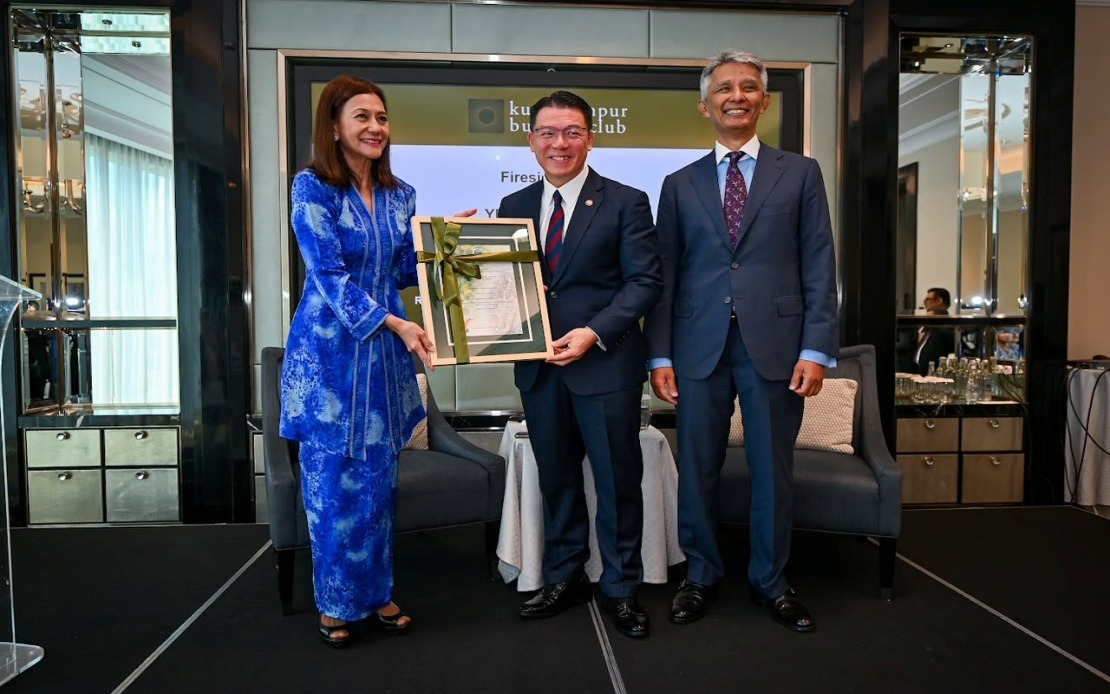
Housing and Local Government Minister Nga Kor Ming has underscored the importance of maintaining steady policy direction as Malaysia pursues comprehensive economic reforms, arguing that consistency in governance will prove instrumental in translating ongoing initiatives into tangible long-term prosperity. Speaking at an event organised by the Kuala Lumpur Business Club, Nga stressed that the stability provided by continued policy adherence underpins investor sentiment and enables the nation to preserve its regional competitiveness amid rapidly evolving global conditions.
The minister's remarks come as the MADANI government, helmed by Prime Minister Datuk Seri Anwar Ibrahim, continues to pursue structural reform across multiple economic and institutional domains. Nga indicated that a sustained mandate would furnish policymakers with the necessary timeframe to deepen reforms across governance structures, enhance the capacity of key institutions, and bring to fruition ambitious transformation strategies already in motion. This emphasis on continuity reflects a broader recognition within government circles that meaningful economic restructuring demands multi-year commitment rather than episodic policy shifts.
According to Nga, the MADANI framework has already yielded measurable improvements in several critical metrics. Malaysia's standing as an investment destination has strengthened, supported by explicit policy frameworks, solid macroeconomic fundamentals, and the relative political stability that has emerged following recent electoral cycles. The government points to resilient export performance during a period of global economic headwinds as evidence that its economic management approach is yielding practical results. These developments, Nga suggested, demonstrate that the reform agenda is not merely aspirational but is producing concrete outcomes that merit continued investor engagement.
The government's achievements in governance transparency have also featured prominently in its reform narrative. Malaysia's position on the Corruption Perceptions Index has improved, a metric that international investors frequently consult when assessing market stability and institutional reliability. Simultaneously, the country has maintained strong international credit ratings despite global economic volatility, signalling to financial markets that fiscal discipline remains a hallmark of policy implementation. These improvements in external perception translate into tangible benefits, as they reduce the cost of capital for Malaysian businesses seeking to access international financing and encourage foreign direct investment flows into the economy.
Beyond domestic institutional strengthening, Nga highlighted the government's success in securing high-value international partnerships that open new avenues for investment and technological cooperation. The strategic partnership with Turkmenistan, valued at RM52.73 billion, represents a significant commitment in energy and infrastructure development that could reshape Malaysia's position within emerging regional supply chains. Long-term energy collaboration initiatives with Russia underscore a deliberate diversification of Malaysia's international economic relationships, reducing dependency on traditional partners and creating additional channels through which capital, expertise, and technology might flow into the domestic economy.
These partnerships exemplify a foreign policy approach grounded in strategic pragmatism rather than ideological rigidity. By cultivating relationships with both established and emerging economies, Malaysia positions itself as a neutral, business-friendly jurisdiction capable of serving as a bridge between diverse economic blocs. This diplomatic flexibility, combined with consistent domestic reform, creates conditions in which multinational corporations and investors perceive Malaysia as a stable, welcoming environment for long-term capital deployment. The cumulative effect of such positioning is that economic opportunities that might otherwise accrue to regional competitors instead flow toward Malaysian shores.
The emphasis on policy continuity also reflects pragmatic lessons from Malaysia's recent economic history. The nation has experienced periods of reform disruption in the past, often resulting in delayed implementation of structural changes and investor hesitation. By contrast, sustained commitment to agreed reform trajectories creates predictability for both domestic enterprises and foreign investors. Businesses can make long-term investment decisions without hedging against the risk that policy reversals might render their strategic calculations obsolete. This reduction in policy-related uncertainty translates into lower risk premiums and more aggressive capital allocation toward productive activities.
For Malaysian enterprises seeking to upgrade their capabilities and expand regionally, policy consistency offers a stable platform from which to execute expansion strategies. International competitors operating in jurisdictions characterised by frequent policy shifts must maintain larger contingency reserves and sophisticated scenario planning apparatus, costs that are partially transferred to consumers and shareholders. Malaysia's commitment to steady reform, by contrast, allows its businesses to allocate resources more efficiently toward innovation and market development rather than bureaucratic navigation and regulatory risk management.
The MADANI framework itself represents an attempt to codify reform priorities within a structured, publicly articulated vision of national economic transformation. By embedding reform objectives within a named, branded governmental agenda, policymakers create institutional mechanisms that persist even as individual ministers and officials rotate through positions. This institutional embedding of reform priorities increases the likelihood that initiatives will continue regardless of specific personnel changes, thereby deepening the policy continuity that Nga emphasises as essential to economic transformation.
For Southeast Asian observers, Malaysia's emphasis on institutional reform continuity offers instructive contrasts with other jurisdictions in the region that have experienced periods of policy volatility or institutional uncertainty. As competition for foreign direct investment intensifies across the Association of Southeast Asian Nations, the jurisdictions that maintain the most stable, predictable policy environments tend to attract disproportionate shares of capital flows. Malaysia's deliberate cultivation of this reputation for policy consistency thus represents a competitive advantage in regional competition for investment and talent.
Looking forward, sustained implementation of the MADANI reform agenda will likely require continued political consensus around core economic priorities, even as specific policy instruments may evolve in response to changing circumstances. The government's framing of policy continuity as central to economic transformation suggests that policymakers understand that meaningful structural change unfolds over years rather than months, and that premature shifts in direction risk undermining progress already achieved. This measured, long-term orientation to economic policymaking stands in contrast to the short-term political cycles that often dominate governance in less institutionally developed contexts.