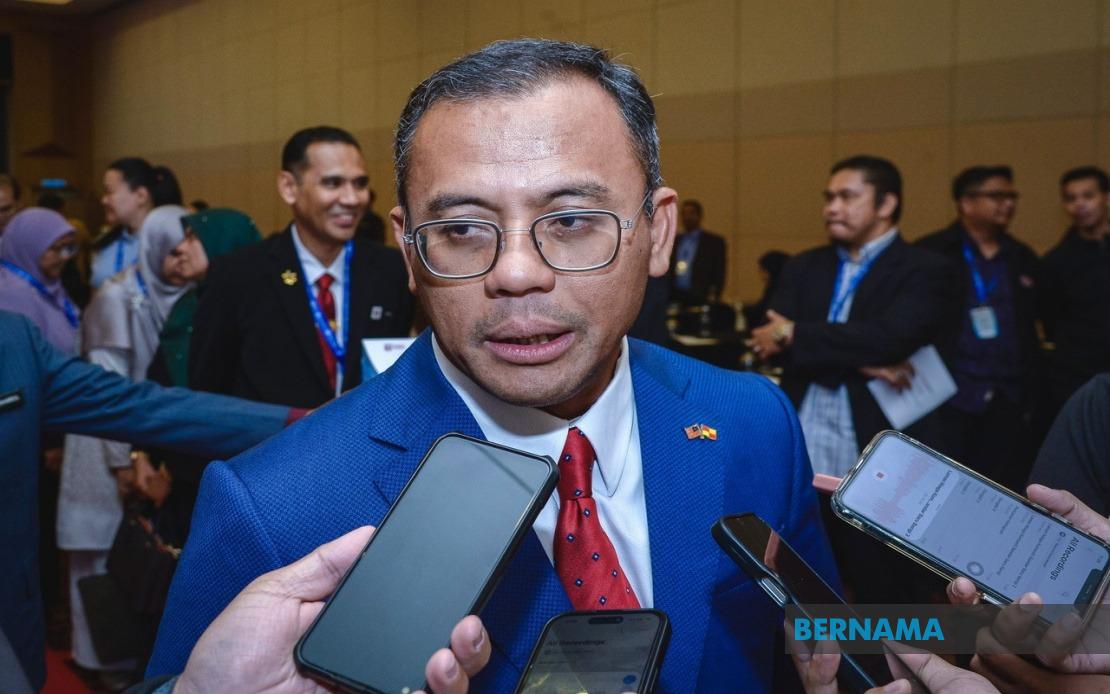
Selangor Menteri Besar Datuk Seri Amirudin Shari has called for a fundamental shift in how governments design and implement policies, arguing that disconnected interventions fail to address the genuine complexities that ordinary families encounter. Speaking at the Human Ecology International Conference II 2026 in Bangi, Amirudin emphasised that effective governance must transition from viewing policy domains in isolation towards understanding them as integrated systems that shape people's lived experiences.
The practical reality facing Malaysian households demonstrates why this reframing matters. Families do not experience healthcare decisions separately from childcare arrangements, or employment opportunities detached from transport constraints and housing affordability. These elements operate as an interdependent web in which a shortage of affordable public transport, for instance, directly influences whether parents can maintain stable employment or whether children receive adequate supervision. Similarly, rising living costs do not affect just one budget category; they create cascading pressures across housing, food security, healthcare access, and educational investment. Yet many government programmes remain siloed within individual ministries, each addressing symptoms rather than the systemic environment generating those symptoms.
Amirudin's framing introduces a critical distinction between institutional success and human wellbeing. A policy might be deemed successful by ministry metrics—if a childcare subsidy programme reaches its target beneficiaries or a transport system operates on schedule—while still failing to enable families to genuinely thrive. The menteri besar's formulation of the question moves beyond whether families are "coping" with their circumstances towards asking whether the surrounding structural environment facilitates their flourishing. This represents a more ambitious vision of governance, one that recognises inequality and strain as features of the policy environment itself rather than as individual shortcomings.
The structural pressures Amirudin identified resonate particularly across Southeast Asia. Long commutes, which consume not just time but energy, mental health, and family interaction, represent a direct consequence of planning and transport policies that fail to coordinate residential development with employment hubs. Caregiving demands reflect both demographic shifts—ageing populations and smaller family sizes—and the absence of integrated social infrastructure. Changing work patterns, accelerated by digitalisation and the lingering effects of the pandemic, have outpaced housing policy, forcing families into either unsustainable debt or geographic separation. Rapid technological change simultaneously creates opportunity and vulnerability, benefiting those with digital access while excluding others from employment and service access. When policymakers address each challenge through separate administrative channels, they inevitably miss critical interactions.
The implication for Malaysia is substantial. As the nation pursues its growth agenda and addresses cost-of-living pressures, the approach to policy design will significantly determine whether benefits reach families broadly or whether structural constraints prevent actual improvement in living standards. A coordinated approach requiring health, transport, housing, and labour ministries to jointly design interventions could yield far greater impact than incremental adjustments within existing silos. This necessitates not merely cooperation but genuine integration of planning and implementation.
Amirudin's emphasis on university partnerships throughout the policy cycle introduces another essential dimension. Academic institutions, particularly those specialising in human ecology and social research, possess analytical capacity to map these interconnections, identify unintended consequences of fragmented policies, and evaluate which integrated approaches actually produce sustained improvements in wellbeing. Universities can serve as neutral ground for testing policy combinations and generating evidence before full-scale implementation, reducing the risk of expensive failures.
The announcement of the ASEAN Human Ecology Consortium during the conference signals recognition that these challenges transcend national borders. Indonesia, the Philippines, Malaysia, and other regional nations confront similar structural pressures—rapid urbanisation, evolving family structures, technological disruption, and resource constraints. The platform for joint research and policy dialogue could enable countries to learn from each comparative experiences, accelerating identification of approaches that genuinely improve human wellbeing across the region.
For Malaysian policymakers, the immediate task involves cultivating cross-ministerial working groups tasked with mapping the interconnections within priority areas such as urban planning, affordable housing, childcare provision, public transport, and employment support. These groups should include not only government officials but also researchers, practitioners working directly with communities, and representatives from affected families themselves. This inclusive approach ensures that policy design incorporates both technical expertise and experiential knowledge of how policies function in reality.
The Memorandum of Understanding between Universiti Putra Malaysia and the University of the Philippines Los Baños facilitates knowledge exchange precisely at this intersection of institutional research capacity and policy application. Student and faculty mobility enable researchers to observe policy implementation across different contexts, generating comparative insights. Publications emerging from such collaboration can influence regional policy conversations, while policy dialogue forums create space for practitioners to engage with research findings and adapt them to local circumstances.
Implementing this integrated approach requires patience with institutional complexity and willingness to slow down isolated interventions in favour of coordinated ones. Government systems typically organise around functional specialisation; transforming them towards holistic policy design demands structural innovation. Performance metrics may need revision to measure not institutional output but genuine household outcomes. Budget allocation processes may require modification to support cross-ministerial initiatives rather than purely departmental ones.
Amirudin's vision ultimately represents a more mature understanding of governance in complex, urbanising, rapidly changing societies. Malaysia's success in addressing cost-of-living pressures, housing affordability, and employment quality depends not on more policies but on smarter coordination of existing capabilities. The Human Ecology International Conference II 2026 provides a moment for Malaysian policymakers and researchers to crystallise this insight into concrete mechanisms and sustained commitment to integrated, evidence-informed governance that genuinely improves how families experience their daily lives.

