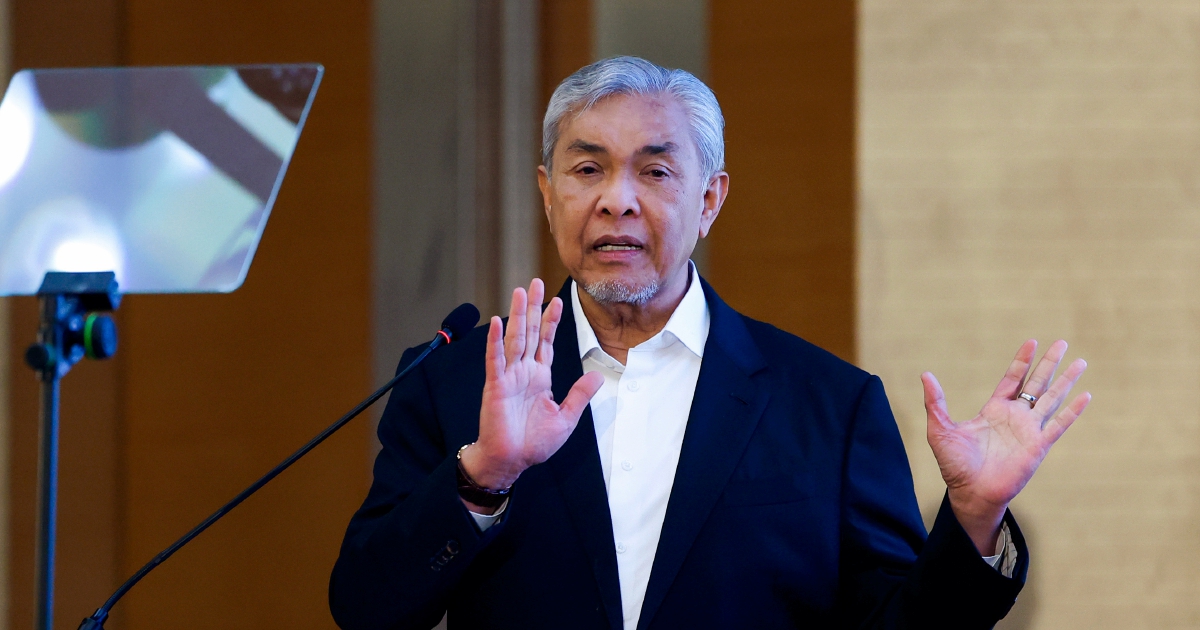
Datuk Seri Dr Ahmad Zahid Hamidi, steering the Barisan Nasional coalition, has issued a pointed appeal to Malaysian political organisations to heed the Negri Sembilan Palace's formal guidance regarding campaign conduct during the ongoing state election. The Barisan Nasional chairman emphasised that political parties must exercise restraint when it comes to matters touching on the sensitive domains of race, religion and the institution of royalty—collectively known as the 3R framework in Malaysian political discourse.
The reminder carries considerable weight given that the Negri Sembilan monarchy occupies a constitutionally protected position within Malaysia's federal system. Unlike some other states, Negri Sembilan has an elective monarchy, where the Yamtuan Besar is selected from among the nine Undangs (district chiefs), a system that underscores the state's distinctive governance structure. When the Palace issues guidance on campaign behaviour, it reflects serious concern about the tone and substance of political debate affecting the realm.
Zahid's public restatement of this directive signals Barisan Nasional's commitment to maintaining decorum during the electoral contest. For the coalition that has dominated Malaysian politics for decades, observing such conventions demonstrates not only respect for constitutional institutions but also a measured approach to competitive politics. The timing of such reminders before major elections is standard practice, yet their repetition suggests ongoing tension around how aggressively political actors test the boundaries of acceptable discourse.
The concept of 3R issues represents a longstanding pillar of Malaysian political culture, enshrined partly in the Constitution and partly in unwritten conventions. These sensitivities reflect the historical compromises made during Malaysia's formation and independence, where constitutional protections for Islam, bumiputera rights, and the royalty system formed the foundation of the social contract. However, the delineation of what constitutes a 3R issue versus legitimate political debate remains contested and contextual, with different observers drawing different lines.
For opposition parties and smaller political entities contesting the Negri Sembilan election, such warnings carry implicit messages about the consequences of transgression. While Malaysian law does provide mechanisms for addressing sedition or breaches of the Sedition Act—though the latter has been selectively enforced—the Palace's informal but potent moral authority often proves more constraining than legal penalties. Parties that ignore such guidance risk not only legal exposure but reputational damage among conservative and institutional-minded voters.
The election itself occurs within Malaysia's broader political landscape, where state-level contests serve as barometers for national sentiment. Negri Sembilan, located in the Klang Valley's southern hinterland, contains a complex mix of urban and rural constituencies, with significant Indian and Chinese populations alongside the Malay majority. This demographic composition means that prudent campaigns must balance appeals to different communities without triggering accusations of stoking communal divisions.
Zahid's emphasis on respecting the Palace's position also reflects wider institutional concerns about maintaining the separation between formal state organs and partisan political competition. Malaysia's constitutional monarchy provides ceremonial and symbolic unification across the federation, and when political campaigns threaten to drag royal institutions into controversy, they potentially undermine the stabilising role these institutions are meant to play. The Negri Sembilan Palace's preemptive guidance suggests awareness of this risk.
From a Southeast Asian perspective, Malaysia's approach to constraining certain categories of political speech stands out as relatively formal and institutionalised compared to regional peers. Thailand's lèse-majesté laws represent a more severe version of royal protection, while Indonesia's more permissive approach reflects a different constitutional settlement. Malaysia's reliance on a combination of constitutional provisions, legislation, and institutional convention represents a middle path that attempts to protect certain domains while preserving democratic contestation.
The opposition's response to such directives often involves carefully calibrated messaging that acknowledges the Palace's authority while attempting to push boundaries around what constitutes legitimate political discussion. In recent years, particularly during periods of political turbulence, this balancing act has become increasingly fraught, with accusations from various quarters that rivals weaponise 3R sensitivities for partisan advantage.
Zahid's role as Barisan Nasional chairman makes his public endorsement of the Palace's reminder strategically significant. It positions the coalition as the defender of constitutional order and institutional respect, a message likely to resonate with older, more conservative voters who value continuity and traditional hierarchies. This framing has long been central to Barisan Nasional's electoral pitch, particularly as it faces challenges from more populist competitors.
The Negri Sembilan election will test whether all contesting parties honour this directive or whether the temptation to gain electoral advantage by exploiting communal sensitivities proves irresistible. Such conduct carries implications extending beyond the state level, potentially influencing expectations about permissible discourse in future national elections.
Ultimately, Zahid's reminder reflects an ongoing Malaysian tension between maintaining institutional respect and enabling vigorous democratic debate. The challenge for all political actors lies in recognising genuine grievances and political differences without permitting such differences to metastasise into communal polarisation. The Negri Sembilan Palace's guidance, and Barisan Nasional's public support for it, represents an attempt to hold that difficult line.

