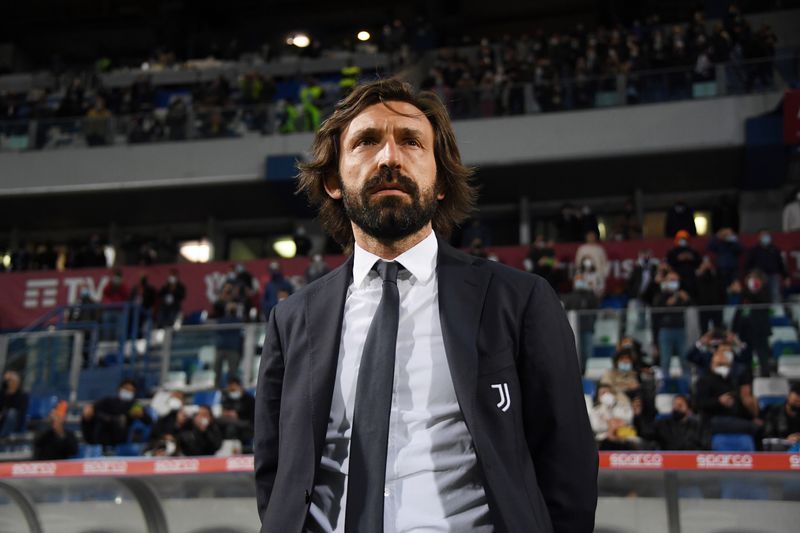
Andrea Pirlo's emerging candidacy to become Italy's next head coach has encountered formidable political obstacles stemming from his commercial relationship with a Russian betting enterprise. The legendary midfielder, who won the World Cup with Italy in 2006, had positioned himself as the frontrunner to take over from Gennaro Gattuso, particularly after Pep Guardiola declined the position. Yet this apparent consensus has fractured as senior Italian Football Federation (FIGC) officials and parliamentarians grapple with the reputational consequences of Pirlo's role as global ambassador for Fonbet, a Moscow-based bookmaker.
The controversy represents an awkward complication for Giovanni Malago, the newly elected FIGC president tasked with revitalizing Italian football following the country's third consecutive failure to secure World Cup qualification. Pirlo signed the ambassadorship agreement with Fonbet in October and subsequently appeared at a promotional event at Moscow's Luzhniki Stadium with former international teammate Marco Materazzi. The timing of that appearance drew particular scrutiny from observers, as the visit coincided with ongoing aerial bombardments of Ukraine. When asked to explain his involvement, Pirlo characterised his participation as apolitical in nature, yet the damage to his candidacy appears to have already taken root.
Notably, Pirlo currently directs United FC, a club competing in the United Arab Emirates Pro League based in Dubai. His role at the club has not shielded him from domestic political pressure back in Italy. The FIGC has declined to provide substantive comment to international media outlets investigating the matter, though sources within the federation acknowledged that Pirlo's connections to Russia are undergoing formal evaluation and that the matter remains unresolved. This ambiguous stance suggests internal divisions within the federation itself regarding how to proceed.
Despite backing from Paolo Maldini, the federation's newly appointed technical director and himself an iconic figure in Italian football, Pirlo has encountered resistance from prominent political voices. Pina Picierno, serving as vice-president of the European Parliament, took to social media to criticise the potential appointment, arguing that Italy's football programme requires transformation across cultural, ethical, and managerial dimensions. She contended that selecting Pirlo would represent movement in precisely the wrong direction given the national team's recent disappointments.
Ignazio La Russa, who chairs the Italian Senate and belongs to Prime Minister Giorgia Meloni's political coalition, articulated his reservations with deliberate restraint. In comments to news agency ANSA, La Russa acknowledged respect for Malago and Maldini while simultaneously expressing profound doubt about Pirlo's suitability for the coaching position. Though recognizing Pirlo's accomplished playing career, La Russa characterised elevating him to the senior coaching role as venturing into uncharted and potentially risky territory. His cautious language masked substantive concern about the appointment.
Carlo Calenda, leading the centrist Azione party, adopted a more forthright posture in his criticism. Calenda articulated a broader principle that individuals or entities promoting Russian interests following 2022—presumably referencing Russia's invasion of Ukraine—should be disqualified from holding positions of national significance. This statement effectively established a categorical boundary regarding acceptable professional associations for those seeking prominent roles in Italian public life, suggesting that Fonbet's Russian origin alone presents disqualifying factors beyond questions about Pirlo's political intentions.
The betting company connection intersects with broader European sensitivities regarding Russia in the post-invasion period. For Southeast Asian observers and Malaysian readers particularly, this controversy illustrates how geopolitical tensions ripple through sporting institutions, even in regions far removed from the conflict itself. The incident demonstrates that athletic and entertainment industries cannot entirely insulate themselves from diplomatic and political considerations, a lesson increasingly relevant across Asia as commercial partnerships with Russian entities face heightened scrutiny from Western political establishments.
The federation's equivocal response suggests internal struggle over how to balance managerial credentials against political and ethical considerations. Maldini's endorsement of Pirlo carries considerable weight given his legendary status within Italian football, yet this backing appears insufficient to overcome mounting parliamentary and bureaucratic objections. The situation reflects broader tension within Italian governance structures, where football federation decisions increasingly intersect with governmental and parliamentary oversight.
For Malaysia and the Southeast Asian region, this controversy offers instructive perspectives on how major football federations navigate complex international political environments. The FIGC's apparent paralysis on the Pirlo question—neither decisively appointing him nor definitively rejecting him—reveals the institutional complications that arise when sporting excellence collides with political acceptability. As Asian football confederations develop increasingly sophisticated corporate sponsorship structures, questions about the political dimensions of commercial partnerships will likely become more prominent in regional discussions.
The ultimate resolution of the Pirlo question remains uncertain, but the trajectory thus far suggests that even his World Cup-winning credentials and managerial experience may prove insufficient against the weight of political objection. Whether the FIGC ultimately proceeds with his appointment despite the opposition, selects an alternative candidate, or finds some compromise arrangement will signal important messages about the federation's priorities and the extent to which European football governance permits external political considerations to override sporting merit in leadership decisions.

