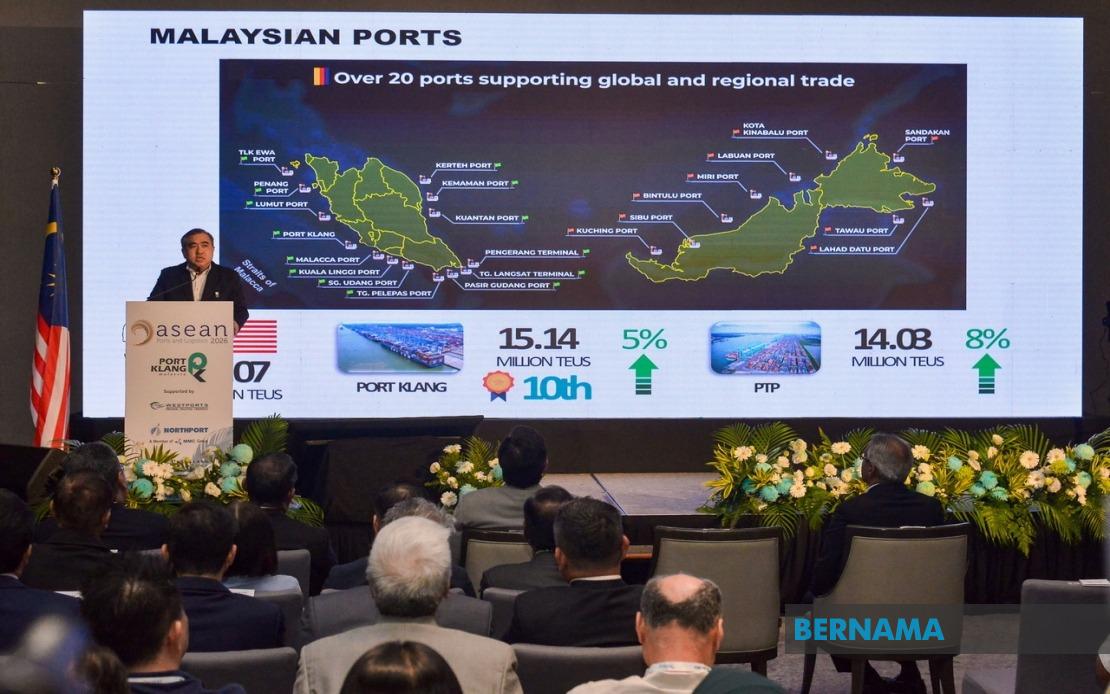
Transport Minister Anthony Loke has set his sights on transforming Malaysia into Southeast Asia's pre-eminent maritime hub through an ambitious expansion of Port Klang, unveiling plans for a Third Terminal on Carey Island that will fundamentally reshape the nation's position in regional shipping and logistics. Speaking at the opening of the ASEAN Ports and Logistics Conference and Exhibition in Kuala Lumpur on July 8, Loke described the multi-phase development as essential infrastructure to sustain Malaysia's competitive edge in global maritime trade over the coming two to three decades.
The scale of Malaysia's maritime ambition becomes apparent when comparing Port Klang's current capacity with that of rival ports in the region. The existing facility handles approximately 20 million twenty-foot equivalent units (TEUs) annually, a figure that pales beside Singapore's Tuas Port, which boasts a handling capacity of up to 60 million TEUs per year. This threefold disparity underscores the urgency driving the Third Terminal initiative and highlights the competitive pressure Malaysia faces in retaining and attracting container traffic in one of the world's most contested shipping markets. The Carey Island development represents the government's determination to close this capability gap and position Port Klang as a true mega-port capable of processing enormous volumes of containerised cargo.
Loke's vision extends beyond mere numbers. The Third Terminal project, which is expected to require nearly two decades for full completion once construction begins, reflects long-term strategic thinking about Malaysia's role in global supply chains. By substantially expanding Port Klang's throughput capacity, the government aims to ensure the country remains an attractive alternative for international shipping lines and cargo operators navigating an increasingly complex geopolitical landscape. The phased implementation approach provides flexibility to adjust development timelines and investment levels according to market demand and economic conditions, a pragmatic strategy for managing a project of such considerable scale and expense.
Progress on the Carey Island terminal has advanced considerably. A feasibility study that commenced in 2018 has reached completion, providing detailed technical, financial, and operational assessments of the project's viability. The Cabinet has subsequently granted in-principle approval for the development to proceed under a public-private partnership model, a structure that will distribute financial risk and leverage private sector expertise and efficiency. However, Loke acknowledged that bureaucratic hurdles remain before construction can commence, specifically relating to land acquisition and utilisation issues that require resolution with the Selangor state government. These administrative matters, while less glamorous than infrastructure announcements, represent the practical bottlenecks that often delay major development projects.
The Carey Island terminal initiative builds upon earlier government decisions. In March, the government formally approved the Third Terminal development as part of broader efforts to strengthen Malaysia's economic capabilities and market position within the regional ports and logistics sector. This sustained policy momentum demonstrates consistent political commitment to port modernisation and reflects recognition among decision-makers that Malaysia's maritime future depends on substantial capital investment and strategic planning. The government's willingness to move forward despite economic uncertainties and land-related complications signals confidence in the project's long-term returns and Malaysia's capacity to execute major infrastructure developments.
Beyond Port Klang, Malaysia's maritime prospects have been unexpectedly brightened by international instability. Geopolitical tensions in West Asia have created operational challenges for shipping routes typically used by cargo carriers traversing the Middle East and beyond. However, rather than diminishing Malaysian port activity, these regional conflicts have redirected traffic toward safer alternatives. Loke emphasised that Malaysia's strategic geographical position along major shipping lanes has transformed into a significant competitive advantage, as vessel operators increasingly reroute cargo through Malaysian ports to avoid conflict zones and mitigate security risks. This silver lining to global turmoil has already yielded tangible benefits.
Both of Malaysia's major deepwater port facilities have demonstrated resilience and growth despite international headwinds. Port Klang and the Port of Tanjung Pelepas recorded positive increases in cargo volumes during the first quarter of the year, a performance that confounds concerns about the wider global shipping slowdown. These gains reflect a fundamental shift in shipping patterns, with more transshipment activities—the practice of moving containers between vessels to consolidate shipments or change direction—now occurring at Malaysian facilities. This trend is likely to intensify if geopolitical tensions persist, potentially transforming Malaysia into a crucial node in redefined global supply chains.
The strategic importance of these maritime developments extends throughout Southeast Asia and beyond. Loke called upon all ASEAN member states to strengthen collaborative efforts in safeguarding the principles of neutrality and security within the Strait of Melaka, one of the world's most critical maritime passages through which trillions of dollars in annual trade flows. The strait's security and freedom from conflict directly influence Malaysia's competitive position, as shipping lines require assurance that passage remains safe and unimpeded. By positioning ASEAN as a unified defender of maritime stability, Malaysia and its neighbours can collectively strengthen shipping confidence and attract cargo operations to the region.
The Carey Island terminal project also carries implications for Malaysia's broader economic strategy. Enhanced port capacity would support industrial development across the Klang Valley and throughout Selangor, as manufacturers and logistics operators require reliable shipping infrastructure for importing raw materials and exporting finished goods. The project's success would reinforce Malaysia's identity as a regional manufacturing and logistics powerhouse, complementing existing industrial clusters and enhancing the nation's appeal to multinational corporations seeking efficient Asian supply chain hubs. The multiplier effects of improved port infrastructure ripple across the broader economy through employment creation, business development, and technology transfer.
Looking ahead, the timeline for Carey Island's development will test Malaysia's capacity for sustained policy execution and project management. Twenty years represents an extended commitment requiring multiple government administrations to maintain consistent vision and funding priorities. International experience with major port developments demonstrates both the potential and the pitfalls of such undertakings. Successful execution demands effective coordination between federal and state governments, efficient private sector partnerships, and pragmatic responses to inevitable technical and environmental challenges. The resolution of current land-related issues will provide an early indicator of whether Malaysia's bureaucratic structures can manage this ambitious agenda efficiently.

