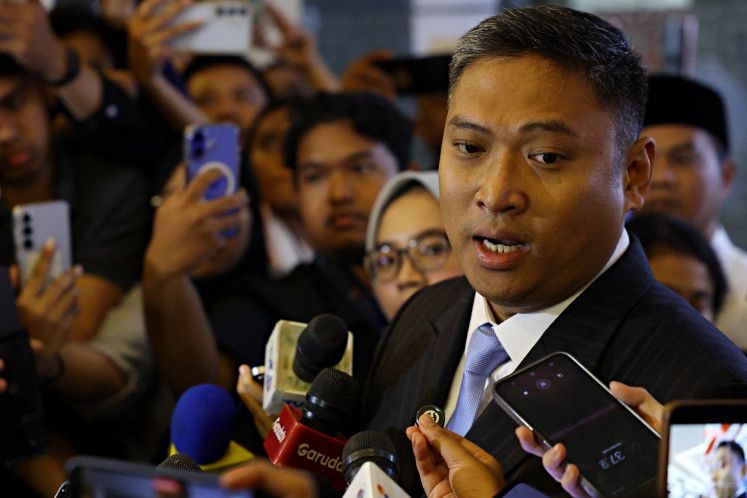
President Prabowo Subianto's flagship free nutritious meals scheme hit fresh turbulence this week when its recently appointed leader, Nanik Sudaryati Deyang, announced her resignation after just under two months in the role. The departure represents another blow to an initiative that has become synonymous with administrative dysfunction, compounded by a corruption scandal that claimed the previous agency head and two of his deputies in June. Nanik's exit underscores the mounting institutional strain within the National Nutrition Agency (BGN), which has struggled to transform a campaign promise into functioning policy since rollout began in early 2025.
Nanik attributed her decision to health concerns, revealing through social media that doctors had discovered a blockage in one of her heart arteries. She described the stress of managing the agency's enormous budget as a source of "acute trauma," employing vivid language to characterise the responsibility of safeguarding public funds as equivalent to standing precariously on a cliff edge where any miscalculation could prove catastrophic. Her emotional account of the psychological toll—including an apparent reluctance to sign documents independently and compulsive policy questioning—provided rare candid insight into the operational chaos afflicting the agency from within leadership ranks.
The timing of Nanik's departure carries particular significance given her appointment came specifically to restore institutional credibility following the arrest of her predecessor, Dadan Hindayana. In early June, Prabowo dismissed Dadan and subsequently two of his deputies faced criminal investigation over alleged procurement irregularities and financial misconduct linked to the programme's multitrillion-rupiah budget. Having previously served as Dadan's deputy, Nanik was elevated to the chief role partly because her institutional knowledge and insider position seemed to offer continuity during a rehabilitation period. Instead, her rapid burnout has deepened questions about whether the agency possesses the structural capacity to execute such an ambitious public initiative.
Without pausing to stabilise the organisation, Prabowo moved swiftly to fill the vacancy by promoting Sudaryono, the Deputy Agriculture Minister and a member of his own Gerindra Party who previously served as his political aide in the 2010s. The president conducted the formal inauguration at the State Palace in Jakarta on Wednesday, signalling both the political importance he attaches to the programme and his determination to assert direct control over its future direction. The rapid succession suggests presidential frustration with the agency's trajectory and a desire to inject trusted political personnel into the role, though this appointment strategy itself reflects the underlying tension between political will and technocratic competence that has plagued implementation.
Sudaryono promised a comprehensive overhaul focused on transparency and accountability, explicitly committing to replacing manual processes with digital systems that would create permanent records of all transactions and decisions. His remarks about eliminating "closed-door" operations and rendering previously opaque activities visible to scrutiny indicated an acknowledgment that institutional opacity had enabled the governance failures now under investigation. However, his credentials rest primarily on political loyalty and early programme involvement rather than nutritional policy expertise, raising questions about whether reshuffling leadership personalities addresses the deeper structural problems that have plagued execution.
State Secretary Prasetyo Hadi acknowledged that the situation represented an unwanted outcome while simultaneously justifying the appointment by noting Sudaryono's participation in early programme design. Prasetyo's comments reflected official determination to frame the leadership changes as part of a deliberate reform strategy rather than reactive crisis management. He indicated that Prabowo had instructed his administration to undertake comprehensive institutional reforms at the BGN, suggesting the president recognises that personnel changes alone cannot resolve the accumulated operational and governance challenges.
The free meals programme has endured a succession of public relations disasters and service failures since its 2025 launch. Repeated mass poisoning incidents across the country sparked widespread health concerns, whilst parallel questions emerged regarding food quality standards and meal preparation protocols. Nanik's response included imposing a moratorium on licensing new kitchen facilities whilst nearly 28,000 existing operations nationwide underwent systematic review. This decision, though aimed at tightening quality control, triggered considerable backlash from thousands of prospective kitchen operators who had invested substantially in equipment and infrastructure based on initial government approval signals.
Financial pressures have forced significant programme retrenchment in recent weeks. The BGN announced this week that it has reduced the provisional 2026 budget from the originally allocated Rp268 trillion to Rp229 trillion, equivalent to approximately US$12.8 billion, representing a contraction of nearly 15 percent. More dramatically, the agency has scaled back its beneficiary target to 62.7 million people for the coming year, down substantially from the initial plan to serve 82.9 million individuals encompassing schoolchildren, toddlers, and pregnant women. These reductions reflect both fiscal constraints and the agency's acknowledgment that quality delivery matters more than numerical targets.
BGN deputy chief Agustina Arumsari crystallised the strategic pivot by emphasising that institutional priority has shifted from maximising beneficiary numbers toward improving service quality. She indicated that the agency has abandoned fixed numerical targets at the current stage, effectively acknowledging that the original expansion targets were unrealistic given implementation capacity constraints. This represents an implicit admission that the programme was launched with ambitions that exceeded institutional capability and financial sustainability, though officials frame the pullback as a deliberate quality-focused repositioning rather than acknowledgment of failure.
Political analyst Wasisto Raharjo Jati offered perhaps the most incisive assessment of the underlying dysfunction, arguing that the recurring crises reflect fundamental shortcomings in programme planning rather than mere execution difficulties. Wasisto characterised the initiative as having been "driven more by political ambition than technocratic preparation," observing that despite its designation as a presidential flagship initiative, the BGN has consistently demonstrated institutional weakness. His analysis suggests the core problem extends beyond corruption scandals and personnel instability to encompass flawed foundational design and insufficient operational groundwork before rollout, a structural liability that leadership changes alone cannot remedy.
For Malaysian observers, the Indonesian experience offers cautionary lessons about implementing large-scale social programmes without adequate institutional preparation and quality control mechanisms. The recurrent crises within BGN—spanning corruption, health incidents, budget overruns, and quality control failures—illustrate the risks of launching initiatives with inadequate backend capacity, even when backed by presidential authority and substantial funding. The programme's trajectory from ambitious 2025 rollout through successive retrenchments and leadership turmoil within eighteen months demonstrates how political timelines can disconnect dangerously from implementation realities, ultimately undermining both beneficiary welfare and public confidence in government competence.

