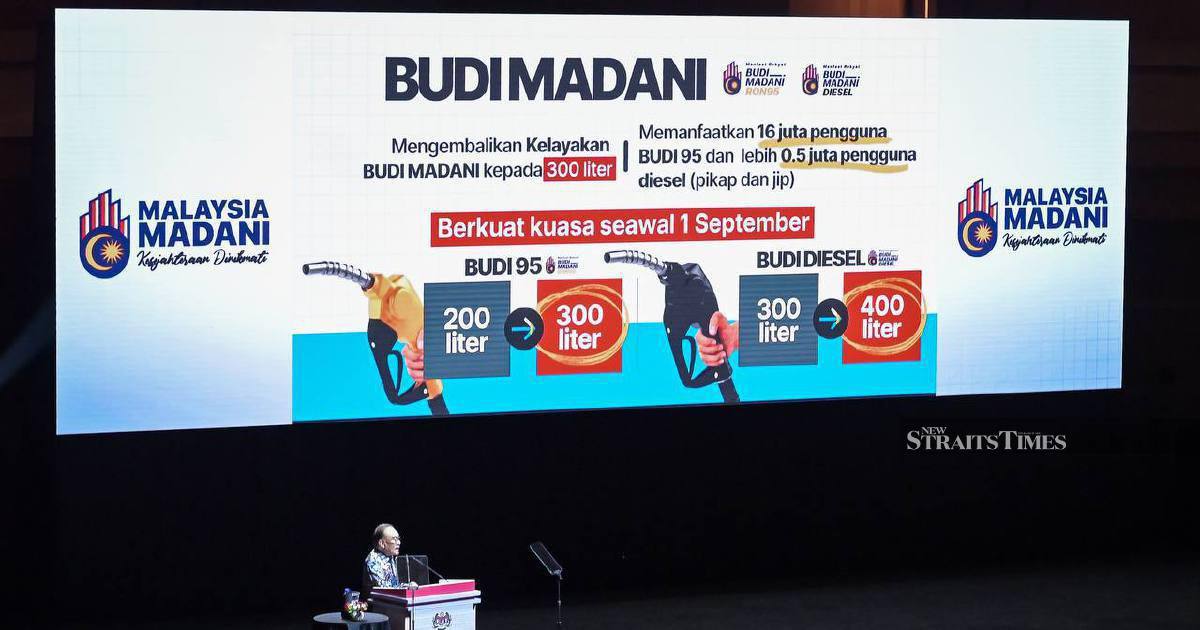
Prime Minister Datuk Seri Anwar Ibrahim has set out a six-point package of immediate policy interventions to address mounting cost-of-living challenges facing Malaysian households and businesses, signalling the government's determination to cushion economic pressures before the formal tabling of the 2027 Budget in October. The announcement, made during his National Day Eve address, underscores the administration's concern about sustained inflation and household budget strain even as the broader economy shows signs of resilience. These measures represent a government effort to demonstrate responsiveness to citizen concerns ahead of major fiscal decisions later this year.
The scope of the relief package spans multiple economic fronts, combining direct consumer assistance with measures intended to enhance business productivity and modernise public service infrastructure. By tabling these interventions before the formal budget process, the government aims to provide faster relief to citizens rather than waiting for October's comprehensive fiscal statement. The timing reflects political awareness that cost-of-living anxieties remain a significant concern among voters, particularly in urban and semi-urban areas where housing costs and transportation expenses consume large portions of household income.
For Malaysian families navigating tighter household budgets, such targeted relief measures carry immediate relevance. The cost pressures that prompted this package have persisted despite various previous interventions, suggesting that policymakers are attempting to layer multiple support mechanisms rather than rely on singular approaches. Analysts note that this multi-pronged strategy indicates recognition within government that cost-of-living challenges stem from diverse sources—from energy and transportation costs to food prices and housing expenses—requiring correspondingly varied policy responses.
The inclusion of business support measures within the relief package signals awareness that household purchasing power depends partly on employment stability and wage growth. By strengthening business competitiveness and operational efficiency, the government hopes to create conditions for job creation and income expansion among workers. This approach reflects orthodox economic thinking that consumer relief achieved through supporting business confidence can prove more sustainable than direct transfers alone, though the specific business measures remain to be fully detailed.
Public service modernisation forms another pillar of the announced package, suggesting government investment in efficiency and service delivery quality. Improved public services, ranging from healthcare and transportation to administrative processes, can effectively reduce household costs by providing better-quality subsidised alternatives to private provision. Enhanced public transport systems, for instance, could reduce commuting expenses for workers, while improved healthcare services would lower out-of-pocket medical spending. This dimension of the package represents an investment approach to cost-of-living relief rather than mere income supplementation.
The October timing for the 2027 Budget provides a structured calendar for additional announcements and policy details. Between now and that formal budget tabling, the government can refine these initial six measures based on implementation experience and economic developments. This phased approach allows policymakers to gather data on how citizens and businesses respond to the immediate interventions, informing the scope and emphasis of broader fiscal measures in the comprehensive budget statement. It also provides time for public consultation and stakeholder feedback on implementation mechanics.
Regional economic observers view Malaysia's cost-of-living policy stance within Southeast Asian context. Several regional economies face similar pressures from elevated transport costs, global commodity price volatility, and structural housing affordability challenges. The Malaysian package may offer lessons for regional policymakers considering their own relief measures, particularly regarding the balance between direct assistance and productivity-focused interventions. The effectiveness of this multi-component approach could influence policy discussions across the Association of Southeast Asian Nations.
For businesses operating in Malaysia, these measures carry implications for operating costs and medium-term profitability. Manufacturing and services sectors particularly sensitive to input costs may benefit from efficiency-focused government support. Small and medium enterprises, which dominate employment across the country, may find targeted assistance particularly valuable if measures address working capital constraints or technology adoption barriers. The extent to which relief measures translate into reduced input costs will determine their actual business impact.
Consumer sentiment and household spending patterns may respond positively to the announcement of concrete relief measures, particularly if implementation proves rapid and transparent. Malaysians observing whether promised relief actually materialises in coming months will form judgements about government competence and economic management credibility. This psychological dimension of economic policy—where confidence in relief measures themselves can influence consumer behaviour and business investment decisions—carries genuine significance for overall economic performance through the remainder of the year.
The six-measure package also reflects broader government priorities regarding economic competitiveness and social stability. By addressing cost-of-living concerns proactively, the administration seeks to maintain social cohesion while implementing what may be more orthodox economic policies in the 2027 Budget itself. This sequencing—immediate relief followed by comprehensive fiscal planning—allows government to balance short-term political imperatives with longer-term economic management objectives. The success of this approach depends on implementation effectiveness and whether subsequent budget measures complement or contradict the relief theme established now.

