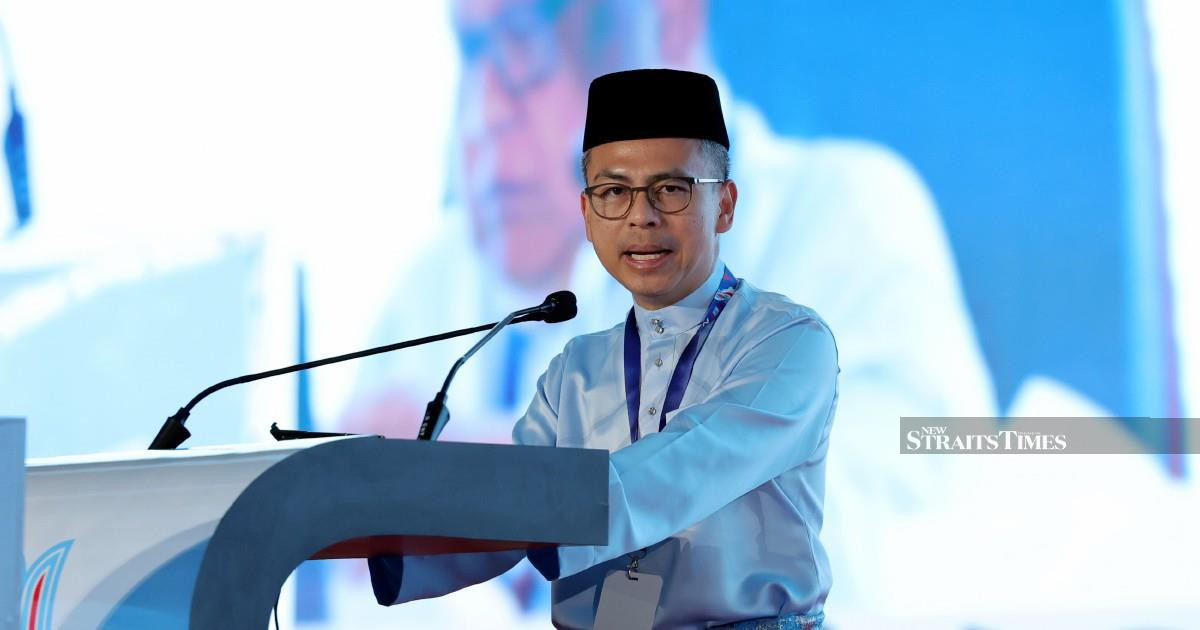
Prime Minister Datuk Seri Anwar Ibrahim is poised to reveal further announcements in the immediate future, according to signals from the government's communications apparatus. Speaking at Ayer Keroh, Datuk Seri Fahmi Fadzil, who serves as PKR's information chief, suggested that the prime minister could unveil multiple developments as soon as the following day, indicating an active pace of policy-making or strategic shifts at the highest levels of the administration.
The timing of such announcements carries significance in Malaysia's political context, where government messaging often precedes major decisions affecting economic policy, structural changes, or administrative reforms. Fahmi's comments reflect the broader pattern within the Anwar administration of utilising carefully coordinated public statements to telegraph policy direction and prepare stakeholders for substantive changes. The sequential nature of these announcements suggests a deliberate communication strategy rather than ad hoc decision-making.
While Fahmi did not specify the nature or scope of the anticipated announcements, the predictability of their timing allows observers, business leaders, and affected communities to prepare for potential transitions. In Malaysian governance, such advance notice often precedes cabinet reshuffles, regulatory modifications, or initiatives addressing national priorities including economic competitiveness, fiscal management, or sectoral reforms.
The positioning of these statements within a short timeframe raises questions about whether multiple announcements represent coordinated initiatives under a broader strategic umbrella or separate policy measures addressed in sequence. Government communication strategies in Malaysia typically cluster announcements to maximise media impact and public attention, particularly when navigating competing narrative landscapes in a multi-platform information environment.
For business stakeholders and investors monitoring government direction, such signals carry practical implications. Malaysian enterprises, particularly those in sectors sensitive to policy shifts, monitor official statements closely for early indicators of regulatory changes or new government priorities. The suggestion of imminent announcements allows corporate planning cycles to remain responsive to potential shifts in operating environments or incentive structures.
Fahmi's role as information chief positions him as a credible conduit for official messaging from the Prime Minister's Office. His public statement therefore carries weight beyond casual commentary, representing intentional communication designed to shape public expectations and media narratives around the coming announcements. This calculated disclosure reflects contemporary governance communication practices, where managing information flow becomes integral to policy implementation.
The announcement strategy also reflects dynamics within Malaysia's political coalition structures. The PKR-led government coalition operates within complex parliamentary mathematics, where timing of initiatives and public communication becomes strategically important for maintaining coalition cohesion and managing expectations across different political constituencies. Sequential announcements allow each component to receive dedicated attention rather than competing for headlines.
Regional observers tracking Malaysian politics note that periods of concentrated government announcements often correlate with efforts to reset administrative priorities or respond to evolving economic or social conditions. The pace of revelations suggested by Fahmi's remarks indicates an administration engaged in active governance rather than a holding pattern, signalling forward momentum in the implementation of the government's broader agenda.
For the broader Southeast Asian context, developments within Malaysia's policy framework carry spillover implications. As a major regional economy with significant cross-border investment flows, changes to Malaysian regulatory frameworks, fiscal policies, or sectoral initiatives often influence regional business strategy and investor confidence across the Association of Southeast Asian Nations grouping.
The public indication of forthcoming announcements also serves a domestic political function, maintaining headline momentum and demonstrating governmental activity to constituencies looking for evidence of progress on campaign promises or stated governance priorities. In Malaysia's competitive media landscape, such announcements help shape narrative dominance and public perception of government effectiveness during a specific political period.
Market participants, including financial traders and currency specialists, typically monitor such signals closely, as policy announcements from prime ministerial levels frequently contain directives affecting monetary policy, fiscal commitments, or structural economic decisions that influence Malaysian asset valuations and currency movements. The certainty of impending announcements may already be influencing trading calculations and forward guidance from financial institutions.
Looking ahead, observers should monitor both the substance of the anticipated announcements and the pattern through which they are delivered. The communication strategy employed—whether announcements emphasise continuity or emphasise rupture with previous approaches—will signal the Anwar administration's evolving interpretation of national priorities and its strategic positioning within Malaysian political economy during this particular parliamentary term.

