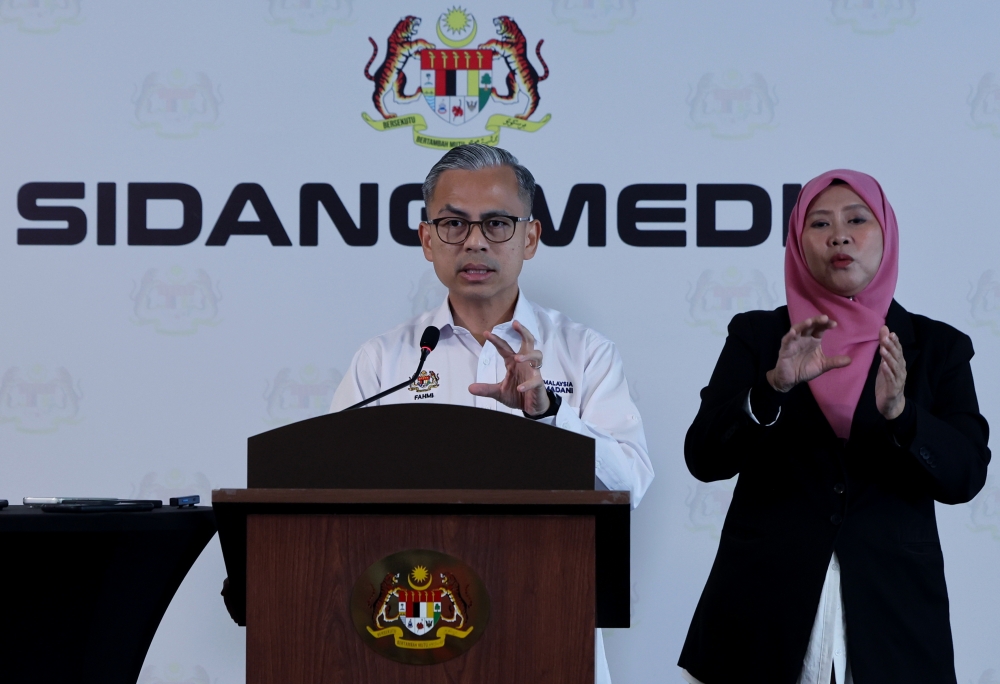
Prime Minister Datuk Seri Anwar Ibrahim has issued a directive to the Ministry of Human Resources to accelerate the processing of approximately 15,000 outstanding foreign worker applications, according to a statement from Communications Minister Fahmi Fadzil on August 5 in Putrajaya. The decision reflects mounting pressure on Malaysian employers struggling with labour shortages and signals a policy shift toward faster approval mechanisms for migrant workers in strategic industries.
The backlog of foreign worker applications represents a significant bottleneck in Malaysia's labour market, where businesses across manufacturing, construction, hospitality, and domestic services have reported persistent staffing difficulties. By directing Kesuma to prioritise these cases, the Prime Minister is attempting to address recurring complaints from industry associations that delayed visa processing hampers productivity and competitiveness. The move carries particular weight in a region where Southeast Asian nations compete for foreign talent and investment, and labour availability directly influences factory location decisions and project timelines.
The timing of this directive comes amid broader economic pressures, as Malaysia seeks to maintain growth momentum following pandemic-related disruptions. Foreign workers comprise a substantial portion of Malaysia's workforce in lower-skilled positions, and their availability has long been tied to sectoral performance. Construction companies, rubber and palm oil plantations, and hospitality establishments have consistently flagged worker shortages as a limiting factor on expansion and contract fulfilment, suggesting this administrative intervention addresses a real economic friction point.
Fahmi's announcement provides limited detail on implementation timelines or processing criteria that Kesuma will apply to prioritise the 15,000 applications. The absence of specific procedural information leaves questions about whether all applications will receive equal attention or whether certain sectors and skill categories will face expedited review. Such clarity would typically accompany such directives in order to set expectations with employers and provide ministry staff with unambiguous operational guidance.
The directive also raises questions about the broader framework governing foreign worker entry into Malaysia. The country operates under established quotas and sector-based allocation systems designed to protect domestic employment opportunities while filling genuine skill gaps. Accelerating approvals at scale requires confidence that the applications under review meet security, health, and labour market criteria, and that the numbers being approved align with Malaysia's integration capacity and social cohesion objectives.
From a regional perspective, Malaysia's approach to foreign workers influences patterns across Southeast Asia. As a middle-income nation hosting substantial migrant populations from Indonesia, Bangladesh, Myanmar, and the Philippines, Malaysia's policies set benchmarks for visa processing efficiency and worker treatment. Faster approval mechanisms can improve Malaysia's attractiveness as a destination for migrant labour, though they must balance speed with rigorous background screening and protection against exploitation.
The announcement comes without corresponding statements from Kesuma itself, suggesting the ministry was notified through internal channels and the public disclosure occurred through the Communications Ministry. This sequence may reflect the political sensitivity of immigration policy, where accelerating foreign worker entry can trigger public concerns about job competition and wage pressure among Malaysian citizens. Framing the initiative through the Prime Minister's direct authority and economic rationale rather than through detailed ministry announcements may be a deliberate strategy to position the decision as a leadership imperative rather than bureaucratic routine expansion.
Employers in labour-intensive sectors are likely to welcome the directive as a partial response to their advocacy for streamlined hiring processes. However, the practical effectiveness of the policy depends on Kesuma's capacity to conduct thorough assessments rapidly. Rushing applications without adequate background verification could expose Malaysia to labour trafficking risks and undocumented employment problems that create downstream costs far exceeding any short-term productivity gains from faster hiring.
The 15,000 figure itself warrants scrutiny. Without official clarification, it remains unclear whether this represents newly submitted applications awaiting first assessment, cases in intermediate review stages, or applications awaiting final approval. The composition of these applications—by sector, skill level, and source country—would significantly shape the labour market impacts and social implications of accelerated processing.
Longer-term, this directive may signal a willingness to expand Malaysia's foreign worker quota if labour shortages persist. Government policymakers appear increasingly convinced that domestic workforce supply cannot meet all demand across key sectors, and that controlled labour migration offers faster relief than training programmes or wage-driven recruitment strategies. This represents a pragmatic acknowledgement of demographic and skills-matching realities in a competitive regional labour market.
Industry observers will be watching to see whether Kesuma announces specific timelines and revised processing standards following this directive. The success of the initiative will ultimately be measured not merely by whether 15,000 applications are approved, but whether those approvals translate into deployed workers who meaningfully address sectoral shortages without creating new complications for labour standards oversight or social stability.

