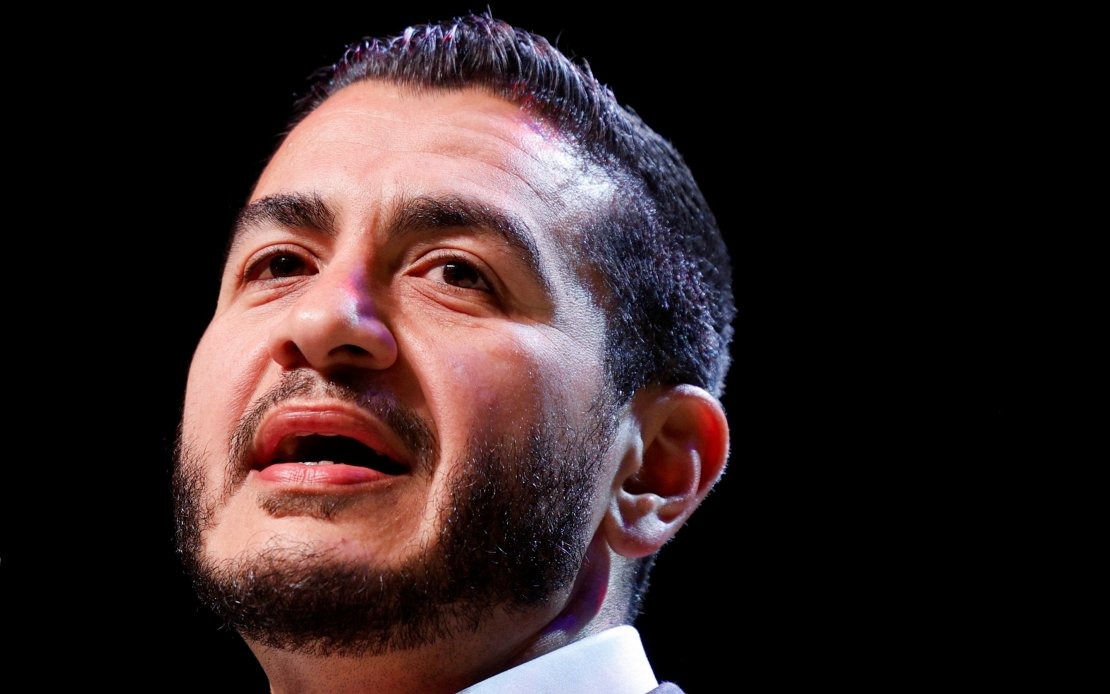
Abdul El-Sayed maintained a slender advantage over establishment-backed US Representative Haley Stevens in Michigan's Democratic Senate primary as votes were being tallied Wednesday, with the contest still awaiting formal certification from the Associated Press. The outcome of this high-profile race will determine which Democrat faces Republican Mike Rogers in November's general election to fill the seat being vacated by retiring Senator Gary Peters. Rogers secured his party's nomination unopposed, positioning him as the presumptive Republican candidate for the general election.
The Michigan Senate race crystallized broader tensions within the Democratic Party between progressive and centrist factions. Stevens enjoyed backing from prominent establishment figures including the outgoing Senator Peters, while El-Sayed rallied support from the party's progressive wing, receiving endorsements from Vermont Senator Bernie Sanders and Representatives Alexandria Ocasio-Cortez and Rashida Tlaib. This ideological divide reflected deeper disagreements over party direction and priorities heading into the November midterms.
The Gaza conflict emerged as a defining issue throughout Michigan's primary campaigns. United States policy toward Israel and international responses to military operations in Gaza featured prominently in candidate messaging and voter deliberations, underscoring how foreign policy matters increasingly shape domestic electoral contests. The prominence of this issue in Michigan, home to a substantial Arab-American and Muslim-American population, highlighted how demographic composition influences candidate positioning and campaign priorities across American states.
Michigan's congressional races produced mixed results for incumbents seeking renomination. Republican Jack Bergman secured his party's nomination in the 1st Congressional District with commanding support, capturing 74.3 percent of votes against two challengers. Similarly, Republican Bill Huizenga won renomination in the 4th District with overwhelming margins, defeating Philip Tanis by a decisive 85-15 percent split. Huizenga will proceed to face Democrat Sean McCann, who earlier prevailed in the Democratic primary with 67.2 percent support against Diop Harris II.
Kansas voters rendered decisive verdicts in competitive races across both federal and state offices. Republican Senator Roger Marshall dominated his primary challenge from Pond Naramore, accumulating nearly 80 percent of votes with nearly complete vote counts. Marshall now prepares for a general election matchup against Democrat Adam Hamilton, who emerged victorious from a densely populated Democratic primary field. The Kansas gubernatorial race featured Democrat Cindy Holscher defeating two rivals to claim her party's nomination, setting up an eventual contest against Republican Ty Masterson, who benefited from former President Donald Trump's explicit endorsement while navigating a crowded primary field. The winner of that race will succeed Democratic Governor Laura Kelly, who faces constitutional term-limit restrictions preventing another campaign.
Missouri's primary elections reflected the Republican Party's efforts to strengthen House control through strategic redistricting championed by state lawmakers with Trump administration backing. Democratic Representative Wesley Bell prevailed in the 1st Congressional District primary despite formidable competition, defeating four challengers including former Representative Cori Bush, who had garnered national attention during her prior tenure. Bell secured renomination and will advance to face Republican Paul Berry III in November's general election. The results illustrated how redistricting efforts can reshape competitive dynamics even within states, with the new map intended to benefit Republican House candidates seeking to maintain legislative majorities.
Virginia's Senate race introduced Republican Bert Mizusawa as the challenger to heavily favored Democratic Senator Mark Warner, who ran unopposed for his party's nomination. The Republican nominee emerged from his party's primary selection process, positioning himself as the establishment GOP candidate in a state Democrats have controlled in recent statewide elections. Warner's unopposed path to renomination reflected his strong political positioning within Virginia's Democratic Party apparatus.
Virginia's congressional contests showcased a mix of returning incumbents and former elected officials. Democrat Shannon Taylor secured the 1st Congressional District nomination with 53.1 percent of votes, positioning herself to challenge Republican Rob Wittman, who ran unopposed and seeks an unprecedented 10th consecutive full term. In the 2nd District, former Democratic Representative Elaine Luria successfully reclaimed her party's nomination with commanding 80.4 percent support, setting the stage for a rematch against incumbent Republican Jen Kiggans. Republican Doug Ollivart won the 7th District Republican primary with 56.6 percent of votes, earning the right to challenge first-term Democratic Representative Eugene Vindman, whose national profile rose during earlier congressional proceedings regarding presidential conduct.
Washington's unique all-party primary system, where all candidates compete regardless of party affiliation and the top two finishers advance to the general election, produced different dynamics than traditional partisan primaries. Democratic Representative Suzan DelBene and Republican Mary Silva both advanced from the 1st Congressional District contest. Democratic Representative Marie Gluesenkamp Perez will face Republican John Braun, who carried Trump's formal endorsement. In the 6th District, Democratic Representative Emily Randall advanced to face Republican Teresa Fox.
These five-state primary elections carry significance for Malaysian and regional observers tracking American political developments, particularly regarding how Democratic and Republican parties are positioning themselves for midterm contests. The prominence of Gaza-related debates in Democratic primaries signals how international affairs increasingly influence domestic political conversations, a pattern relevant to Asian democracies where similar dynamics frequently emerge. The strong performance of progressive Democrats in Michigan, despite establishment resistance, suggests the Democratic Party's leftward ideological drift continues regardless of party establishment preferences. Meanwhile, Republican dependence on Trump endorsements across Kansas, Missouri, and Washington indicates the former president's continued grip over GOP nomination dynamics despite occupying no elected office. These patterns provide instructive parallels for understanding coalition-building and intra-party dynamics within democratic systems more broadly.

