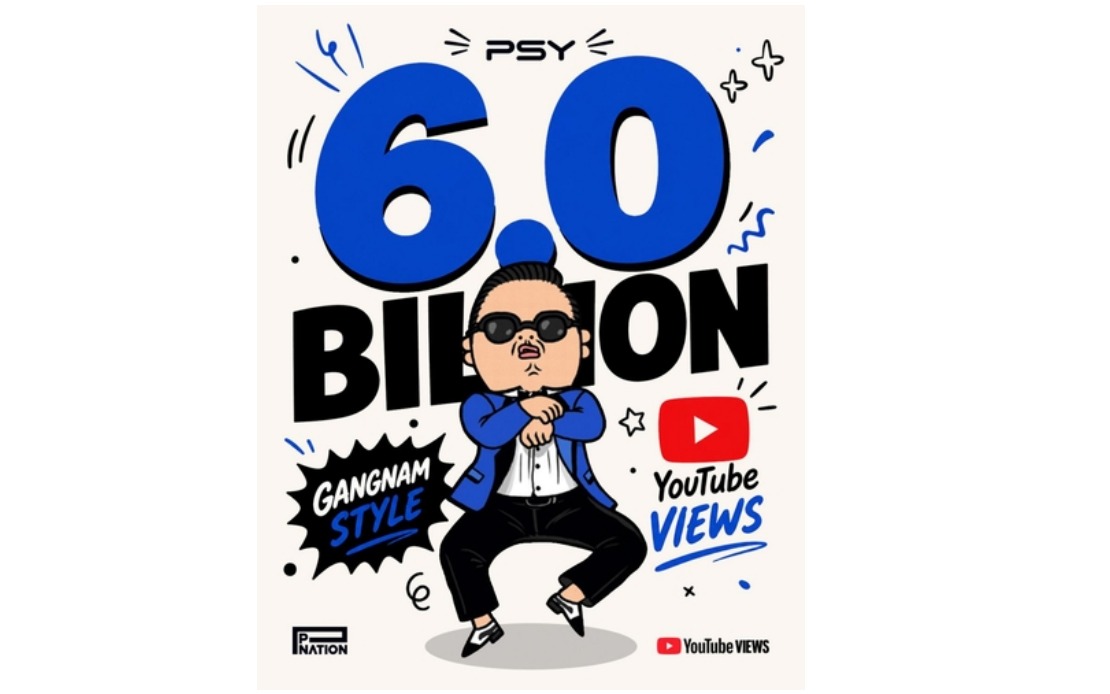
South Korean pop sensation Psy has achieved a remarkable milestone with his 2012 hit "Gangnam Style" accumulating over 6 billion views on YouTube, establishing itself as the most-watched K-pop music video in history. The music video crossed this unprecedented threshold on Friday, more than a dozen years after the song's initial release in July 2012, according to P Nation, Psy's entertainment agency. This achievement represents a significant moment not only for the artist but for the entire Korean music industry, which has increasingly dominated global entertainment consumption over the past decade.
The journey to this landmark figure has been remarkably consistent, demonstrating the song's persistent cultural relevance across diverse audiences worldwide. The track reached the 5 billion view mark in December 2023, indicating that the rate of viewership has remained steady despite the years elapsed since its peak popularity. Such sustained engagement with a single music video is exceptionally rare in the digital media landscape, where viral phenomena typically experience sharp spikes followed by rapid decline in viewer interest. This pattern suggests that "Gangnam Style" has transcended typical viral content to become something closer to a permanent fixture of global pop culture.
P Nation issued a statement emphasizing the deeper significance of this achievement beyond mere statistical success. The company noted that surpassing 6 billion views represents a symbolic milestone in K-pop history, reflecting the medium's capacity to unite audiences across geographical borders and generational divides. This observation carries particular weight for Southeast Asian markets, where Korean cultural products have experienced exponential growth in consumption and influence. The figure underscores how digital platforms have fundamentally altered the distribution and longevity of entertainment content, allowing songs to accumulate audiences gradually over extended periods rather than relying solely on traditional broadcast cycles.
The original appeal of "Gangnam Style" rested on a combination of elements that proved remarkably durable. The track featured an infectious, easily memorable melody paired with a satirical commentary on the wealthy Gangnam district in Seoul—the neighbourhood synonymous with luxury consumption and aspirational lifestyle in South Korea. This social commentary, wrapped in an accessible pop format, gave the song intellectual substance beyond its immediate catchiness, allowing it to resonate with listeners on multiple levels. The accompanying choreography, particularly the iconic horse-riding dance move, became instantly recognisable and spawned countless imitations and parodies globally, from corporate offices to military bases to wedding celebrations.
International chart performance further validated the song's crossover appeal. "Gangnam Style" achieved the number two position on Billboard's Hot 100 chart, demonstrating its capacity to compete with established Western pop acts in their primary market. More significantly, it became the inaugural K-pop music video to surpass 1 billion views on YouTube, a breakthrough that marked a watershed moment for Korean entertainment in the global digital sphere. This achievement occurred during a period when K-pop was still consolidating its international presence, before the genre experienced the explosive growth that followed in subsequent years with groups like BTS and BLACKPINK.
Psy's celebration of this milestone occurred during a concert performance on Sunday, where the artist acknowledged the contribution of global fans to the video's enduring success. During the event, he announced plans to upload new content to YouTube, signalling his continued engagement with the platform that had proven instrumental in his international career. This commitment to sharing fresh material with audiences demonstrates an awareness that cultural relevance requires ongoing participation and interaction with fan communities, rather than passive reliance on past achievements. The gesture also reflects broader trends within entertainment industries, where artists increasingly view social media platforms not as supplementary promotional channels but as primary venues for audience engagement.
The context of this achievement extends beyond individual artist success to illuminate broader dynamics within the global entertainment marketplace. The dominance of "Gangnam Style" as the most-watched K-pop video illustrates the structural advantages that early-mover advantage provides in digital ecosystems. While subsequent K-pop releases have achieved greater critical acclaim and more dedicated fanbase engagement, few have managed to accumulate the sheer volume of views that "Gangnam Style" continues to generate through repeated casual viewership and periodic rediscovery by new audiences. This dynamic has important implications for understanding how cultural products achieve and maintain global prominence in the streaming era.
For Malaysia and other Southeast Asian nations, the significance of this achievement extends beyond entertainment statistics. The region has emerged as a crucial market for Korean cultural exports, with K-pop, Korean dramas, and Korean consumer goods commanding substantial market share among younger demographics. The sustained popularity of "Gangnam Style" demonstrates the mechanisms through which Korean cultural content achieves penetration in regional markets—initially through viral moments and novelty appeal, then transitioning into nostalgic content that maintains visibility across generational cohorts. Understanding these patterns provides insight into how cultural influence operates in the digital age, particularly for emerging entertainment industries seeking to expand their international reach.
The 6 billion view figure also invites reflection on the economics of digital content creation and distribution. While individual view counts do not directly translate to proportional financial returns, the massive audience size signals substantial accumulated revenue from advertising, streaming licensing agreements, and other monetisation mechanisms. For creators and production companies, such figures justify investment in high-quality production values and professional marketing campaigns—investments that have become increasingly necessary as global audiences develop more sophisticated expectations regarding entertainment content quality.
Looking forward, the significance of this milestone lies partly in the questions it raises about sustainability and evolution within the K-pop industry. "Gangnam Style" represented a particular moment in K-pop's development—playful, satirical, and optimised for novelty-driven viral appeal. Subsequent K-pop successes have often emphasised technical excellence, elaborate production, and dedicated fan communities rather than attempting to replicate the broad-based, casual viewership that "Gangnam Style" achieved. This diversification suggests that the K-pop industry has matured beyond reliance on single viral phenomena, instead cultivating multiple pathways to international success.

