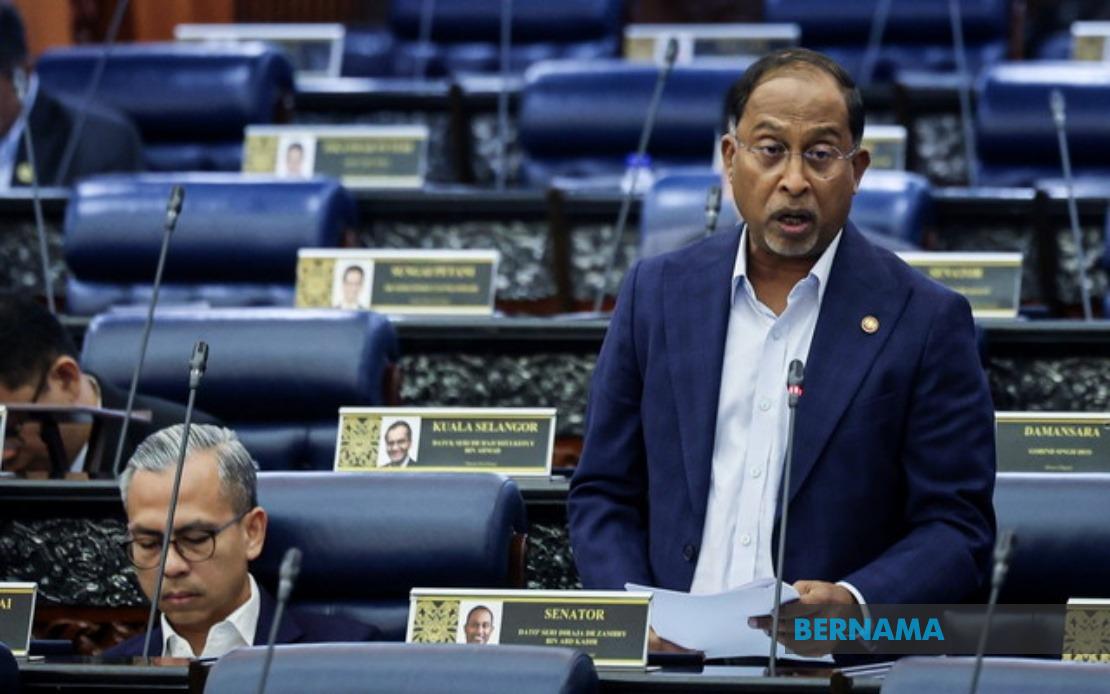
Malaysia's National Higher Education Fund Corporation (PTPTN) has reported a substantial recovery of RM197 million in loan repayments over the past twelve months through its partnership with debt negotiation agencies, signalling a more aggressive yet structured approach to tackling the nation's persistent student loan defaults. The figure represents a meaningful improvement of 6.4 per cent compared to the equivalent period in the previous year, demonstrating the measurable impact of outsourcing collection efforts to specialised intermediaries. Higher Education Minister Datuk Seri Dr Zambry Abdul Kadir disclosed these figures during parliamentary proceedings, underlining the government's determination to improve recovery rates for one of Malaysia's most troublesome credit portfolios.
The ministry's strategy involves channelling severely delinquent accounts to debt negotiation agencies, locally known as APH, after traditional in-house recovery methods have proven unsuccessful. As of May of this year, the total number of borrower accounts transferred to these agencies reached 103,418, collectively representing arrears exceeding RM3 billion. This vast concentration of non-performing student loans represents a significant financial burden on PTPTN's balance sheet and reflects decades of loose enforcement practices that allowed millions of graduates to defer or abandon their repayment obligations.
Crucially, accounts are only escalated to APH under stringent conditions designed to protect borrowers from arbitrary action. PTPTN transfers cases only when arrears have accumulated over more than 120 months—effectively a decade of non-payment—and after a court judgment has been formally recorded against the borrower. This sequential gatekeeping mechanism ensures that accounts reaching APH represent genuine cases of sustained default rather than temporary payment difficulties. The minister emphasised that this threshold is deliberately high, allowing PTPTN's internal collection teams considerable opportunity to resolve disputes before external agencies become involved.
Minister Zambry explicitly rejected characterisations of APH engagement as punitive, framing it instead as a proportionate mechanism reserved for the most intractable cases within the portfolio. He stressed that appointing negotiation agencies reflects a recognition that certain delinquent accounts require specialist intervention beyond PTPTN's conventional capacity. The appointment of APH should therefore be understood not as a confession of defeat, but rather as a pragmatic acknowledgement that some borrowers have fundamentally disengaged from the repayment system and require professional intermediaries to re-establish contact and negotiate realistic settlement paths.
The 6.4 per cent year-on-year increase in collections via APH carries significance beyond the monetary figure itself. The improvement suggests that debt negotiation agencies possess comparative advantages in persuading long-term defaulters to resume payments—perhaps through different communication strategies, legal leverage, or simply the shock value of external involvement. For borrowers who have successfully avoided PTPTN's collection efforts for a decade or more, the appearance of a third party typically signals that the matter has genuinely escalated beyond administrative remedy. This psychological pressure, combined with the legal weight of prior court judgments, apparently motivates meaningful numbers of delinquent borrowers to engage seriously with repayment options.
Parliamentary questioning from Lim Lip Eng (PH-Kepong) highlighted ongoing concerns about the governance framework surrounding APH operations and the adequacy of flexibility mechanisms for borrowers experiencing genuine hardship. The minister's response reaffirmed that dialogue remains available even after APH involvement, and that PTPTN legal officers retain discretion to assess individual circumstances and propose adjusted repayment schedules aligned with borrowers' demonstrated capacity to pay. This emphasis on residual flexibility is important, as it acknowledges that severe delinquency does not always reflect unwillingness to pay but often reflects unemployment, underemployment, or other structural economic challenges affecting Malaysia's graduate workforce.
The minister outlined a case-by-case assessment framework that considers borrowers' income levels, existing financial commitments, and broader socio-economic circumstances. This individualised approach contrasts with mechanistic debt recovery models that treat all delinquencies identically regardless of underlying causation. PTPTN's stated commitment to distinguishing between culpable defaulters and borrowers genuinely unable to meet original repayment terms suggests an institutional learning that blanket enforcement generates limited returns and may ultimately undermine the fund's legitimacy among the borrowing population.
The RM3 billion in aggregate arrears among accounts transferred to APH underscores the scale of PTPTN's underlying collection challenge. Even assuming the 6.4 per cent improvement rate continues, full recovery of this portfolio would require years of sustained effort and would demand that APH agencies successfully convert a substantial proportion of long-term defaulters into regular contributors. The financial implications extend beyond PTPTN itself, as prolonged under-collection constrains the fund's capacity to issue new loans to subsequent cohorts of students and potentially necessitates government supplementation of operating budgets.
For Malaysian borrowers, the expansion of APH involvement carries mixed implications. On one hand, the involvement of external agencies increases the practical pressure and urgency of the collection process, potentially limiting the option of indefinite avoidance. On the other hand, the availability of negotiation pathways and documented flexibility in restructuring arrangements provides potential relief for those genuinely unable to meet original contractual terms. The effectiveness of this approach ultimately depends on whether APH agencies prove capable of distinguishing between can't-pay and won't-pay scenarios and whether PTPTN's legal officers genuinely exercise discretion to accommodate justified hardship cases.
The broader institutional context matters significantly. PTPTN's collection difficulties reflect not merely individual borrower behaviour but also systemic factors including Malaysia's variable employment outcomes for graduates, the real decline in graduate salaries relative to cost-of-living pressures, and historical culture of loan non-repayment that developed when PTPTN enforcement was perceived as weak. Addressing the underlying portfolio default rate therefore requires complementary policy interventions addressing graduate employment, wage stagnation, and the psychological legitimacy of loan obligations themselves—factors beyond APH's purview.

