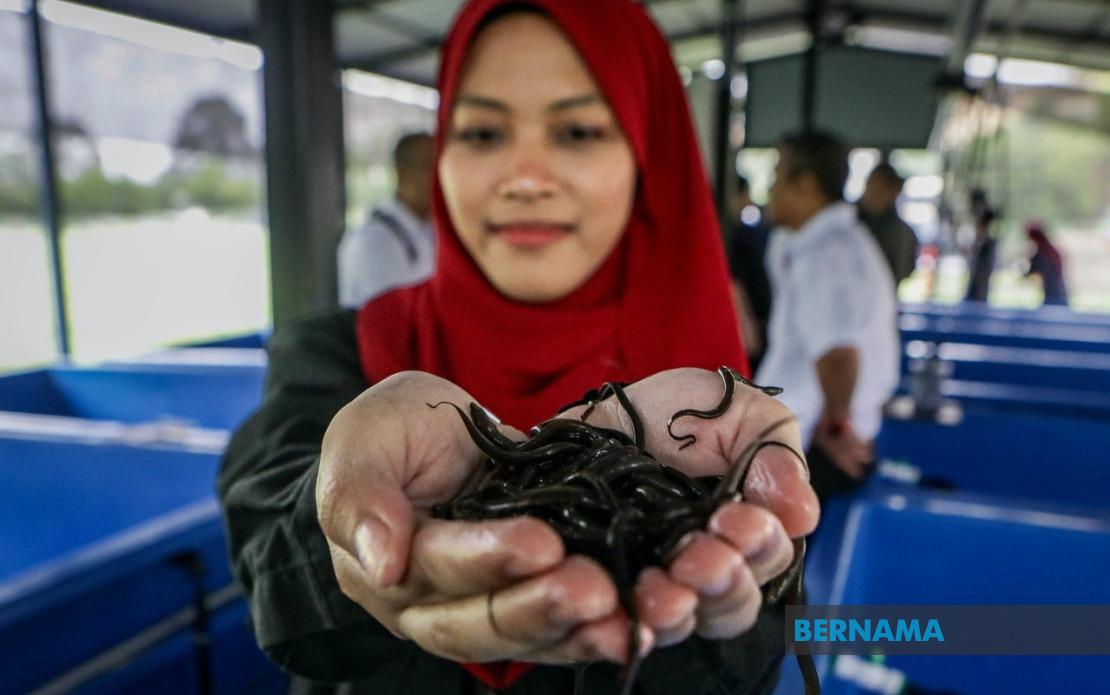
Politeknik Tuanku Syed Sirajuddin (PTSS) in Perlis is reshaping perceptions of what technical and vocational education institutions can achieve beyond classroom walls. The polytechnic's central role in the Projek Penternakan Belut Komersial Geran Sejati MADANI exemplifies a broader shift towards using TVET expertise as a catalyst for community development and economic empowerment. Rather than confining their mandate to producing graduates, PTSS has embraced a dual mission of knowledge transfer and capacity building that extends directly into the communities it serves.
The project, officially launched on July 1, was overseen by Azlan Abdul Samat, director of the Perlis Federal Development Office under the Prime Minister's Department's Implementation Coordination Unit. This high-level endorsement underscores the initiative's alignment with national development priorities and reflects growing recognition that vocational institutions possess the technical expertise necessary to unlock economic potential in rural areas. The involvement of governmental bodies signals that sustainable community development increasingly depends on strategic partnerships between educational institutions, government agencies, and local populations.
PTSS director Khairul Anuar Ishak outlined how the polytechnic will manage the project's complete lifecycle over six months, beginning with infrastructure setup and equipment procurement, advancing through seed acquisition and community training, and culminating in the handover of fully operational enterprises to local management. This phased approach ensures communities receive comprehensive support rather than merely receiving resources and being left to navigate implementation independently. By maintaining oversight through the critical establishment period, PTSS mitigates risks associated with new agricultural ventures and creates conditions for sustainable success.
The RM500,000 initiative extends across five distinct communities, each receiving 15,000 eel seeds to initiate commercial farming operations. This distributed model prevents concentration of resources in a single locality while maximising the initiative's reach and demonstrating scalability. For participating communities, the project represents more than a temporary grant; it establishes the foundation for an ongoing income stream with relatively low barrier to entry for local farmers unfamiliar with aquaculture.
Projection data indicates that each community can realistically achieve approximately 5,000 kilogrammes of eel production during the five to six month growth cycle. These yields represent meaningful commercial quantities capable of supporting household incomes and potentially generating employment beyond farming itself, through processing, transport, and marketing functions. The contract farming model reduces marketing uncertainty that typically deters smallholder farmers from entering new agricultural sectors, providing assured sales channels and price stability.
Khairul Anuar emphasised that PTSS's involvement demonstrates how vocational expertise transcends traditional educational boundaries to address economic challenges in specific communities. The project combines hands-on training, technical guidance adapted to local conditions, and innovation application—precisely the capabilities that distinguish TVET institutions from general educational providers. Students benefit simultaneously through experiential learning opportunities that ground theoretical knowledge in operational reality, creating genuine pedagogical value alongside community benefit.
This collaborative framework strengthens relationships between institutions that historically operated within separate spheres. Educational establishments, government implementation agencies, industry participants, and community organisations working in concert can achieve integrated development outcomes that isolated efforts cannot. The partnership model positions TVET institutions as essential infrastructure for inclusive economic growth, particularly in regions where agricultural transformation offers the most viable pathway to prosperity.
For Malaysian context, the project illuminates a replicable template for regional development. Southeast Asian nations increasingly recognise that vocational education institutions represent underutilised assets for community economic development. The Perlis initiative demonstrates concrete mechanisms through which technical colleges can translate curriculum content into livelihood improvement, strengthening the case for expanded TVET investment and integration with broader rural development strategies.
The eel farming sector specifically offers advantages relevant to Malaysian geography and climate. As a water-based aquaculture commodity, eel farming requires modest land footprints compared to conventional agriculture, making it accessible to communities with limited acreage. Local market demand exists across Malaysia and the broader Southeast Asian region, supporting viability of contract farming arrangements. The relatively short production cycle—five to six months—enables community farmers to realise returns quickly, building confidence for sustained participation.
Sustainability considerations underscore the project's design. By transferring complete management responsibility to communities after the establishment phase, PTSS avoids creating dependency on institutional support and cultivates local ownership essential for long-term viability. Financial management training alongside technical instruction ensures communities can maintain operations profitably and reinvest surpluses into enterprise expansion or improved productivity. This holistic approach addresses common failure points that plague development initiatives focused narrowly on technology transfer without accompanying institutional capacity.
The initiative's significance extends beyond immediate economic metrics to encompass social and institutional dimensions. Successfully operating eel farming enterprises can anchor community identity around a distinctive economic activity, potentially attracting younger residents who might otherwise migrate to urban centres seeking employment. Enhanced local economic activity strengthens community cohesion and can support improvements in local services and infrastructure as demand grows. Educational institutions gaining experience in community partnership models develop institutional capacity to scale similar initiatives across other sectors and communities.
Moving forward, the Perlis eel farming project warrants monitoring and documentation to assess both quantitative outcomes—production volumes, income generation, sustainability rates—and qualitative impacts on community dynamics and individual livelihoods. Success metrics should extend beyond first-harvest yields to measure whether enterprises remain operationally viable two years post-handover, whether participating communities have replicated or expanded operations, and whether local institutions have institutionalised training methodologies for replication. Such evidence would provide compelling rationale for expanding TVET-community partnership models as a cornerstone of inclusive development policy.

