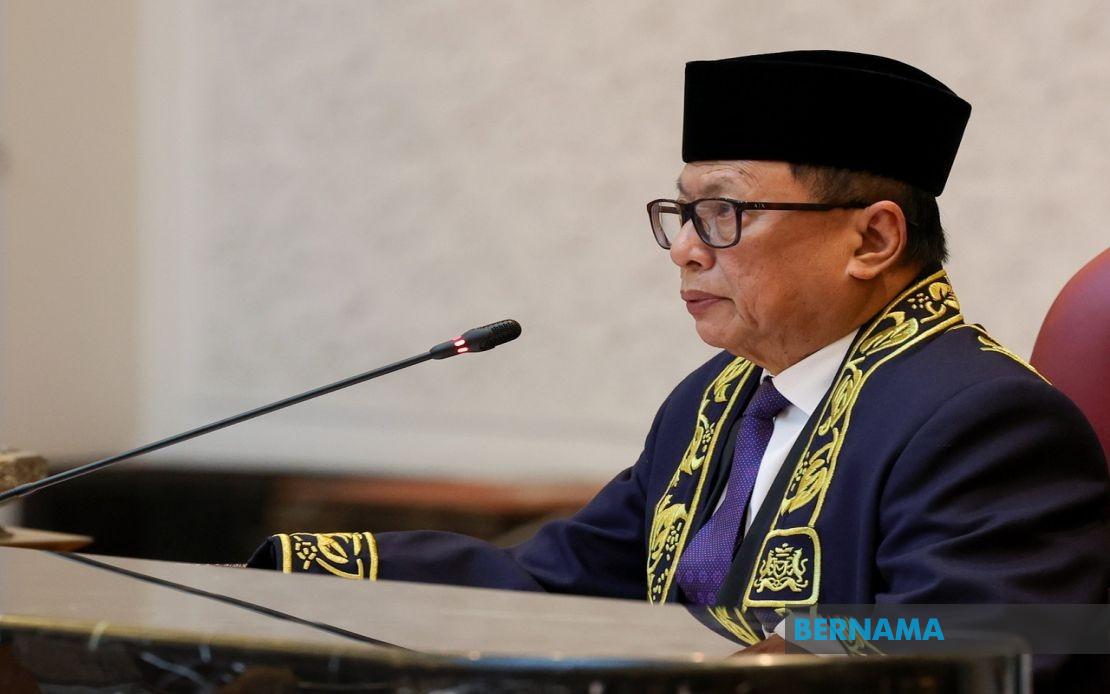
A significant rift has opened within Johor UMNO following the immediate resignation of Datuk Dr Mohd Puad Zarkashi, the party's Supreme Council member representing the Rengit state assembly seat. On June 25, 2026, Puad announced his departure through a Facebook statement, framing his exit as a principled decision that would liberate him to voice concerns without fear of internal repercussions. By resigning voluntarily rather than awaiting formal expulsion, he sought to preempt party disciplinary action and establish himself as an independent voice within Malaysia's political landscape.
At the heart of Puad's departure lies a damning assessment of Johor UMNO's leadership structure. He characterises Onn Hafiz, the state chief minister, as a mere "pak turut"—a Malay phrase denoting a compliant subordinate—stripped of genuine decision-making authority. According to Puad, this dynamic has transformed Johor UMNO from an influential faction within Malaysia's dominant political coalition into what he terms a "tethered puppet," constrained by external forces and unable to pursue independent policy directions. The critique suggests deeper anxieties about centralised control within the party and the extent to which state-level leaders retain autonomy.
Puad's resignation statement emphasised that his decision reflected genuine political conviction rather than personal grievance or career advancement. He explicitly rejected suggestions that personal interests motivated his departure, instead positioning himself as a whistleblower exposing systemic dysfunction before matters deteriorate further. This framing attempts to elevate his resignation from a routine party defection into an act of principled dissent, appealing to UMNO members and ordinary Malaysians who harbour concerns about leadership accountability and organisational integrity.
The immediate catalyst for this dramatic announcement appears linked to candidate selection processes for the forthcoming Johor state election. On June 24, Puad had hinted at imminent revelations while raising concerns about irregularities in how Barisan Nasional had nominated candidates. His earlier announcement that he would not contest the Rengit seat—despite winning it comfortably in the 2022 Johor election—already signalled brewing discontent. His proposal to step aside for younger candidates may have been genuine, or conversely, a diplomatic pretext masking deeper organisational tensions.
Puad's political trajectory demonstrates significant senior experience within Malaysia's federal and state structures. He previously served as Batu Pahat Member of Parliament during the 12th General Election, securing victory with a substantial 12,968-vote majority over PAS candidate Muhammad Abdullah. His subsequent parliamentary loss in the 13th General Election to PKR's Datuk Mohd Idris Jusi by a narrower 1,524-vote margin illustrated the volatility of electoral politics in that constituency. Beyond electoral contests, Puad held important ministerial portfolios, including Deputy Education Minister between 2009 and 2013, and directed JASA (the Special Affairs Department) from March 2015 until April 2018. He also led Batu Pahat UMNO's divisional structure, giving him substantial organisational credentials.
The resignation presents complex implications for Johor UMNO's internal dynamics and cohesion. As a Supreme Council member, Puad represented the party's senior decision-making tier, and his public departure carries symbolic weight beyond a single politician switching allegiances. His accusations that leadership functions as a subordinate entity rather than an autonomous power centre strike at fundamental questions about federalism within UMNO and whether state chapters genuinely control their destinies or respond to directives from higher hierarchies. For Malaysian political observers, this episode illustrates ongoing tensions between centralisation and decentralisation within ruling coalitions.
The timing of this resignation, shortly before a state election, amplifies its political significance. Johor, as Malaysia's southern economic engine and a traditional UMNO stronghold, remains crucial for the broader coalition's electoral prospects. An internal leadership crisis, particularly involving substantive allegations of institutional dysfunction, risks demoralising grassroots party members and providing ammunition to opposition forces seeking to portray BN as fragmented and conflict-ridden. Whether Puad's departure catalyses broader factional conflicts or remains an isolated incident will substantially influence the state's political trajectory.
For Malaysian readers, this development underscores persistent governance challenges within major political parties. The alleged absence of internal institutional independence, where regional leaders operate as proxies rather than principals, reflects broader questions about organisational culture and democratic accountability within ruling structures. Puad's willingness to publicly criticise UMNO while claiming deep attachment to the party's foundational mission suggests that substantial internal constituencies harbour doubts about current leadership approaches, though whether these concerns represent widespread sentiment or represent a minority position remains unclear.
The statement's assertion that Puad now enjoys freedom to "criticise UMNO, a platform that I love and respect for the Malays and Malaysians" reveals the paradox underlying his departure. He simultaneously rejects the party as currently constituted while affirming commitment to its historical role within Malaysian society. This posture enables potential reengagement or repositioning should circumstances shift, leaving his political trajectory unusually fluid. Whether Puad's resignation catalyses substantive party reform or becomes merely another episode in UMNO's perpetual internal negotiations remains an open question for Malaysian political analysts and observers tracking the organisation's future direction.

