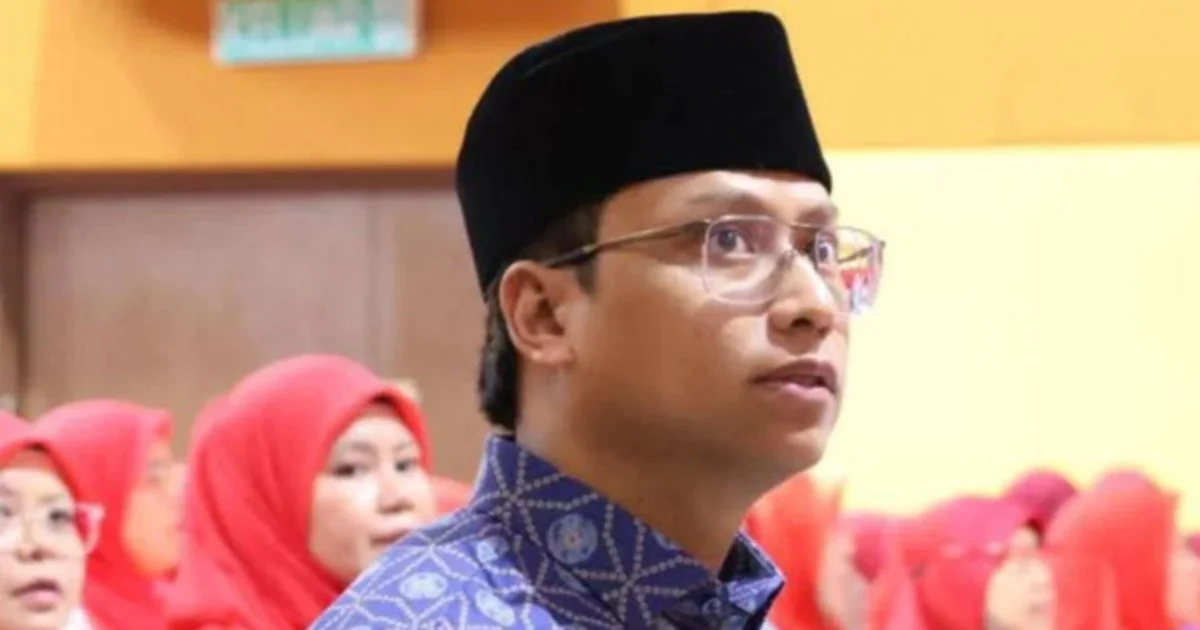
Datuk Dr Mohd Puad Zarkashi's son has stepped forward to defend his father's recent public commentary on Umno's strategic direction, characterising the former Supreme Council member's statements as constructive criticism rooted in concern for the party's survival and relevance. The family's public backing represents a notable stance within the party, where such forthright assessments of institutional health often generate significant internal friction and competing interpretations about loyalty and legitimate dissent.
The younger Puad articulated that his father's remarks were fundamentally motivated by an earnest desire to strengthen Umno rather than damage it, a distinction that carries particular weight given the party's longstanding sensitivities around public criticism from senior figures. Within Malaysia's dominant Malay-Muslim political structures, generational tensions frequently manifest through competing visions about how traditional parties should evolve to meet contemporary challenges, and the Puad family's intervention highlights these fault lines in unusually explicit fashion.
Invoking a historical framework, the son suggested that future assessments of Umno's current trajectory would vindicate his father's concerns, a rhetorical move that situates the criticism within longer arcs of institutional development rather than immediate political controversy. This framing implicitly positions the Puad family as possessing superior foresight about the party's predicament, a claim that inevitably invites scrutiny from rival party factions and competing power centres within Umno's sprawling internal ecosystem.
For Malaysian observers following Umno's internal dynamics, the family's public defence underscores deeper divisions within the party about its foundational purpose and contemporary adaptability. Umno has long grappled with balancing its historical role as guardian of Malay-Muslim interests against pressures to modernise organisational structures and policy approaches that many members view as increasingly anachronistic. Datuk Dr Mohd Puad Zarkashi's senior status within the party hierarchy means his observations carry unavoidable weight, regardless of whether party leadership acknowledges them directly.
The nature of such intra-party criticism in Malaysia's political ecosystem warrants particular attention because public dissent by prominent figures often generates informal consequences that extend beyond formal disciplinary mechanisms. While Umno maintains official channels for internal debate, senior members who speak candidly about institutional weaknesses frequently encounter subtle marginalisation, reduced access to party resources, or exclusion from decision-making forums. The family's decision to amplify these concerns publicly rather than allow them to fade suggests conviction about their legitimacy and urgency.
Regionally, Umno's internal health matters considerably beyond Malaysia's borders because the party's political decisions and ideological posture influence broader trajectories across Southeast Asia. As the region navigates complex questions about democratic governance, identity politics, and institutional resilience in the face of social transformation, Umno's own capacity to evolve while maintaining its core constituencies remains instructive. The Puad family's intervention implicitly acknowledges that Umno's future viability depends on genuine self-assessment rather than defensive institutional insularity.
The son's invocation of historical judgement as a validation mechanism also reflects broader patterns in Malaysian political discourse where participants frequently appeal to posterity's assessment of their actions. This rhetorical strategy sidesteps immediate empirical verification—whether the father's diagnoses of party weakness prove accurate—by situating the conversation within meta-level debates about institutional wisdom and foresight. Whether subsequent events vindicate these concerns or expose them as exaggerated remains an open question that party members will doubtless continue debating.
Umno's current leadership faces the delicate challenge of responding to such criticism without appearing defensive or silencing legitimate internal voices. The party's historical authority derives partly from its purported capacity to represent coherent Malay-Muslim interests, a mandate that arguably depends on internal candour about evolving conditions and emerging threats. Public dismissal of Datuk Dr Mohd Puad Zarkashi's observations risks reinforcing perceptions that the party suppresses inconvenient truths, while engagement with the critiques might validate them or deepen internal divisions.
The family's public stance also illustrates how personal relationships and generational dynamics intersect with formal organisational hierarchies in Malaysian politics. A son defending his father's institutional critique carries both intimate and symbolic resonance, suggesting that party loyalty and family loyalty need not conflict, and that genuine concern for an institution sometimes demands frank acknowledgement of its vulnerabilities. This framing potentially opens space for other senior figures to voice similar concerns without automatically incurring accusations of disloyalty.
Moving forward, observers of Malaysian politics should monitor whether Datuk Dr Mohd Puad Zarkashi's son's defence prompts broader discussion within Umno about institutional adaptation, or whether the party's leadership opts for containment strategies that treat the criticism as an isolated expression requiring no substantive response. The answer will reveal much about Umno's genuine appetite for self-examination and whether the party views such internal scrutiny as salutary or merely troublesome.

