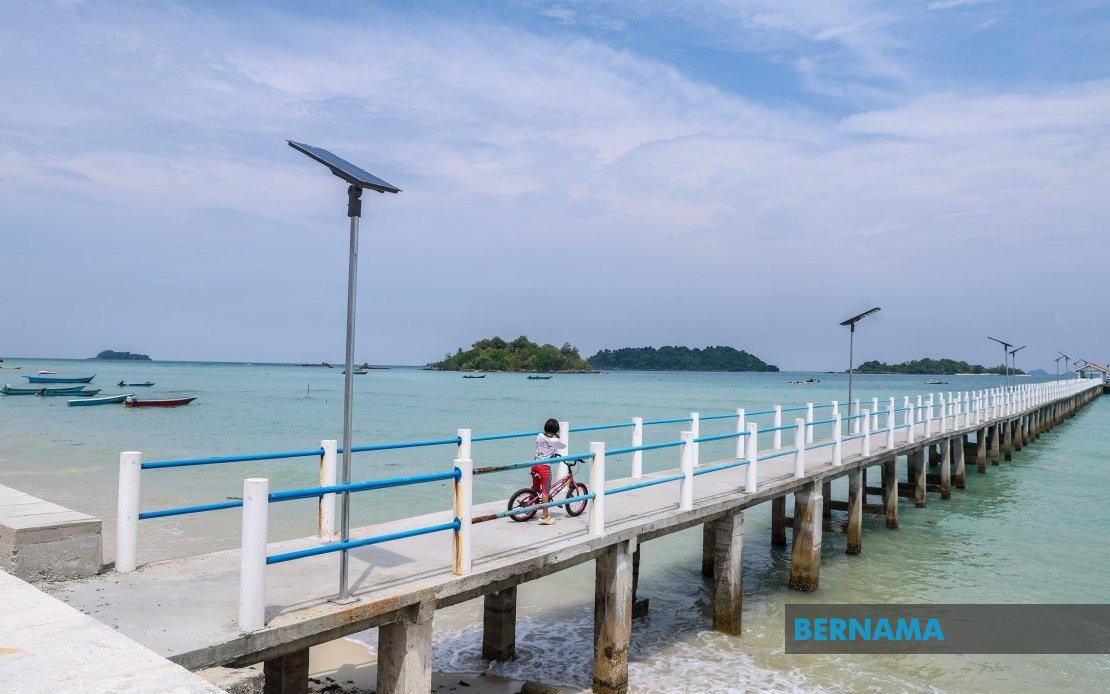
As Johor state heads toward its election on Saturday, the small island community of Pulau Tinggi is pressing for urgent action on two critical infrastructure and social welfare issues that have festered for years. Located off the coast near Mersing, the island's approximately 150 residents are looking to the elected Tenggaroh state representative to finally deliver on longstanding demands for a jetty upgrade and housing assistance programmes that could stabilise their fragile island economy and prevent further population decline.
The Kampung Pasir Panjang jetty stands at the centre of residents' concerns. Once a vital hub for both commercial fishing operations and tourist arrivals, the structure has deteriorated markedly since around 2017, creating safety hazards for the villagers who still depend on it. Village chief Rossana Hussin explained that despite the deterioration, fishermen and visitors continue using the aging facility because few alternatives exist. She noted that applications to upgrade the jetty were formally submitted to the Mersing District Office in March and have received tentative encouragement from authorities, yet no concrete action has materialised. The delay frustrates residents who view the jetty not merely as an amenity but as essential infrastructure for their livelihoods and daily connectivity to the mainland.
Beyond the jetty, housing conditions in Kampung Tanjung Balang present an equally pressing challenge. The majority of Pulau Tinggi's population comprises B40-category fishermen—those earning below RM4,849 monthly—many of whom live in homes requiring substantial repairs or complete renovation. Rossana highlighted that housing assistance applications have been pending for months, leaving vulnerable families shouldering repair costs they cannot afford. She stressed that timely intervention through structured housing repair grants would not only ease the financial burden on these families but would also contribute to improving overall living standards and community morale on an island where economic opportunities are severely limited.
The urgency of these demands reflects a deeper demographic crisis affecting Pulau Tinggi. The island's population has contracted significantly over the past decade as younger residents migrated to mainland employment centres and some settled in Felda schemes offering more stable income prospects. Mariam Mamat, an 85-year-old resident, expressed concern that without concrete efforts to revitalise economic opportunities, the exodus would continue unchecked, eventually rendering the island a ghost community. She called on the new state government to prioritise tourism sector development and job creation schemes tailored to young islanders, framing infrastructure investment as essential to reversing the demographic collapse.
Rossana, who assumed the village chief role in 2024, has become the primary voice articulating residents' grievances to state authorities. Her position reflects growing frustration that previous electoral cycles have yielded promises without delivery. She has explicitly urged the incoming Tenggaroh state representative and relevant government agencies to coordinate efforts in addressing the island's interconnected challenges—acknowledging that solutions require collaboration across multiple departments and political levels.
The timing of these appeals is significant. With 2.7 million eligible voters across Johor preparing to elect 56 state representatives on Saturday, island communities like Pulau Tinggi represent the kind of marginalised constituency that typically receives minimal campaign attention. The voters' call for action suggests they view the election as an opportunity to demand accountability from candidates who have made development pledges in the past without visible results. For Mersing-based candidates, addressing Pulau Tinggi's concerns could demonstrate tangible commitment to rural and maritime communities often overlooked in mainstream political discourse.
The jetty and housing issues carry broader implications for Johor's development strategy. Pulau Tinggi is not unique in facing infrastructure decay and economic stagnation; numerous small islands and remote coastal villages across the state share similar complaints about inadequate facilities and limited livelihood opportunities. Scaling solutions from Pulau Tinggi could provide a template for addressing equivalent challenges elsewhere, potentially strengthening the social contract between government and marginalised communities. Conversely, continued inaction risks deepening cynicism about electoral promises and widening development disparities between accessible urban areas and harder-to-reach island and remote communities.
The housing crisis component intersects with broader B40 welfare policy debates in Malaysia. Despite national initiatives targeting low-income households, implementation at the state and local level remains inconsistent. Pulau Tinggi's fishermen represent exactly the demographic such programmes are designed to assist, yet bureaucratic delays and funding constraints have prevented meaningful relief. The new Johor government will inherit responsibility for either accelerating these stalled applications or explaining to residents why their needs remain subordinate to other spending priorities.
Tourism revitalisation represents another angle through which residents view potential solutions. Pulau Tinggi possesses natural assets and cultural heritage that could attract visitors seeking authentic island experiences away from mainstream destinations. Mariam Mamat's emphasis on job creation through tourism reflects recognition that fisheries alone cannot sustain the island's economy indefinitely, particularly as marine resources face pressure from larger commercial operations. Investment in tourism infrastructure, hospitality training, and marketing could create employment for younger residents while preserving the island's demographic viability.
The election itself may catalyse change if residents vote strategically. While Pulau Tinggi's small population means limited electoral clout in absolute terms, newly elected representatives are particularly responsive to constituent demands during their first months in office. Village chief Rossana appears positioned to leverage this window by presenting the jetty and housing issues as immediate implementation priorities, accompanied by documentation of previous applications and official feedback endorsing the proposals.
Ultimately, Pulau Tinggi's situation encapsulates tensions between Malaysia's development model and the lived experience of communities occupying its periphery. Infrastructure investment and housing assistance represent relatively modest expenditures within state budgets, yet their absence signals to island residents that their survival and wellbeing are peripheral concerns. The Saturday election offers a moment for voters to signal that neglect carries political consequences, and for elected representatives to demonstrate whether campaign commitments to inclusive development represent genuine policy commitments or hollow rhetoric.

