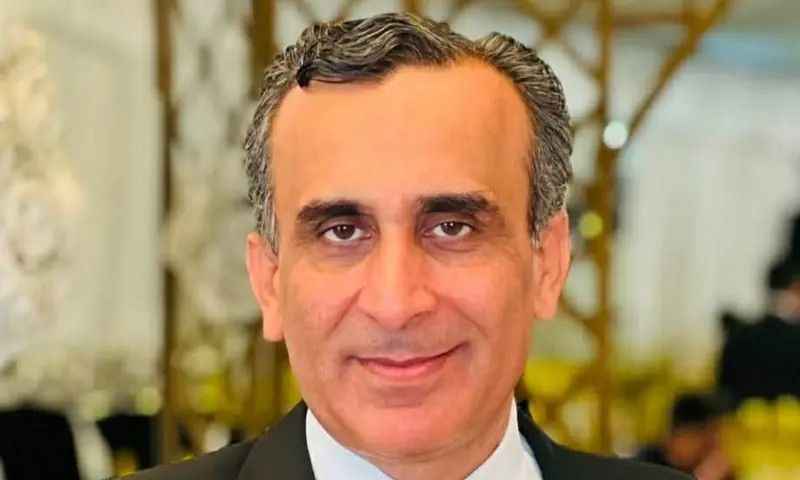
Punjab's provincial administration has formally appointed Irfan Sadiq Tarar to serve as Prosecutor General, marking a significant leadership transition in one of South Asia's largest regional legal systems. The appointment, announced on Saturday through official government notification, comes as the position remained vacant following the promotion of the previous office-holder, Farhad Ali Shah, who accepted nomination as an additional judge of the Lahore High Court, the province's apex judicial body.
The appointment was issued under the statutory authority conferred by Section 6 of the Punjab Criminal Prosecution Service Act 2006, granting Tarar an initial tenure of three years. This legislative framework ensures that prosecutorial appointments in the province maintain institutional consistency while allowing for periodic review and renewal of leadership. The three-year term represents the standard mandate for this senior constitutional position within Punjab's law enforcement hierarchy.
Tarar brings considerable experience in legal administration and bar association governance to the role. Prior to his elevation as Prosecutor General, he held the position of vice chairman at the Punjab Bar Council, the regulatory body responsible for overseeing the province's legal profession and maintaining professional standards. Concurrently, he served as vice president of the Lahore Bar Association, where he represented the interests of practicing attorneys in Punjab's capital and largest city. These parallel responsibilities demonstrate his standing within the legal community and his ability to navigate complex professional relationships across multiple stakeholders in the justice system.
His professional affiliations also include membership with the Ahsan Bhoon-led Independent group, a faction within Punjab's legal circles that maintains independence from major bar association blocs. This positioning suggests Tarar may bring a somewhat non-aligned perspective to prosecutorial decision-making, potentially widening consensus-building beyond entrenched factional interests that sometimes characterize legal profession dynamics in the province.
The transition to a new Prosecutor General carries implications for Punjab's ongoing law enforcement priorities. The Prosecutor General's office carries substantial responsibility for formulating prosecutorial policy, overseeing case management across thousands of criminal matters, and ensuring that provincial prosecution resources align with government directives and public interest considerations. Tarar's appointment signals potential shifts in prosecutorial emphasis and departmental management approach, particularly given his background in bar council administration rather than traditional prosecutorial advancement.
For Malaysian readers and those monitoring South Asian governance developments, this appointment exemplifies patterns of institutional succession in Pakistan's federal structure. Punjab, with a population exceeding 125 million citizens, operates as a semi-autonomous jurisdiction within Pakistan's constitutional framework. Leadership changes in senior prosecutorial positions ripple across the provincial judiciary, law enforcement, and legal professions in ways comparable to senior appointments within Malaysia's own state bar councils and prosecution services.
Farhad Ali Shah's transition to the bench, while creating the vacancy Tarar now fills, reflects the established pathway whereby distinguished prosecutors gain judicial appointment. This career progression, common across Commonwealth legal systems including Malaysia's, demonstrates how prosecutorial experience informs judicial perspective and contributes to bench composition with practitioners who understand enforcement realities. Shah's elevation thus represents professional advancement reflecting credibility and performance within his previous role.
The formal notification process employed for Tarar's appointment underscores the importance Punjab places on prosecutorial independence and statutory regulation of senior legal appointments. Rather than purely discretionary executive decision-making, the reliance on the Punjab Criminal Prosecution Service Act 2006 provides legislative scaffolding for appointments, establishing criteria, procedures, and tenure protections that theoretically insulate the Prosecutor General's office from arbitrary political interference.
Tarar's mandate commences at a moment when Pakistan's judicial system faces intense scrutiny regarding prosecutorial conduct, particularly regarding political cases and sensitive investigations. His appointment during this complex period may attract attention from human rights observers, legal transparency advocates, and international oversight bodies monitoring prosecutorial independence in the region. How he navigates potential political pressure while maintaining professional integrity will likely define his tenure's legacy.
The composition and leadership of provincial prosecution services carry direct bearing on criminal justice outcomes affecting millions of ordinary citizens. Prosecutorial decisions influence conviction rates, case dismissals, sentencing recommendations, and plea agreement patterns. Tarar's prosecutorial philosophy, efficiency improvements, and resource allocation choices will measurably impact Punjab's criminal justice throughput over his three-year term.

