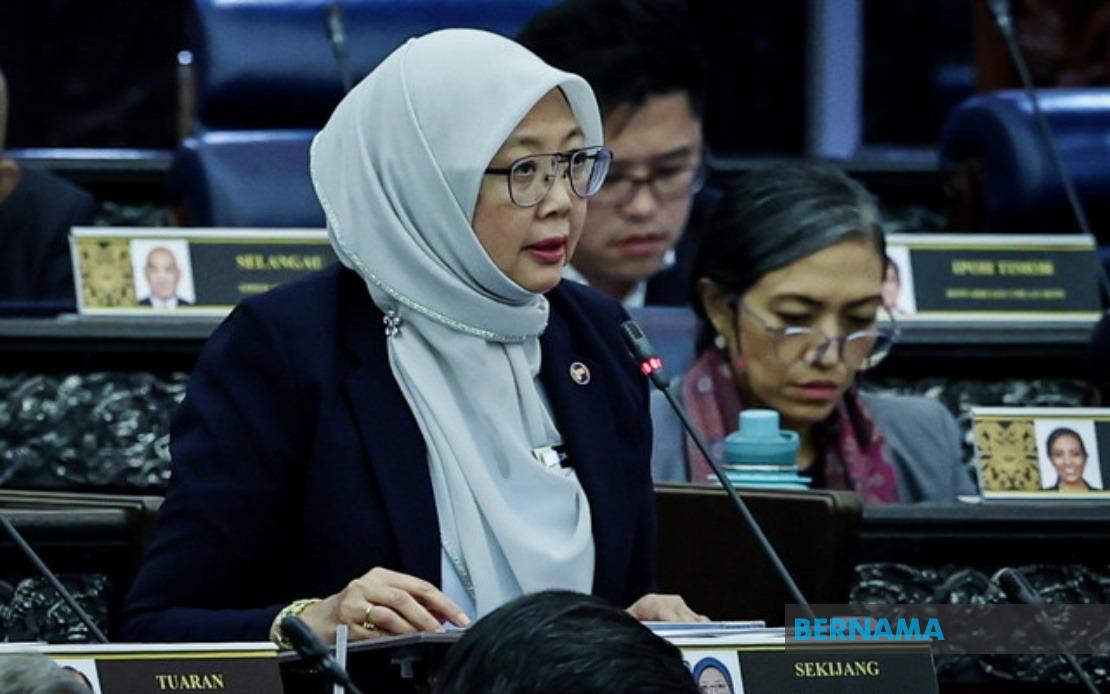
Datuk Seri Dr Zaliha Mustafa, chairman of the Government Backbenchers Club and Member of Parliament for Sekijang, has made a compelling case for the complete and transparent publication of Tabung Haji's implementation progress regarding the 25 recommendations stemming from the Royal Commission of Inquiry. Speaking during parliamentary debate in Kuala Lumpur on August 11, she argued that full disclosure of both the reform status and financial recovery efforts is essential to rebuild the confidence of millions of Malaysian Muslims who rely on the institution for their hajj pilgrimage savings.
The Royal Commission of Inquiry into Tabung Haji was established in 2021, with members formally appointed on January 20, 2022. The commission subsequently presented its comprehensive 211-page report to the Yang di-Pertuan Agong on August 30, 2022. This report was only made available to the public relatively recently, revealing significant findings about management and operational deficiencies that plagued the institution between 2014 and 2020. According to the most recent update available as of July 30 this year, Tabung Haji has achieved implementation of 75 per cent of the commission's recommendations, leaving a quarter of proposed reforms either incomplete or still in progress.
Dr Zaliha's intervention during the special parliamentary sitting debates the nature and pace of institutional reform at an organisation that holds profound significance for Malaysian Muslims. Tabung Haji serves not merely as a financial institution but as a custodian of trust for millions of Malaysians saving for one of Islam's five pillars. The breach of that trust, which led to the establishment of the inquiry, therefore carries implications that extend beyond balance sheets and financial metrics into questions of institutional integrity and public confidence. Her emphasis on the need for Parliament to receive a fuller accounting reflects broader concerns about accountability and transparency in the governance of public institutions.
Among her specific concerns, Dr Zaliha highlighted the RCI's finding that political pressure in the lead-up to a general election constituted a key factor in precipitating Tabung Haji's financial crisis. This observation underscores a systemic vulnerability in how major financial institutions can be influenced by short-term political considerations at the expense of long-term stability and depositor protection. She questioned whether the emphasis on what she termed Muslim unity should overshadow the imperative to examine and acknowledge mismanagement and poor decision-making, arguing that genuine unity cannot be built on a foundation of compromised trust or unexamined failures.
Particular scrutiny in Dr Zaliha's parliamentary remarks focused on the role and conduct of Datuk Seri Abdul Azeez Abdul Rahim, Tabung Haji's former chairman. Although officially serving in a non-executive capacity, the former chairman maintained extensive involvement in numerous investment negotiations and simultaneously held positions across several Tabung Haji subsidiaries and related entities. This concentration of influence within a single individual raises important questions about governance structures, checks and balances, and the separation of decision-making authority that ought to characterise properly functioning institutional frameworks.
The scale of financial movements during the tenure of the former chairman also merits scrutiny. Dr Zaliha called upon the government to clarify the extent of the former chairman's involvement in significant investment decisions and to address allegations that cash held in accounts linked to him reached approximately RM170 million at certain junctures. Such concentrations of liquid assets under individual control, particularly where that individual simultaneously wields broad operational influence, represent potential governance risks that ought to be transparently examined and explained to depositors and the public.
Dr Zaliha's proposal that a detailed implementation status report be presented to Parliament, complete with timelines for outstanding recommendations, addresses a critical transparency deficit. Currently, the public knows that three-quarters of recommendations have been implemented, but lacks granular information about which specific reforms have been completed, which remain ongoing, and when the remaining quarter will be finalised. This lack of specificity undermines public confidence and suggests an unwillingness to be held accountable to clear benchmarks and deadlines.
Equally important in her submission is the call for publication of comprehensive loss recovery efforts. Depositors and Malaysian taxpayers alike have legitimate interests in understanding what concrete steps are being taken to recover funds lost through mismanagement, what progress has been achieved, and what realistic prospects exist for further recovery. Without such transparency, the public narrative remains one of institutional failure without corresponding accountability or remediation.
The establishment and work of the RCI itself represents significant acknowledgement of serious institutional dysfunction. However, the delayed publication of its report and the apparent reluctance to provide detailed public accounting of implementation progress suggest that converting the commission's findings into genuine reform remains a work in progress. For an institution entrusted with the savings of millions of Muslim Malaysians for their religious obligations, this measured pace of transparency and reform may itself constitute a form of breach of trust that deserves parliamentary and public scrutiny.
The broader implications extend to governance standards across Malaysian public institutions. If a major financial institution serving millions of people can experience the scale of mismanagement that triggered an RCI investigation, and if the subsequent reform process can proceed with limited public transparency, this raises questions about accountability frameworks across the institutional landscape. Dr Zaliha's intervention thus transcends the specific circumstances of Tabung Haji to address fundamental questions about how Malaysian public institutions should operate, how they should be monitored, and to whom they should ultimately answer.
Moving forward, the government faces a choice between continuing with measured, incremental disclosure or embracing the comprehensive transparency that Dr Zaliha and others are advocating. The former approach may minimise short-term political discomfort but risks prolonging institutional reputational damage and continuing to undermine depositor confidence. The latter approach, while demanding and potentially uncomfortable, offers the prospect of genuine institutional renewal and restoration of public trust in one of Malaysian Islam's most important financial institutions.

